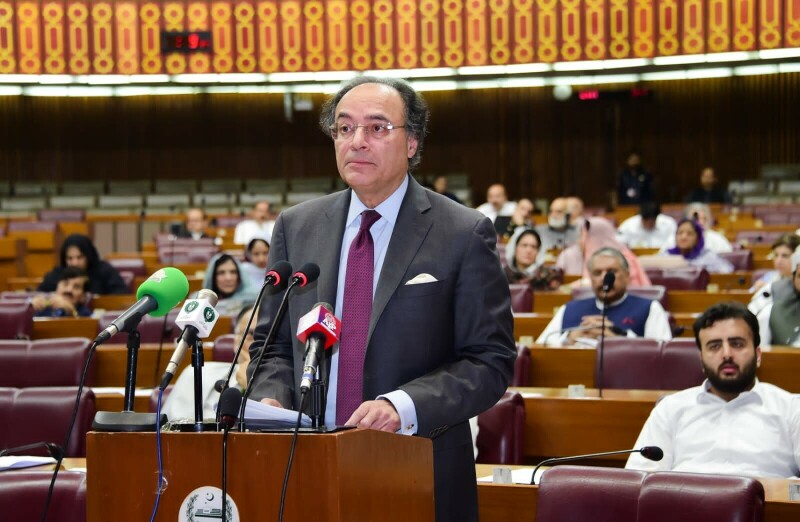
ISLAMABAD: Pakistan’s parliament on Friday passed the government’s tax-heavy finance bill for the coming fiscal year ahead of more talks on a new bailout with the International Monetary Fund (IMF) as it seeks to avert a debt default for an economy growing at the slowest pace in South Asia.
The government presented the tax-loaded budget two weeks ago, drawing sharp criticism from the opposition parties and other business entities that expressed concern over rising government expenditures and little fiscal room for economic growth.
Finance Minister Muhammad Aurangzeb moved the finance bill in parliament, which was endorsed by the ruling alliance led by Prime Minster Shehbaz Sharif. Pakistan Muslim League-Nawaz (PML-N), the party in command at the centre, saw its main coalition partner, the Pakistan Peoples Party, disagree with some of the budgetary measures before announcing its support earlier this week.
Meanwhile, addressing the National Assembly, the finance minister said that the country’s economic indicators are moving in the right direction.
“Our current account deficit has decreased significantly, the fiscal deficit is under control, while currency has stabilised,” said Aurangzeb.
“Inflation rate, which is dynamic in nature, has lowered from 38% to 11%. The economy has stabilised, and we are continuing with this stability to achieve further growth.”
He reiterated that the tax-to-GDP ratio cannot remain at current 9.5%. “It is completely unsustainable”, he said, “and we need to increase it to 13% in the coming three years”.
“If it was up to me, I would have immediately ended the category of non-filers,” he said.
“But we have taken important steps for next year, and have increased tax rates to punitive levels so that a non-filer is compelled to pay taxes,” he added.
Govt ought to have consulted us before budget presentation: Bilawal
Speaker Sardar Ayaz Sadiq announced the passage of the bill in a live TV telecast.
Policymakers have set a challenging tax revenue target of Rs13 trillion ($46.66 billion) for the year starting July 1, up about 40% from the current year, in the national budget presented on June 12.
The budget is an important step towards taking onboard the IMF, which is engaged with Pakistan for a possible loan programme of $6 billion to $8 billion.
The rise in the tax target is made up of a 48% increase in direct taxes and a 35% hike in indirect taxes over revised estimates for the current year.
Non-tax revenue, including petroleum levies, is seen increasing by a whopping 64%.
The tax would increase to 18% on textile and leather products as well as mobile phones besides a hike in the tax on capital gains from real estate. Workers will also get hit with more direct tax on income.
Opposition parties, mainly parliamentarians backed by the jailed former Prime Minister Imran Khan, rejected the budget, saying it will be highly inflationary.
Pakistan has projected a sharp drop in its fiscal deficit for the new financial year to 5.9% of gross domestic product (GDP), from an upwardly revised estimate of 7.4% for the current year.
Pakistan’s central bank has also warned of possible inflationary effects from the budget, saying limited progress in structural reforms to broaden the tax base meant increased revenue must come from hiking taxes.
The upcoming year’s growth target has been set at 3.6% with inflation projected at 12%.

ISLAMABAD: Pakistan’s parliament on Friday passed the government’s tax-heavy finance bill for the coming fiscal year ahead of more talks on a new bailout with the International Monetary Fund (IMF) as it seeks to avert a debt default for an economy growing at the slowest pace in South Asia.
The government presented the tax-loaded budget two weeks ago, drawing sharp criticism from the opposition parties and other business entities that expressed concern over rising government expenditures and little fiscal room for economic growth.
Finance Minister Muhammad Aurangzeb moved the finance bill in parliament, which was endorsed by the ruling alliance led by Prime Minster Shehbaz Sharif. Pakistan Muslim League-Nawaz (PML-N), the party in command at the centre, saw its main coalition partner, the Pakistan Peoples Party, disagree with some of the budgetary measures before announcing its support earlier this week.
Meanwhile, addressing the National Assembly, the finance minister said that the country’s economic indicators are moving in the right direction.
“Our current account deficit has decreased significantly, the fiscal deficit is under control, while currency has stabilised,” said Aurangzeb.
“Inflation rate, which is dynamic in nature, has lowered from 38% to 11%. The economy has stabilised, and we are continuing with this stability to achieve further growth.”
He reiterated that the tax-to-GDP ratio cannot remain at current 9.5%. “It is completely unsustainable”, he said, “and we need to increase it to 13% in the coming three years”.
“If it was up to me, I would have immediately ended the category of non-filers,” he said.
“But we have taken important steps for next year, and have increased tax rates to punitive levels so that a non-filer is compelled to pay taxes,” he added.
Govt ought to have consulted us before budget presentation: Bilawal
Speaker Sardar Ayaz Sadiq announced the passage of the bill in a live TV telecast.
Policymakers have set a challenging tax revenue target of Rs13 trillion ($46.66 billion) for the year starting July 1, up about 40% from the current year, in the national budget presented on June 12.
The budget is an important step towards taking onboard the IMF, which is engaged with Pakistan for a possible loan programme of $6 billion to $8 billion.
The rise in the tax target is made up of a 48% increase in direct taxes and a 35% hike in indirect taxes over revised estimates for the current year.
Non-tax revenue, including petroleum levies, is seen increasing by a whopping 64%.
The tax would increase to 18% on textile and leather products as well as mobile phones besides a hike in the tax on capital gains from real estate. Workers will also get hit with more direct tax on income.
Opposition parties, mainly parliamentarians backed by the jailed former Prime Minister Imran Khan, rejected the budget, saying it will be highly inflationary.
Pakistan has projected a sharp drop in its fiscal deficit for the new financial year to 5.9% of gross domestic product (GDP), from an upwardly revised estimate of 7.4% for the current year.
Pakistan’s central bank has also warned of possible inflationary effects from the budget, saying limited progress in structural reforms to broaden the tax base meant increased revenue must come from hiking taxes.
The upcoming year’s growth target has been set at 3.6% with inflation projected at 12%.






 American Dollar Exchange Rate