
KARACHI: The world’s largest textile products exhibition, Heimtextil, is being held in the German city of Frankfurt from January 13 to 16, where textile product buyers and sellers from around the world will participate. Pakistani textile product manufacturers will also participate in large numbers in this important exhibition.
Quality cotton prices have shown an overall trend of stability, although trading remains limited. Since December 13, 2025, the Evacuee Property Trust Board (EPTB) has taken possession of the Karachi Cotton Exchange (KCE) building with the assistance of the FIA and has sealed the entire building, due to which the highly important daily cotton spot rate has not been issued for the past month. This situation has caused severe difficulties for banks, insurance companies, textile mills, and ginners. 320 cotton brokers are suffering losses of millions of rupees on a daily basis, and approximately 5000 people have become idle and unemployed.
The Cotton Exchange building has been sealed by the EPTB with the support of the FIA, which has been challenged by the KMC in the Sindh High Court. The Sindh High Court has restrained the FIA from taking action on the petition of Karachi Mayor Barrister Murtaza Wahab.
The All Pakistan Textile Mills Association (APTMA) has warned the prime minister about the destruction of industries against expensive electricity rates. After textile spinners, the knitwear and value-added textile sectors are now also facing severe crisis. The Pakistan Hosiery Manufacturers Association (PHMA) has also warned the relevant authorities while echoing the increasing threats to the textile industry.
The All Pakistan Textile Mills Association has urged the Federal Board of Revenue to withdraw the implementation of video analytics at the spinning stage and instead install this system at the ginning stage so that the movement of undocumented cotton can be effectively prevented.
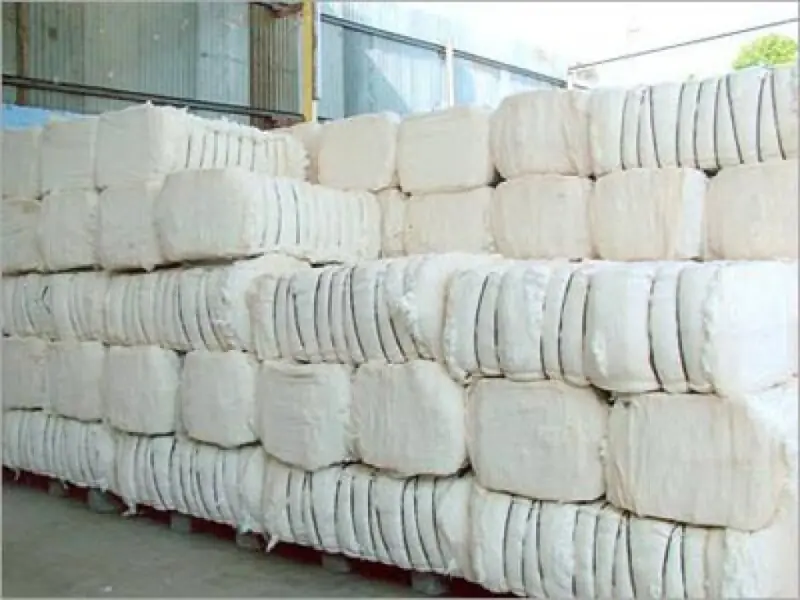
During the past week, overall stability has been observed in cotton prices in the local cotton market. There has been an increase of Rs 200 to Rs 300 per maund in the demand and prices of quality cotton, while the prices of medium and light cotton are running at Rs 14,500 to Rs 15,500 per maund according to quality.
The price of quality cotton is running at Rs 15,800 to RS 16,200 per maund.
Phutti is available in limited quantity, with its price running at Rs 6000 to Rs 7500 per 40 kilograms, while the price of Balochi Phutti seed has remained at Rs 7,800 to Rs 8,500.
The business volume in the market is limited, and some textile mills are selectively purchasing cotton. Several ginners had stocked quality cotton to obtain higher prices, and they are now also releasing their stock.
On the other hand, the building of the Karachi Cotton Association has been taken into possession by the Evacuee Property Trust Board with the assistance of the Federal Investigation Agency since December 12, 2025 due to which the spot rate of the Karachi Cotton Association has not been issued since December 13, 2025. The spot rate is of great importance because banks and insurance companies provide loans to textile mills and cotton ginning factories based on the spot rate. The spot rate determines the price of Pakistan’s cotton worldwide, which is why the industry is facing significant difficulties.
The Karachi Cotton Association has not issued the daily cotton spot rate for approximately one month because since December 13, 2025, the EPB has taken the building into its possession with the help of the Federal Investigation Agency and sealed the entire building.
This matter has been challenged in the Sindh High Court by the Karachi Metropolitan Corporation. The Sindh High Court has restrained the Federal Investigation Agency from taking action on the petition of Karachi Mayor Barrister Murtaza Wahab.
In the provinces of Sindh and Punjab, cotton prices per maund have remained at Rs 14,000 to Rs 16200 according to quality and payment conditions. The prices of cottonseed cake and oil remain stable.
Chairman of the Karachi Cotton Brokers Forum, Naseem Usman, stated that mixed trends are being observed in international cotton prices. The price of New York cotton futures is running between sixty-five to sixty-eight American cents per pound.
The Karachi Metropolitan Corporation (KMC) on Tuesday approached the Sindh High Court against sealing of the Karachi Cotton Exchange building and forcibly ejecting all tenants/occupants of the historical structure.
The KMC submitted that the impugned sealing order had been jointly issued by the Federal Investigation Agency (FIA) and the Evacuee Trust Property Board (ETPB) without issuing any notice to the petitioner for commencement of any proceedings for declaring the subject property as evacuee trust property.
The petitioner further contended that the ETPB and FIA lacked jurisdiction to declare any property as evacuee trust property since the same was no longer a federal subject and subsequently, a provincial law on the subject matter had also been enacted in 2019.
Citing the ministry of interior, ministry of religious affairs & interfaith harmony, ETPB, FIA, chief secretary of Sindh and others as respondents, the KMC filed two petitions in the SHC impugning the sealing order and subsequent registration of an FIR.
Representing the petitioner, advocate Haider Waleed along with Karachi Mayor Murtaza Wahab argued that Dec 12 ex-parte sealing order was unlawful and without jurisdiction and the building had been sealed on a false pretext of its title being vested with the federal government.
“Unlawful” sealing order is nothing but a preposterous tactic to usurp the heritage property, SHC told
They asserted that the mala fide actions of the sealing and usurping the subject property were conducted by the FIA through an unlawful raid, barging into the building and ejecting all tenants/occupants through brute force, abuse of power and in an oppressive/unconstitutional manner.
The lawyers also contended that no prior notice was issued to the petitioner on the subject matter and even otherwise, neither the ETPB nor the FIA had jurisdiction to declare any property as evacuee trust property or to intervene with the peaceful/lawful possession of the same.
They claimed that impugned sealing order was nothing but a farcical and preposterous tactic to usurp the property by the federation despite the fact that matters pertaining to evacuee property no longer fall within the domain of the parliament in the wake of the 18th Amendment and subsequent enactment of the Sindh Evacuee Trust Properties (Management & Disposal) Act, 2019.
They argued that upon passing of such act, any evacuee trust property in the province of Sindh would exclusively stand vested in the province of Sindh and not in the federal government/ETPB.
They further maintained that impugned sealing order was utterly unconstitutional, wholly without jurisdiction and nothing but an attempt to encroach upon the legislative and executive functions of Sindh.
The counsel argued that the Karachi Cotton Association (KCA) was the lessee to the subject property granted by the KMC and evidenced by the duly registered conveyance deed dated July 22, 1936 and after expiry of initial lease granted for 99 years, the same was renewed by the petitioner Nov 19, 1982 for a further period of 99 years till 2081.
The All Pakistan Textile Mills Association has warned the prime minister of an impending industrial catastrophe, stating that current electricity rates for industries are already the highest in the region. According to details, Pakistan’s largest industrial organisation, the All Pakistan Textile Mills Association, has alerted the prime minister that the ongoing process of electricity tariff revision, if not corrected, poses a serious and lasting threat to industrial competitiveness, exports, and grid stability.
In an official letter written on January 6, 2026, addressed to the Prime Minister’s Advisor Dr Syed Tauqeer Hussain Shah, APTMA Chairman Kamran Arshad cautioned that the current electricity rates for industries are already the highest in the region, pushing businesses toward closure, relocation, or disconnection from the national grid. The APTMA informed the prime minister that electricity rates for industries currently carry a cross-subsidy burden of Rs 131 billion, which increases to Rs 160 billion after including Karachi Electric.
This cross-subsidy burden adds approximately 6.5 rupees per kilowatt hour to the B3 category industrial tariffs, bringing the cost of industrial electricity in Pakistan to nearly 12.5 US cents per kilowatt hour. In contrast, other economies competing in exports, including China, India, Bangladesh, and Vietnam, are providing electricity to their industries at rates between 5 to 9 cents per kilowatt hour, creating a structural cost disadvantage for Pakistani exports.
The association warned that unless the cross-subsidy imposed on industries is eliminated, Pakistan’s export sector will remain uncompetitive, regardless of any changes in exchange rates or the provision of concessionary packages.
Pakistan’s hosiery and value-added textile sector is currently facing an extremely severe crisis. Group leader Chaudhry Salamat Ali of the Manufacturers and Exporters Association and senior vice chairman of the North Zone, Ahmad Afzal Awan, have stated that the sector is experiencing its worst crisis due to the failure to reduce interest rates and increases in energy tariffs and taxes. They were addressing a luncheon held in honor of Pakistan Hosiery Manufacturers Association members. They emphasised that Pakistan currently has the highest interest rate in the region, which needs to be reduced to three to four percent for exporters.
They further explained that electricity costs seven cents across the entire region while it costs fourteen cents in Pakistan. Similarly, gas prices in Bangladesh and Vietnam are one-third compared to Pakistan, and labor wages are fifty percent lower. They demanded that the export regime be restored and the two percent tax imposed on exporters be reduced to one percent, because the current tax deductions amount to nearly fifteen percent. Even after this, exporters still face harassment or notices from tax authorities.
The Pakistan Hosiery Manufacturers Association echoed growing concerns in the textile industry on Tuesday, warning that the country’s export engine is approaching a dangerous tipping point and requires immediate, coordinated intervention. Aligning with recent concerns raised by industrial organisations, the association’s leaders stated that the continuous decline in competitiveness is now translating into factory slowdowns, workforce reductions, and sustained losses of international buyers.
The All Pakistan Textile Mills Association has urged the Federal Board of Revenue to withdraw the implementation of video analytics at the spinning stage and instead install the system at the ginning stage to effectively prevent the movement of undocumented cotton.
Copyright media, 2026







 American Dollar Exchange Rate