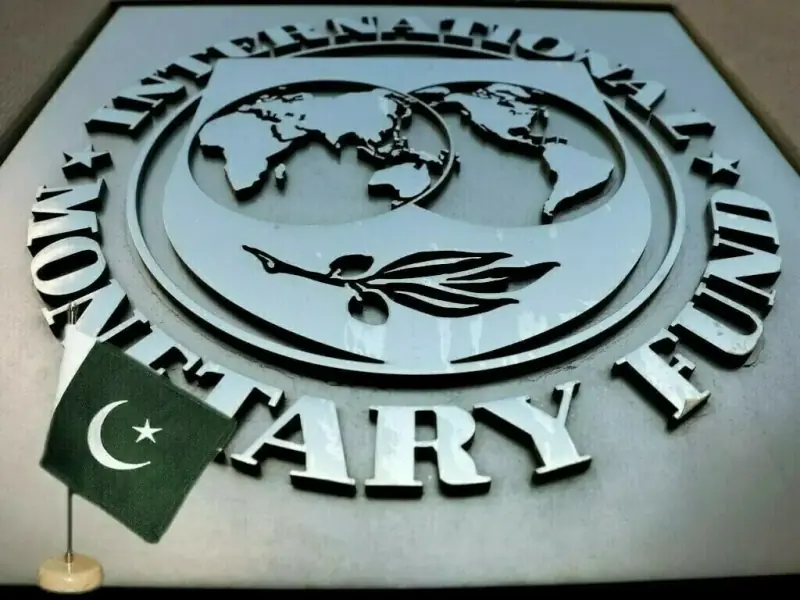

The International Monetary Fund’s Executive Board will meet on Dec 8 to review Pakistan’s request for a $1.2 billion disbursement under the Extended Fund Facility (EFF) and the Resilience and Sustainability Facility (RSF), according to the Fund’s updated schedule.
Pakistan and the IMF reached a staff-level agreement in October after negotiations in Karachi, Islamabad, and Washington. The deal, covering reviews of both the EFF and RSF, requires board approval before funds can be released.
Clearance would unlock about $1.2 billion, roughly $1 billion under the EFF and $200 million through the RSF.
Separately, IMF Deputy Managing Director Bo Li praised Pakistan’s reform trajectory, calling the country “on the right path of reform and resilience,” the Finance Division said.
He noted that, alongside the $7 billion stabilisation programme, the RSF would provide $1.3 billion to strengthen Pakistan’s fiscal and financial resilience to climate risks.
The Fund has earlier said Pakistan has made progress in fiscal consolidation, reducing inflation and rebuilding external buffers, but warned that risks remain elevated due to flood-related losses and stressed the need for tight, data-driven monetary policy.
The upcoming board meeting follows the release of the IMF’s Governance and Corruption Diagnostic Assessment, a mandatory condition for approval, which identified systemic governance gaps and said Pakistan could raise growth by up to 6.5% over five years if it implements a 15-point reform plan.
The findings prompted opposition calls for investigations into alleged governance failures. Khyber Pakhtunkhwa Chief Minister Mohammad Sohail Afridi also sought accountability, saying the report raised “grave questions” about the use of public resources and the diversion of funds abroad.
Finance Minister Muhammad Aurangzeb said the diagnostic should accelerate long-overdue reforms, adding that several recommendations were already being implemented.
If approved on Monday, the $1.2 billion disbursement could be released as early as the next day, supporting Pakistan’s external buffers and broader reform agenda.





 American Dollar Exchange Rate