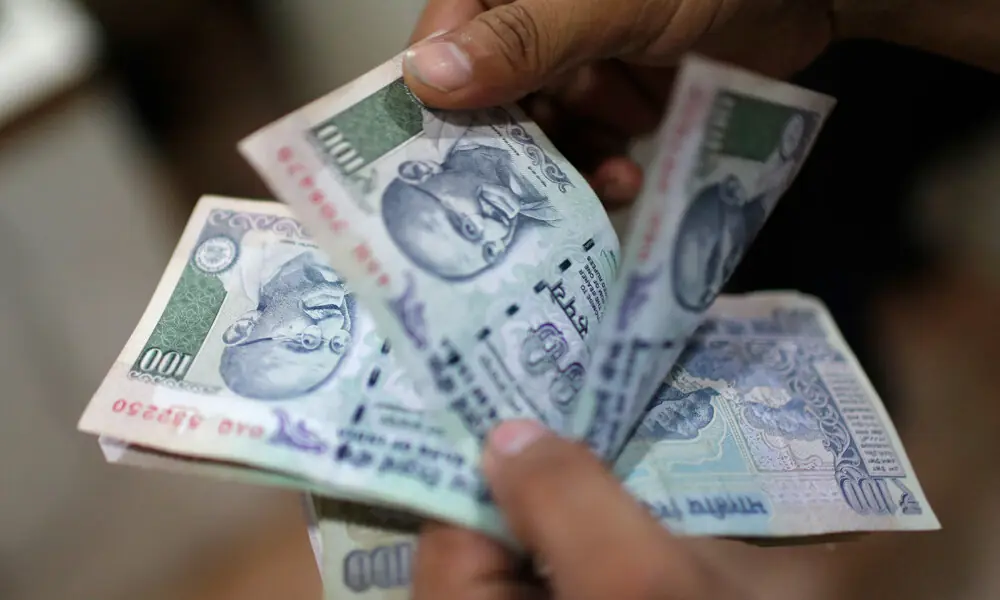
MUMBAI: Indian lenders are shelling out premiums for short-term funds last seen during the Covid-19 crisis, with sluggish deposit growth driving dependence on certificates of deposit (CDs) and pushing borrowings to a record high.
Outstanding CDs skyrocketed to a record high of 6.64 trillion rupees ($71.04 billion) as of February 28, registering a staggering jump of 75% over the last two years.
“Some banks have raised fixed deposit rates, but the credit growth is so strong that lenders have to rely on CDs, and some pressure should persist till the end of the year,” said Binod Kumar, Managing Director and CEO at Indian Bank.
Banks use CDs to raise money from institutional investors at a market-determined rate, netting them a higher quantity offunds when compared to retail deposits, which are funds parked by individual customers.
Indian Bank to launch over $500 million infrastructure debt issue next week, MD says
The FBIL three-month CD benchmark rate jumped to 7.41%, while the three-month treasury bill yield stood at 5.31%. The spread that banks pay to access funds has jumped to 210 basis points, levels last seen in March 2020.
Even though market participants expect rates to ease next month, bankers say the magnitude of the drop may be smaller than in previous years.
“The rates should cool off from current levels in April but may not decline sharply as the gap between deposit and credit growth will persist,” Indian Bank’s Kumar added.
Remedial measures
Reliance on CD funding has risen this year as credit growth outpaced deposits, with aggressive FX intervention nearly offsetting the impact from the Reserve Bank of India’s liquidity infusion.
Indian Bank, infrastructure financier NaBFID to raise 80 billion rupees via bonds by March
Abhishek Bisen, fixed income head at Kotak Mutual Fund, expects rates to ease but banks to also continue issuances to meet funding requirements.
Market participants do not expect deposit growth to recover much, expecting the situation to continue into 2027.
“Going forward, a sustained infusion of liquidity and ensuring an adequate surplus in the banking system would help compress CD spreads,” Kotak Mutual Fund’s Bisen said.
“Additional targeted measures, such as liquidity injections through mechanisms like TLTRO, could also help address the sticky liquidity deficit and ease upward pressure on CD rates.”
Lenders also want approval from the RBI to sell CDs of up to three years, which will help distribute their liabilities and release some pressure from the largely used three-month bucket.

MUMBAI: Indian lenders are shelling out premiums for short-term funds last seen during the Covid-19 crisis, with sluggish deposit growth driving dependence on certificates of deposit (CDs) and pushing borrowings to a record high.
Outstanding CDs skyrocketed to a record high of 6.64 trillion rupees ($71.04 billion) as of February 28, registering a staggering jump of 75% over the last two years.
“Some banks have raised fixed deposit rates, but the credit growth is so strong that lenders have to rely on CDs, and some pressure should persist till the end of the year,” said Binod Kumar, Managing Director and CEO at Indian Bank.
Banks use CDs to raise money from institutional investors at a market-determined rate, netting them a higher quantity offunds when compared to retail deposits, which are funds parked by individual customers.
Indian Bank to launch over $500 million infrastructure debt issue next week, MD says
The FBIL three-month CD benchmark rate jumped to 7.41%, while the three-month treasury bill yield stood at 5.31%. The spread that banks pay to access funds has jumped to 210 basis points, levels last seen in March 2020.
Even though market participants expect rates to ease next month, bankers say the magnitude of the drop may be smaller than in previous years.
“The rates should cool off from current levels in April but may not decline sharply as the gap between deposit and credit growth will persist,” Indian Bank’s Kumar added.
Remedial measures
Reliance on CD funding has risen this year as credit growth outpaced deposits, with aggressive FX intervention nearly offsetting the impact from the Reserve Bank of India’s liquidity infusion.
Indian Bank, infrastructure financier NaBFID to raise 80 billion rupees via bonds by March
Abhishek Bisen, fixed income head at Kotak Mutual Fund, expects rates to ease but banks to also continue issuances to meet funding requirements.
Market participants do not expect deposit growth to recover much, expecting the situation to continue into 2027.
“Going forward, a sustained infusion of liquidity and ensuring an adequate surplus in the banking system would help compress CD spreads,” Kotak Mutual Fund’s Bisen said.
“Additional targeted measures, such as liquidity injections through mechanisms like TLTRO, could also help address the sticky liquidity deficit and ease upward pressure on CD rates.”
Lenders also want approval from the RBI to sell CDs of up to three years, which will help distribute their liabilities and release some pressure from the largely used three-month bucket.







 American Dollar Exchange Rate