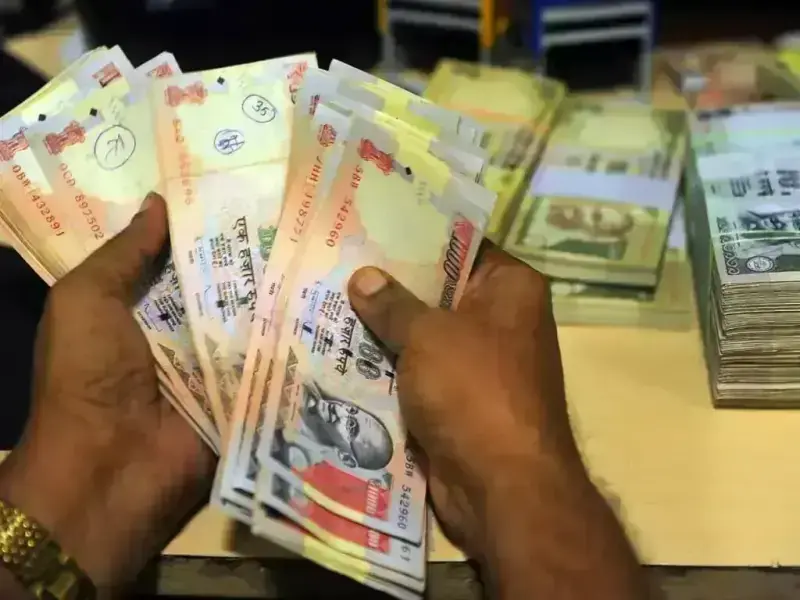

MUMBAI: The Indian rupee slid to its worst one-day fall in nearly two months on Friday, as elevated dollar demand from importers alongside maturing positions in the non-deliverable forwards market hurt the South Asian currency.
Intermittent dollar sales from state-run banks, most likely on behalf of the Reserve Bank of India, helped limit the currency’s fall, traders said.
The Indian rupee closed at 90.8650 per dollar, down 0.6% on the day to log its worst drop since mid-November last year and inching closer to its all-time low of 91.0750 hit in December. The currency was down about 0.7% week-on-week.
The local currency’s weakness also contributed to pushing dollar-rupee forward premiums to 3-week highs as importers locked in hedges while interbank traders held on to a paying bias.
“The depreciation pressure on the INR is likely here to stay, especially in the absence of an India-US trade deal,” analysts at ANZ said in a note.
India’s merchandise trade deficit for December stood at $25.04 billion, data released on Thursday showed. The data also pointed to resilience in exports to the U.S. despite steep tariffs.
While the RBI’s interventions to support the currency limit near-term weakness they also throw up a challenge by draining rupee liquidity from the banking system, which exerts upward pressure on local borrowing costs.
“The optimal policy course will be to tolerate a more flexible exchange rate such that liquidity can be boosted to levels sufficient to support domestic demand,” ANZ’s note said.
Meanwhile, Asian currencies were largely rangebound and the dollar index hovered near a six-week high after upbeat U.S. economic data left traders trimming bets on Federal Reserve rate cuts.
Markets are now pricing in a 67% chance that the Federal Reserve will stand pat on rates in April, up from 37% a month ago, according to the CME FedWatch tool. Odds of cuts in January and March are around 5% and 20%, respectively.







 American Dollar Exchange Rate