
LONDON: Iran’s threat to send oil prices to $200 a barrel may sound like bombast, but as the energy crisis drags on, that outcome looks more likely than U.S. President Donald Trump’s prediction that prices will soon fall back to pre-war levels.
Now in its third week, the joint Israeli-U.S. war against Iran – which has escalated into a regional conflict – has elicited a surprisingly muted reaction from global oil benchmarks.
Brent crude now trades near $100 a barrel, about 65% above its level at the start of the year, a price that was unthinkable only weeks ago but still below the brief peak of nearly $120 last Monday.
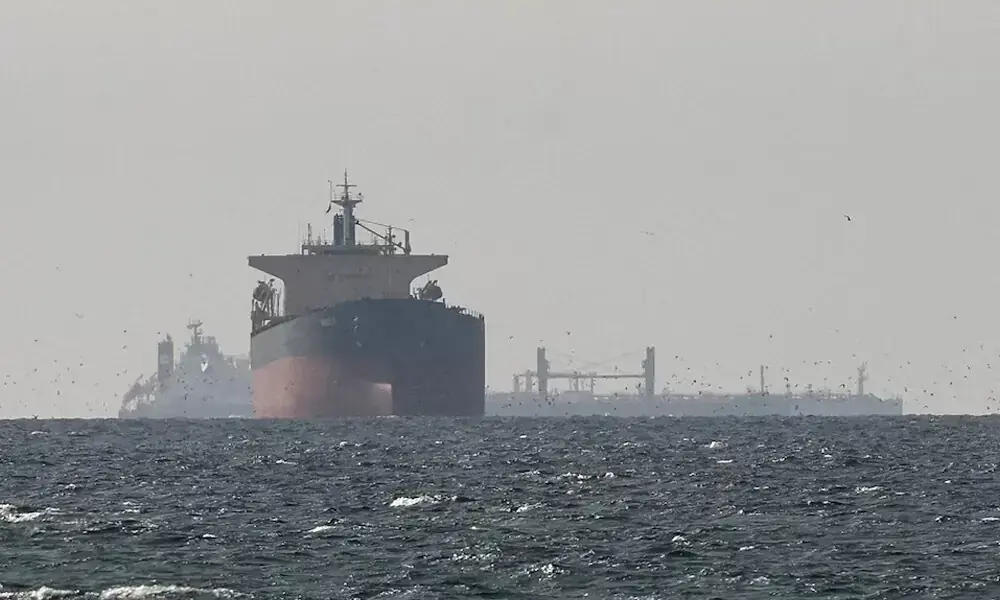
And given that roughly a fifth of global oil supplies, or about 20 million barrels per day, have been trapped by the effective closure of the Strait of Hormuz since the conflict began, crude prices should arguably be a lot higher.
Brent fell slightly on Monday on news that several tankers carrying crude and oil products to India, China and Pakistan have crossed the strait in recent days, as this indicated that some countries maymanage to negotiate safe passage for their vessels. But the volumes being moved are extremely modest.
Trump criticises allies over rejection of Hormuz request, as Iran and Israel trade airstrikes
Investors still appear ready to give Trump the benefit of the doubt, betting that the crisis will unwind quickly and Hormuz will soon be reopened. Call it the “Trump put,” the “TACO trade” or “buying the Trump,” but many oil traders seem to be wagering that the president will ultimately be able to limit the market damage.
“When this is over oil prices are going to go down very, very rapidly,” Trump told reporters on Monday. However, that optimism looks increasingly hard to square with realities on the ground – both on the battlefield, where fighting is intensifying, and in physical oil markets, where supply snarls are metastasizing.
Red alert
Physical crude markets are flashing stress signals that paper markets have so far largely ignored. Omani crude – exported from a terminal outside the Strait of Hormuz – is trading at a record premium of $51 a barrel to Brent, compared with an average of just 75 cents in February, pushing the outright price to around $150 a barrel for May loading.
US-Israeli aggression: Iran thanks Pakistan for showing solidarity
A similar pattern is playing out elsewhere. Cash premiums for Dubai crude jumped to $56 a barrel on Monday from an average of 90 cents in February, according to data from S&P Global Platts and Reuters.
The surge reflects the enormous uncertainty over the actual amount of supply available amid repeated Iranian strikes on oil terminals in Oman and at Fujairah, the United Arab Emirates’ main oil-exporting terminal outside Hormuz.
For refiners, particularly in Asia, this is a serious problem. The region relies on the Middle East for roughly 60% of its crude imports, and the difficulty of sourcing alternative, timely supplies is rapidly becoming acute.
A shipment from the Gulf takes around a month to reach Asian customers, meaning that with every day Hormuz remains closed, the supply gap facing refiners widens.
The strain is already forcing painful adjustments. Refiners across Asia have begun cutting processing rates to conserve dwindling stocks. China’s Sinopec, the world’s largest refiner by capacity, plans to slash production throughput this month by more than 10% from its original plan due to a crude supply shortfall, Reuters reported.
German defence minister rejects Trump’s call for military support against Iran
At the same time, China and Thailand have banned exports of refined fuels, a defensive move that risks tightening global markets further.
As crude scarcity deepens, refined fuel prices are soaring. Asian jet fuel prices are approaching $200 a barrel, close to a record of about $220 reached earlier this month.
And this crisis is not confined to Asia. Europe accounted for roughly three-quarters of Middle Eastern jet fuel exports shipped via Hormuz last year – about 379,000 bpd, according to data analytics firm Kpler – yet no cargo has transited the strait since the war began.
Unsurprisingly, jet fuel barges in the Amsterdam-Rotterdam-Antwerp refining hub have surged to a record $190 a barrel, surpassing the previous peak hit in the immediate aftermath of Russia’s full-scale invasion of Ukraine in February 2022.
Three times worse
The comparison with the Ukraine crisis is telling. Russia supplied around 30% of Europe’s crude imports and a third of its refined product imports before the invasion of Ukrainein 2022.
Trump upset as key US partners shun call for Hormuz warship escorts
The fear of losing supply from one of the world’s largest producers – Russia pumps around 10 million bpd – drove Brent to $130 a barrel in the aftermath of the invasion even though this worst-case scenario never fully materialized.
The physical disruption from the Iran war has already exceeded that feared amount by more than three times, according to Morgan Stanley.
To be sure, the oil market entered the Iran war in relatively comfortable shape, with the International Energy Agency forecasting that global supply would exceed demand by around 3.7 million bpd. Of course, that glut has been eliminated by the current disruption.
The IEA’s announcement last week of plans for a record release of 400 million barrels from member states’ strategic petroleum reserves has helped cushion the initial blow. But drawing down inventories cannot substitute for the delivery of new barrels.
Even the immediate reopening of Hormuz would not bring instant relief. Around 10 million bpd of Middle Eastern production have been shut in since the conflict began, according to the IEA. Restoring those flows would take weeks, if not months.
The supply shock, in other words, is real and could have legs.
Once Hormuz is finally reopened, oil prices could initially plunge in a relief rally, but given the grim reality in the physical markets, traders may want to think twice before betting that the return to normality Trump has promised is coming anytime soon.







 American Dollar Exchange Rate