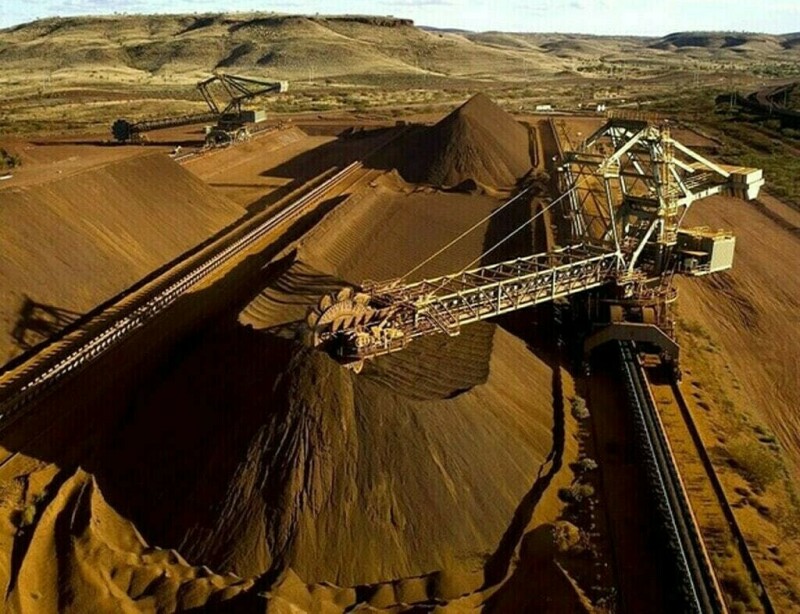

BEIJING: Iron ore futures slipped to their lowest in nearly two months on Tuesday, dragged down by demand fears sparked by U.S. President Donald Trump’s plan to double the tariffs on steel imports to 50% and weak factory data in top consumer China.
The most-traded September iron ore contract on China’s Dalian Commodity Exchange (DCE) ended morning trade 0.92% lower at 697 yuan ($96.84) a metric ton.
The contract hit its lowest since April 10 at 690.5 yuan a ton earlier in the session.
The benchmark July iron ore on the Singapore Exchange eased 1.03% to $94.25 a ton as of 0334 GMT, after touching its lowest since April 10 at $93.8 earlier.
On Friday, Trump unveiled his plan to increase tariffs on imported steel and aluminum to 50% from 25%, ratcheting up pressure on global steel producers and deepening his trade war.
India’s top miner tests local iron ore pricing
U.S. prices of steel and aluminium spiked on Monday, while shares of foreign steelmakers slumped.
Chinese markets, however, were closed on Monday due to a public holiday.
Despite a 90-day pause, the ongoing tariff war between the world’s two largest economies has impacted the Chinese manufacturing sector, casting a shadow on steel’s demand outlook.
The manufacturing sector has taken the lead as the country’s biggest steel consumer, outpacing infrastructure and real estate.
China’s manufacturing activity shrank for the first time in eight months in May, a private-sector survey showed on Tuesday, after official data recorded contraction for a second month on Saturday.
Other steelmaking ingredients on the DCE also weakened, with coking coal and coke falling 2.97% and 0.91%, respectively, to nearly nine-year lows.
Steel benchmarks on the Shanghai Futures Exchange lost ground amid lower raw materials costs.
Rebar shed 0.88%, hot-rolled coil lost 0.55%, wire rod dipped 0.25% and stainless steel ticked 0.39% lower.



 American Dollar Exchange Rate