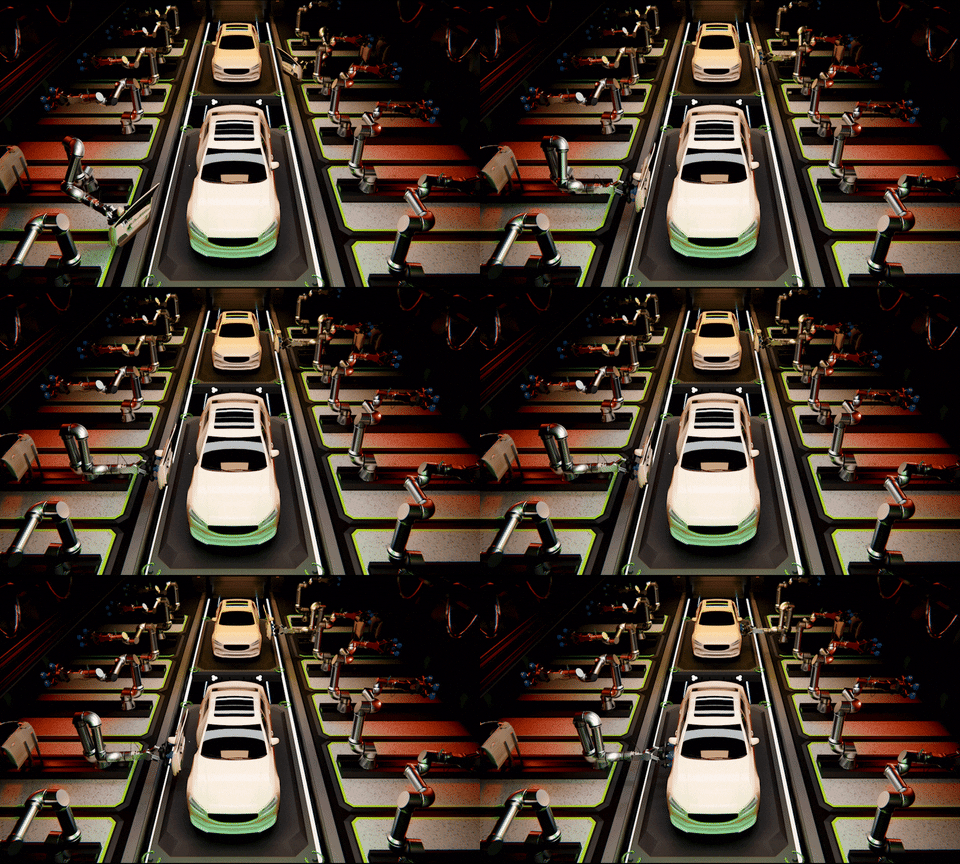

Pakistan can reduce cars prices and make them affordable for the middle-class people, the largest class of the country, if proper localisation of engineering items including auto engine, transmission, and suspension system are manufactured instead of assembling in the country, according to automotive industrialists and auto analysts.
Talking to media, auto expert Usman Ansari said proper and robust localisation of engineering items, parts and pieces could scale down car prices as no impact of localised vehicles would be felt if US dollar or Rupee values fell prey to fluctuations.
He called for achieving the 100% localisation target of car assemblers/manufacturers as the auto industry lasts for over 30 years in the country.
Also read: Car sales in Pakistan jump 46% in first four months of FY2025-26
Speaking about higher auto prices, Zain Shariq, automotive industrialist, said, “Cars that are low profit but high volume are a sector that’s very weak in Pakistan. The average Pakistani doesn’t need high quality tech, he just needs decent transport for his family. Unfortunately, companies make more profit from larger cars, at a lower overhead”.
“The Pakistan car market is open for visionary entrepreneurs to capture, but it requires a personal level of commitment from the top management for it to work.
“Import-based items will always have a risk of jumping up in price due to threats of devaluation and supply chain risks. Localisation of engine and transmission is essential for serious price reduction for example,” Shariq stressed.
He said car sales were heavily influenced by some key economic indicators such as stable inflation, low interest rate, stable currency.
“This allows the market to take on the risk of financing.
“However, we should look to the west and learn from what is happening there. Car sales are dropping rapidly in the west as well, and auto loan delinquency is at an all-time high. A debt or subsidy driven boom is not sustainable in the long run. In Pakistan when we say the car sales are going up, they are still relatively very low compared to our population,” he said.
Shariq explained that prices come down due to market forces.
“When it is a buyers’ market [supply is more and buyers less], suppliers are forced to bring prices down. Pakistan is only now moving towards somewhat of a buyers’ market, with new models and new competition.
“We can see the impact of this with historic price reductions never before witnessed in the market, as well as new models coming in at incredible prices.”
Shariq further said the last auto policy was designed to encourage new entrants to create genuine competition in the local market.
“That policy is only now bearing fruit. It would be a mistake to shake up the auto policy too much while the full impact of the last policy hasn’t been felt yet. Policy maturation takes time, and short term interference only leads to lower investor confidence due to unpredictability of the market and policies,” he said.
Also read: Surge in used car imports sparks concern in auto industry
Automobile expert Shafiq Ahmed Shaikh was of the view that experts and stakeholders always suggest that a massive portion of a car’s price in Pakistan consists of taxes.
“Giving rational tax relief to all categories would attract more brands. Now more incentives and tax reductions are required on all EV vehicles to bring more affordable vehicles with best features for consumers.”
When it comes to deep localisation, he said moving to complete manufacturing critical parts like full engines, designing of cars and others locally would drastically reduce costs by insulating prices from rupee depreciation.
“Import of commercial used cars must be discussed among stakeholders for better results.”
Shaikh said revitalising base industries was way more useful as utilising local resources like the Pakistan Steel Mills (PSM) or other local steel mills in Pakistan to supply raw materials would lower production costs.




 American Dollar Exchange Rate