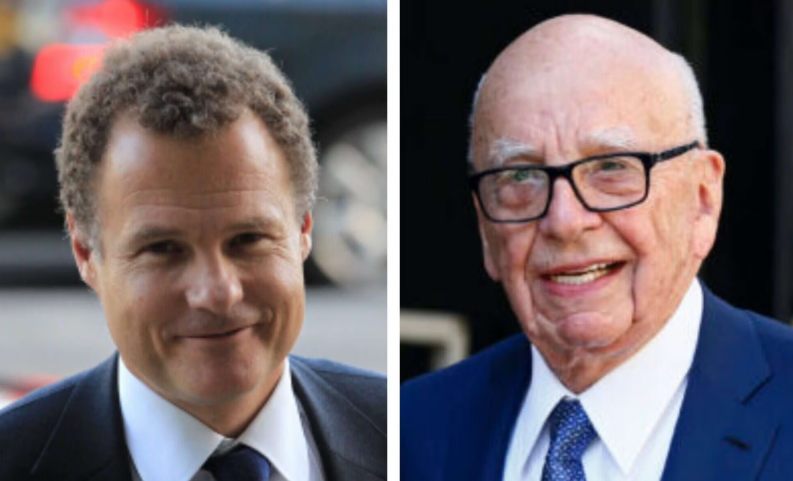
As Rupert Murdoch’s dominance in Britain fades, Lord Rothermere’s bid for the Telegraph titles signals a major shift in media power, raising questions over who will shape the UK’s political and editorial landscape next.
Guardian – Imran Malik – December 22, 2025
For decades, one name has dominated any serious conversation about media power in the English-speaking world: Rupert Murdoch. But in Britain, a quiet yet decisive shift is underway. With his renewed bid for the Telegraph titles, Lord Rothermere is positioning himself as the most influential media mogul of the next era, potentially eclipsing Murdoch’s once unrivalled leverage.
A Long Game Finally Pays Off
Unlike most media executives who plan in five-year cycles, the Rothermere family thinks in generations. Lord Rothermere, owner of the Daily Mail, first attempted to acquire the Daily Telegraph back in 2004. He failed then, a loss that reportedly delighted Murdoch, who feared the creation of a conservative media bloc powerful enough to rival his own.
Two decades later, Rothermere has returned. This time, timing and circumstance are on his side.
From Patient Proprietor to Strategic Power Player
The Telegraph titles, put up for sale again after failed ownership attempts, have given Rothermere the opening he has waited years for. At 57, he has reaffirmed his family’s deep-rooted commitment to British newspapers, even as many rivals have pivoted away from print.
Media analysts note that Rothermere is not driven by short-term profits alone. His passion lies in building a long-lasting media ecosystem serving centre-right audiences, one that could shape political narratives for decades to
Why This Deal Changes Everything
If successful, the acquisition would unite the Mail and the Telegraph under one roof, creating a conservative media powerhouse unseen in modern Britain. While Murdoch’s influence remains global, his grip on UK print has loosened. Rothermere’s move signals a rebalancing of power on Fleet Street, one rooted in legacy media rather than digital-first disruption.
Importantly, Rothermere insists on editorial autonomy. Former editors have repeatedly stated that the Rothermere family historically allows editors full control, intervening only when commercial performance fails. This hands-off philosophy has won loyalty inside newsrooms and sets him apart from more interventionist proprietors.
Politics, Power, and Growing Scrutiny
The bid has raised political and regulatory concerns. Critics warn that concentrating agenda-setting power in fewer hands could distort public discourse, especially as British politics drifts rightward. Supporters counter that a stronger Mail-Telegraph alliance could preserve quality journalism in an industry battered by digital giants and collapsing regional media.
Rothermere’s decision to take his company private in 2021 has made the pursuit easier. Free from shareholder pressure, he no longer needs to justify bold moves publicly, giving him flexibility Murdoch once enjoyed at his peak.
Beyond Print, Toward the Future
Rothermere is also eyeing growth beyond Britain, particularly in the United States, where he believes centre-right national titles face limited competition. He sees lessons in the Telegraph’s subscription model and believes the Mail can evolve beyond its advertising-heavy structure.
Despite speculation over funding and regulatory hurdles, insiders believe Rothermere is prepared to pay a premium to secure the titles, viewing them as a once-in-a-generation acquisition.
The End of an Era, or a New One?
This moment does not mark Murdoch’s disappearance from global media, but it does signal the end of his uncontested dominance in Britain. Lord Rothermere’s calculated patience, family legacy, and renewed ambition suggest a shift from the Murdoch age to something more traditional, more British, and deeply rooted in print culture.
Whether regulators approve the deal or not, one reality is already clear. The battle for Britain’s media soul is no longer Murdoch’s alone.








 American Dollar Exchange Rate