Professor sheds lights on the Iranians invisible in Hollywood and US news media

It will come as little surprise to anyone who has ever consumed Hollywood entertainment that when foreign elements (and by foreign, we mean ‘not Caucasian American’) enter the picture, the stereotypes fly high and proud. Russians are criminal masterminds, Mexicans exist in a perpetual yellow-orange universe, and Iranians follow the well-beaten path taken by the committed terrorist.
In light of the ongoing military action in Iran, connoisseurs of American news media will be aware that even fact-based organisations follow the stereotypical parameters laid out by the entertainment industry. At least, such is the view held by Iranian professor at Rutgers University in New Jersey, Hooshang Amirahmadi. During a recent conversation with The Hollywood Reporter, Amirahmadi explains how Iran has been consistently misrepresented in US television.
A skewed perception
“Iran, unfortunately, has been presented to Americans as a pariah state made up only of terrorists,” says Amirahmadi. ” It’s actually really a similar situation to what Iranian TV portrays vis-à-vis Israel — ‘they’re all terrorists.’ And unfortunately it doesn’t seem to ever get better. I’ve worked on US-Iran relations for more than 40 years and there’s still animus for Americans toward Iranians because of this.”
Founder of the transnational American Iranian Council, Amirahmadi is well versed on the subject of how the country of his origin is viewed through an American lens. As per the publication, he also ran the Center for Iranian Research and Analysis, visited Iran during its war with Iraq to try to bring about a resolution, has authored numerous books in English and Persian, and even (unsuccessful) submitted bids to run for president of Iran in 2005, 2013 and 2017.
Amirahmadi concedes that US networks are limited by the difficulties faced by reporters in gaining access to the ground and delivering direct news coverage to their audience.
“That’s obviously a challenge,” he admits, but adds that other issues are also at play. “Another big problem is that American universities produce very few Iran specialists. There used to be a lot, and now you have less, and those you do have tend to be American. They’re great, but we really need more who aren’t just giving the American view.”
Films to the rescue
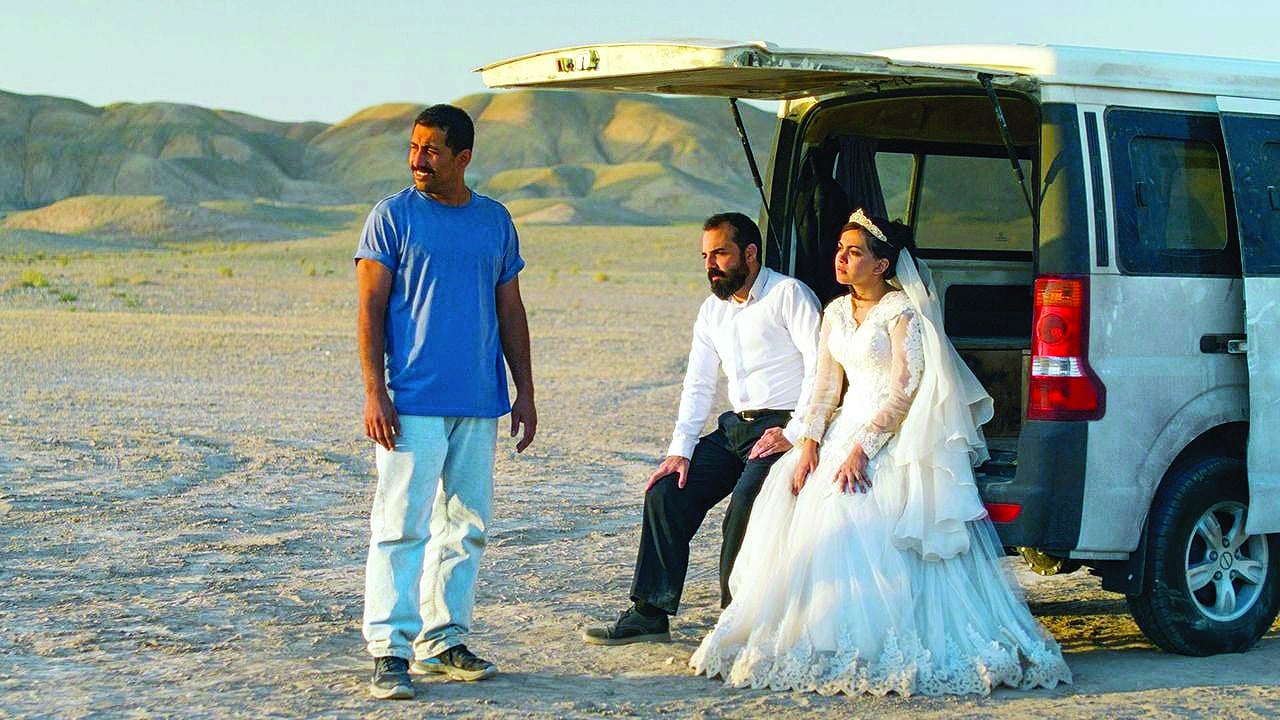
Fortunately for those on the lookout for authentic content, however, despite the difficulties of getting news coverage from the country, there are still Iranian filmmakers committed to getting their stories out for the world to see. This past Oscar season, for example, saw director Mohammad Rasoulof’s The Seed of the Sacred Fig, which showed a younger generation opposing the Iranian regime. In addition, Jafar Panahi, one of the most well-known dissident filmmakers in Iran, walked away with the Palme d’Or at Cannes in May for his political film It Was Just an Accident. But are these anti-regime, pro-democracy films an accurate representation of Iran?
“What people don’t remember is that Iran was the most pro-American country in the Middle East before the revolution,” Amirahmadi reminds readers. “Why would that change? People below 50 or 60 may not remember. But people above 50 or 60 do, and they can help the younger people.”
The professor adds that despite images perpetuated in American media about Iranians’ devotion to terrorism, the reality on the ground is different.
“I think the Iran street is actually very pro-American,” he muses. “It’s the regime that isn’t.”
Amirahmadi adds that for a true picture of anti-American sentiments, one needs look no further than Saudi Arabia, despite the friendly relations between the governments of both countries.
“If you want to see anti-American, go to the streets of Saudi Arabia, where 35 per cent of the people live below the poverty line,” he continues. “Not the palace. The palace, the so-called pro-American palace, that’s just billionaires having fun. Trust me, they are not pro-American. In 10 years, they’ll have the most anti-American country in the region. The average Iranian is 10 times more pro-American than the average Saudi.”
The ordinary Iranian



 American Dollar Exchange Rate