
Pakistan’s recent rise as a mediator in the Iran–US conflict is being seen as one of its most significant diplomatic successes in years, indicating a mix of strategic positioning and opportunistic diplomacy.
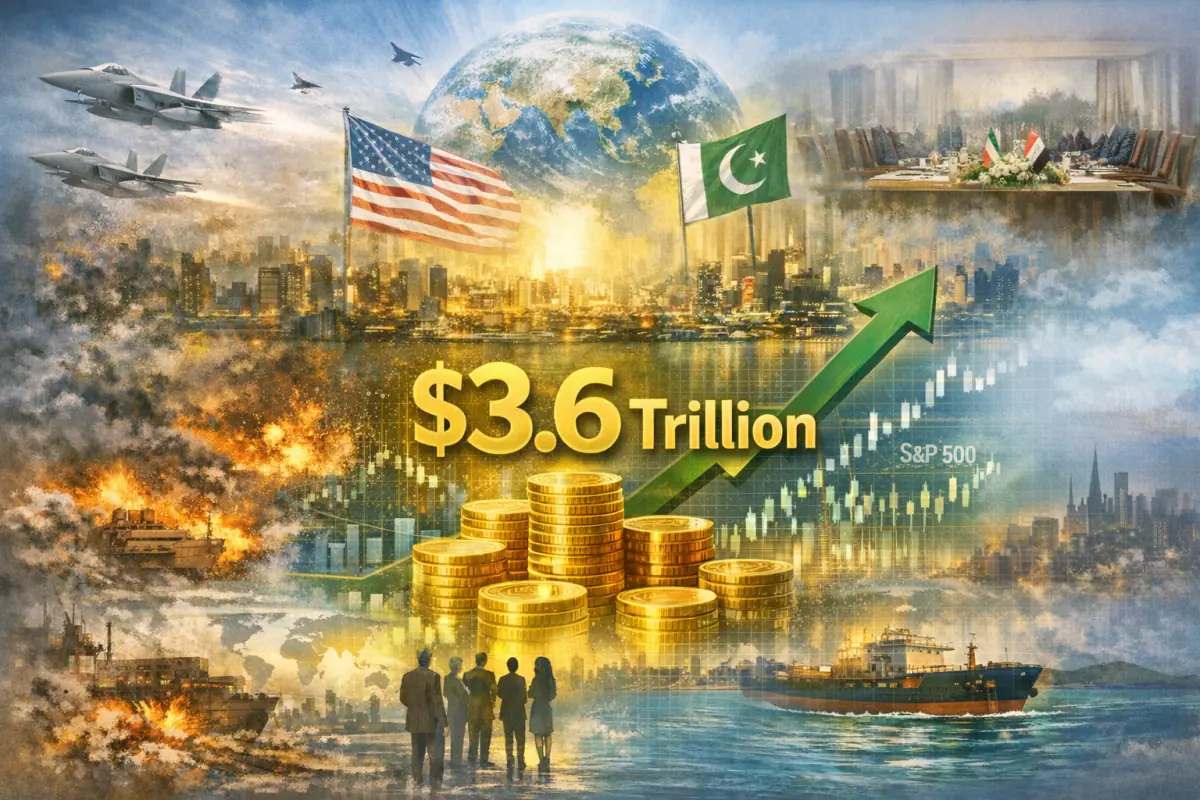
The South Asian nation, however, not only saved the globe from a geopolitical catastrophe but has also made the world richer by over $3 trillion.
This was stated by Atif Mian, a noted Pakistani-American economist and currently a professor of economics at Princeton University.
“On April 7, the world edged toward [US President] Trump’s 8pm ultimatum that ‘a whole civilisation will die tonight.’ By mid-afternoon, Polymarket gave less than a 5% chance for a ceasefire. But then in a flurry of last-minute diplomacy led by Pakistan’s PM Shehbaz Sharif, ceasefire odds shifted from near-impossibility to 100%, as both US and Iranian leadership publicly acknowledged the important role played by Pakistan,” said Atif in a post.
The economist noted that the sharp shift in probability of ceasefire from near-zero to certainty, “allows us to estimate cleanly the market value of Pakistan’s successful diplomacy”.
Atif shared that the S&P 500 rose by 2.9% around the ceasefire announcement, with a similar reaction from other global markets.
“Global markets represent about $125 trillion, so a 2.9% jump represents a gain of $3.6 trillion for the world. Pakistan helped create TEN times its own GDP for the world!” said Atif.
Trump says Iranians ‘willing to suffer’ for freedom
The assessment comes after Trump announced a two-week ceasefire in the six-week war on Tuesday, just hours before a deadline after which Trump had threatened to destroy Iran’s civilisation.
The ceasefire has halted US and Israeli air strikes on Iran. But it has not ended Iran’s blockade of the Strait of Hormuz, which has caused the biggest-ever disruption to global energy supplies, or calmed a parallel war between Israel and Hezbollah in Lebanon.
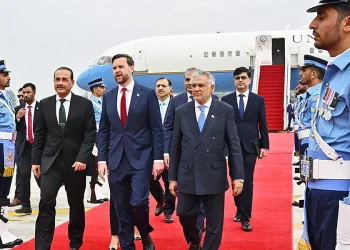
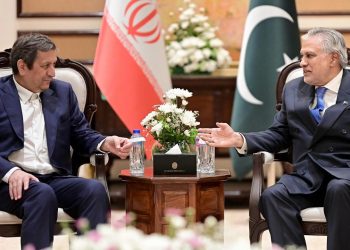
Meanwhile, Islamabad is hosting high-level US–Iran talks, including senior figures like the US Vice President JD Vance and Iran’s Foreign Minister Abbas Aragchi.
These are being described as the most significant US–Iran diplomatic engagement in decades.
“For me, the best part is not the trillions of dollars, but seeing Pakistan on the world stage as a peacemaker.
“I hope Pakistan runs with this new identity by promoting peace not only abroad, but also at home,” concluded Atif.



 American Dollar Exchange Rate