
Designed by Yasmeen Lari, one of Pakistan’s foremost architects, the PSO House in Karachi glimmers under the blistering sun. Inside the 10-storey glass-clad structure, hundreds of its employees could be seen working to carve out a new path for the oil marketing company (OMC) as it seeks to navigate a rapidly evolving energy transition.
Established in 1976, following the merger of Premier Oil Company Limited (POCL) and State Oil Company Limited (SOCL), the country’s largest OMC, Pakistan State Oil (PSO), remains a vital cog in the country’s energy infrastructure.
The listed company recorded a profit-after-tax (PAT) of Rs12.1 billion for the first half of the fiscal year 2025-26 (1HFY26) ended December 31, 2025, and maintained its leadership in the country’s white oil segment with a 42.2% market share, along with its near-total dominance in Pakistan’s aviation sector with a 99% market share in the jet fuel segment.
However, the company does not want to remain merely an oil retailer and is actively pursuing its transformation into a diversified energy provider in Pakistan.
Among a list of initiatives, PSO plans to install 40 to 50 electric vehicle (EV) charging stations across the country this year, driven by environmental, social and governance (ESG) principles.
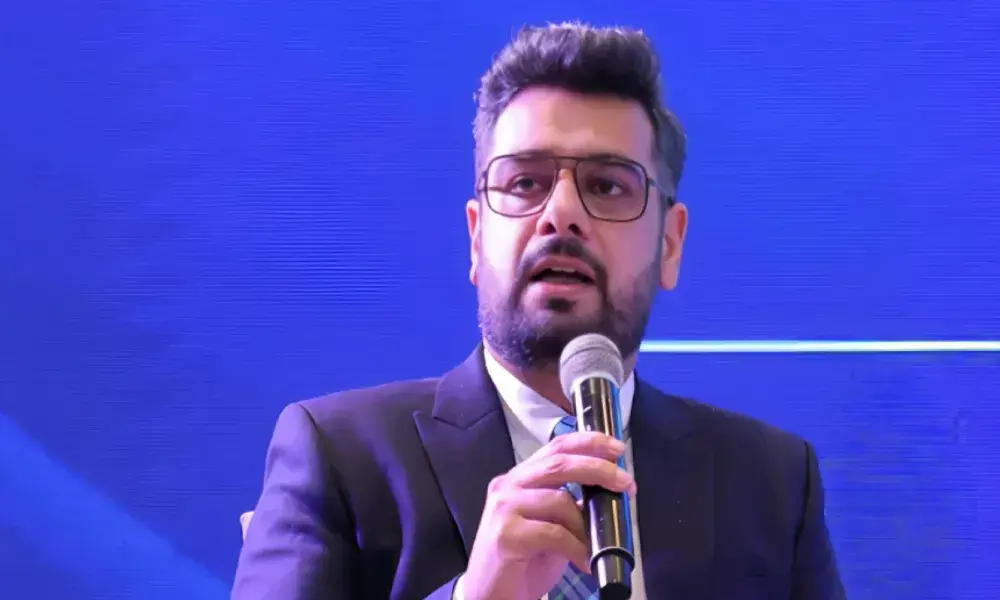
In an exclusive interview with media, PSO’s Head of ESG, Farrukh Ahmad, said while Pakistan’s geography makes it vulnerable to climate-induced disasters, the energy price hike has been a major factor driving solarisation in the country.
“We are an energy producer, not restricted to oil retail,” Ahmad stated.
The official acknowledged that EV adoption in Pakistan is expected to remain slow due to uncertainties over resale value, evolving battery technology and limited component availability.
However, conventional autos will coexist with EVs for the foreseeable future, he maintained, similar to the power grid, where renewables are expanding but the plant’s base-load power still relies on traditional energy sources, i.e. fossil fuels.
As part of its diversification strategy, PSO has also entered the digital financial domain.
During the last financial year, PSO’s subsidiary, Cerisma (Pvt.) Limited, made steady progress towards achieving operational readiness as an Electronic Money Institution (EMI). After getting SBP approval, Cerisma commenced pilot operations in October 2025.
Also read: PSO aggressively building fuel stocks
Since then, the company has rolled out both consumer and merchant products, with consumer applications live on iOS and Play stores, and merchants being provided with RAAST-enabled QR codes.
On the infrastructure front, PSO, through its subsidiary PSO Renewable Energy (Private) Limited, has commissioned over 1 megawatt (MW) of renewable energy on its operational assets, including Zulfiqarabad Terminal, Machike Terminal and three company-operated retail outlets.
The renewable subsidiary plans an additional 2.5 MW of renewable energy by July 2026 through the solarisation of Mehmoodkot, Faisalabad, Kemari, Tarujabba, Sihala, Chakpirana, Faqirabad, and Habibabad locations.
PSO believes that the deployment of renewable solutions not only contribute in neutralising of the carbon emissions across the portfolio but also help optimise the cost in a country “where energy is a major component of manufacturing competitiveness”.
Having over 16-year experience in diversified sectors, including energy and cement, Ahmad intends to implement the ESG principles in Pakistan’s largest OMC.
“The company aims to achieve organisation-wide ESG implementation within the next three years,” said Ahmad. “This involves incorporating sustainability metrics into business planning, vendor evaluation, and green procurement policies.”
“The biggest part of ESG is to calculate carbon footprint and how to reduce it, which is very complex.”
Ahmad noted that while the Securities & Exchange Commission of Pakistan (SECP) has introduced reporting guidelines and the State Bank of Pakistan (SBP) is implementing green banking regulations – targeting 15% of lending for green initiatives – the country faces a talent crunch.
“Approximately 80% of environmental professionals have exited Pakistan for Gulf countries, having a high demand for such professionals, which has created a shortage of qualified personnel,” he shared.
Beyond EV charging, PSO is also exploring alternate fuels, including Blue LPG initiatives in northern areas.
Talking about green hydrogen, Ahmad said, “safety remains the primary hurdle for hydrogen adoption. If that is resolved, hydrogen boom will be greater than solar”.
Also read: Pakistan State Oil: performance and outlook
Moreover, transitioning from Euro 2 to Euro 5 fuel standards is another step in reducing environmental impact, he shared.
According to the ESG chief, sustainability is no longer optional for large corporations.
“If we don’t evolve in ESG, we risk becoming irrelevant,” he said, emphasising that preferential lending and long-term profitability are now tied to environmental and governance performance.







 American Dollar Exchange Rate