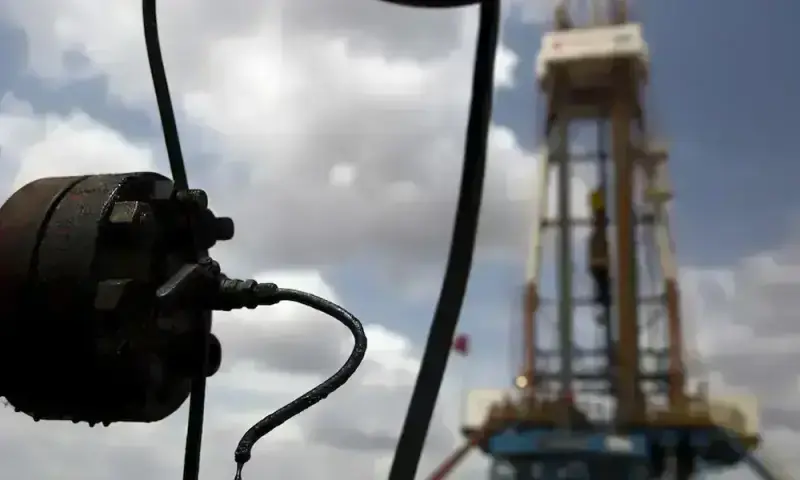

LONDON: Oil prices dipped on Monday, after Iran said it had “total control” following weekend violence, easing some concerns over supply from the OPEC producer, while investors also weighed efforts to resume oil exports from Venezuela.
Brent crude futures lost 22 cents, or 0.4%, to $63.12 a barrel by 0939 GMT while US West Texas Intermediate crude was at $58.87 a barrel, down 25 cents, or 0.4%.
Both benchmarks rose more than 3% last week in their biggest such rise since October, as Iran’s clerical establishment stepped up its crackdown on the biggest demonstrations since 2022, though protests escalated over the weekend.
The situation in Iran is “under total control” after the weekend spike in violence, Foreign Minister Abbas Araqchi said on Monday in remarks translated to English.
US President Donald Trump’s warning of action against Tehran should protests turn bloody motivated “terrorists” to target protesters and security forces in order to invite foreign intervention, he added. More than 500 people have been killed in Iran’s civil unrest, a rights group said on Sunday.
Trump is expected to meet senior advisers on Tuesday to discuss options for Iran, a US official told Reuters.
While a premium has formed in oil prices in recent days, the market is still underestimating the geopolitical risk from a wider Iran conflict that may affect oil shipments in the Strait of Hormuz, Saul Kavonic, head of energy research at MST Marquee.
“The market is saying, ‘Show me the disruption to supply’, before materially responding,” he added. Venezuela is expected to resume oil exports soon following the ouster of President Nicolas Maduro, as Trump said last week the government in Caracas is set to turn over as much as 50 million barrels of sanctioned oil to the United States.
That has set off a race among oil companies to find tankers and prepare operations to ship the crude safely from vessels and dilapidated Venezuelan ports, four sources familiar with the operations said.
In a White House meeting on Friday, Trafigura said its first vessel should load in the next week.
Oil prices are expected to stay rangebound unless there is a clear demand revival or a meaningful supply disruption, said Priyanka Sachdeva, senior market analyst at Phillip Nova.
She added that oil futures are increasingly pricing in an oversupply narrative as the market moves into 2026.
Investors are also watching the risk of disruptions in supply from Russia, amid Ukraine’s attacks targeting its energy facilities and the prospects of tougher US sanctions on Russian energy.






 American Dollar Exchange Rate