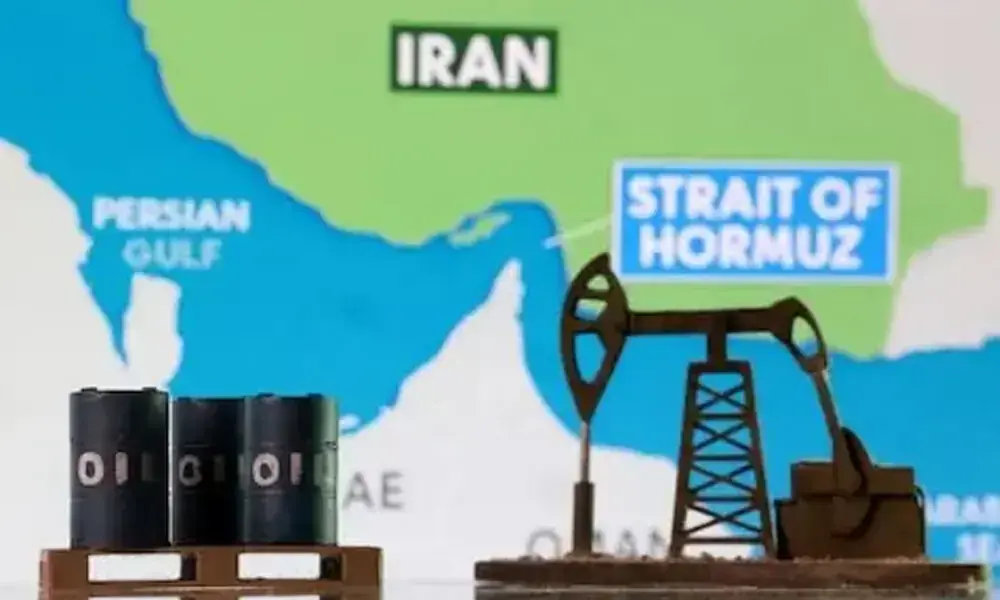

LONDON: Oil remained within sight of multi-month highs on Wednesday as the U.S.-Israeli war on Iran disrupted Middle East energy flows, although prices pared gains after a report that Iranian operatives sought talks with the U.S. to end the conflict.
The New York Times reported operatives from Iran’s Ministry of Intelligence signalled openness to the U.S. Central Intelligence Agency to talks on ending the war, citing officials briefed on the matter.
Brent crude was up 27 cents, or 0.3%, to $81.67 per barrel at 1438 GMT, after hitting a high of $84.48 and a low of $80.30 earlier in the session. On Tuesday, Brent closed at its highest since January 2025.
U.S. West Texas Intermediate crude was down 53 cents, or 0.7%, to $74.03, a day after settling at its highest since June.
“While flows through the Strait of Hormuz remain disrupted, market participants seem to expect a de-escalation of the conflict and a resumption of oil flows,” UBS analyst Giovanni Staunovo said.
“The market should, however, also focus on the risk of further production shut-ins if flows through the Strait remain disrupted, in my view.”
U.S. Defense Secretary Pete Hegseth said on Wednesday the U.S. was winning in the war against Iran and that the U.S. military could fight as long as needed.
Leadership council takes over: Israel says warplanes hit Tehran again after killing Khamenei
Israeli and U.S. forces have struck targets across Iran, prompting Iranian retaliatory strikes against energy infrastructure in a region that accounts for just under a third of global oil production.
Iraq, the second-largest crude producer in the Organization of the Petroleum Exporting Countries, has cut output by nearly 1.5 million barrels a day due to storage limits and the lack of an export route, officials told Reuters.
They said the country may have to shut nearly 3 million bpd of output within days if exports do not resume.
Iran has also targeted tankers in the Strait of Hormuz, through which about a fifth of the world’s oil and liquefied natural gas flow. Traffic through the Strait remains effectively closed.
U.S. President Donald Trump said the U.S. Navy could begin escorting oil tankers through the Strait if necessary, adding that he had ordered the U.S. International Development Finance Corporation to provide political risk insurance and financial guarantees for maritime trade in the Gulf.
Saudi Aramco seeks to reroute crude away from Strait of Hormuz, sources say
“While oil prices declined on the headline, we think the insurance proposal is likely in a concepts-of-a-plan stage and question whether there has been sufficient coordination with the multiple international tanker insurers,” RBC analyst Helima Croft said.
Countries and companies have begun seeking alternative routes and supplies of crude. India and Indonesia said they were looking for other supplies, while some Chinese refineries were shutting or moving up maintenance plans.
In the U.S., crude stocks rose by 5.6 million barrels last week, according to market sources citing American Petroleum Institute figures, well above the 2.3 million projected by analysts.
Official figures from the U.S. government are expected later on Wednesday.



 American Dollar Exchange Rate