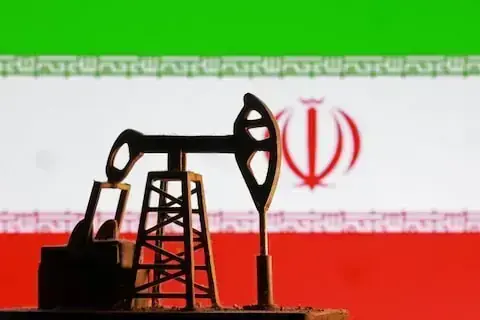

LONDON: Oil prices rose slightly on Monday, with investors weighing the market implications of upcoming U.S.-Iran talks aimed at de-escalating tensions against a backdrop of expected OPEC+ supply increases.
Brent crude futures gained 41 cents, or 0.6%, to $68.16 a barrel by 1508 GMT.
U.S. West Texas Intermediate crude was at $63.32 a barrel, up 43 cents. The contract will have no settlement on Monday, the Presidents’ Day holiday in the United States.
Fears of supply disruption from the U.S.-Iran tensions have helped keep oil prices stable, said PVM analyst Tamas Varga.
Trading is set to be muted also with markets in China, South Korea and Taiwan closed for Lunar New Year holidays.
Last week, both benchmarks posted weekly declines with Brent settling about 0.5% lower and WTI losing 1% after comments from U.S. President Donald Trump that Washington could make a deal with Tehran over the next month.
The two countries are due to hold a second round of talks in Geneva on Tuesday over Tehran’s nuclear programme.
In the run-up to the talks with Washington, mediated by Oman, Iran’s foreign minister met with the U.N. nuclear watchdog chief.
Iran is pursuing a nuclear agreement with the U.S. that delivers economic benefits for both sides, with energy and mining investments and aircraft purchases up for discussion, an Iranian diplomat was reported as saying.
The U.S. is preparing for the possibility of a sustained military campaign if the talks do not succeed, U.S. officials have told Reuters. Iran’s Revolutionary Guards have warned that in case of strikes on Iranian territory, they could retaliate against any U.S. military base.
“Increased Iranian tension could drive Brent to $80 a barrel. Fading tension would drop it back to $60 a barrel,” SEB analysts said in a note.
With U.S.-Iran tensions pushing up oil prices, the Organization of the Petroleum Exporting Countries and allies – together called OPEC+ – are putting a dampener on this bullishness by leaning toward a decision to resume output increases from April at their March 1 meeting following a three-month halt, Reuters reported.
Meanwhile, China’s Russian oil imports are set to climb for a third straight month to a new record in February after India slashed purchases on the back of U.S. pressure, according to traders and ship-tracking data.








 American Dollar Exchange Rate