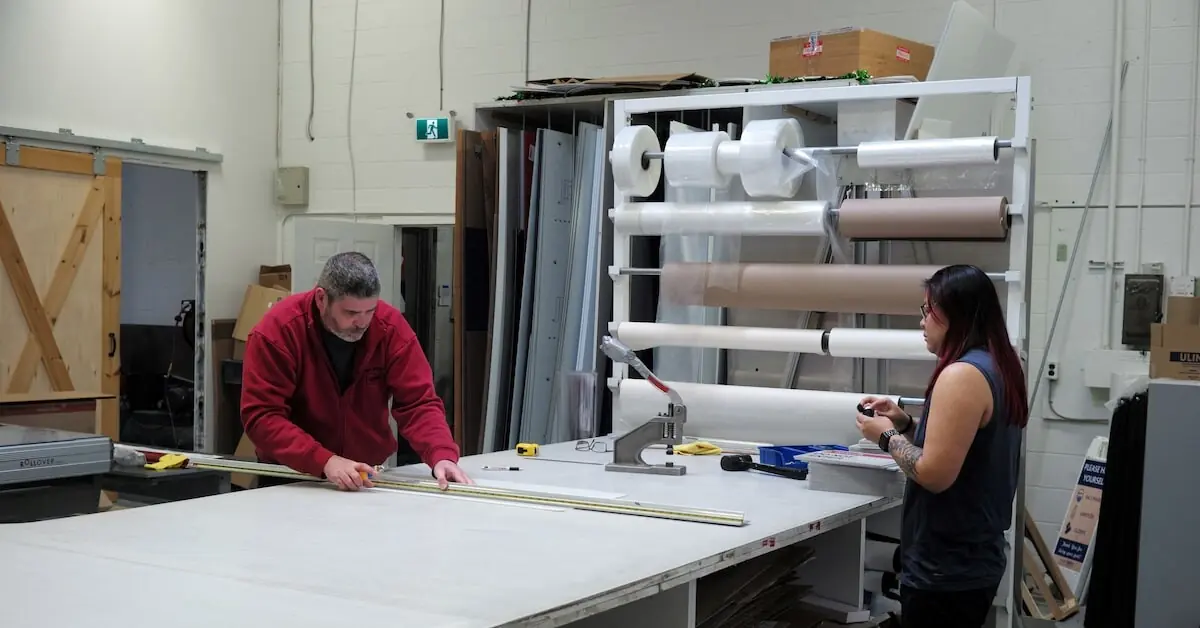
WINDSOR, Ontario: Windsor-based FASTSIGNS, a Canadian company that designs and installs custom business signs and graphics, last year endured its toughest year since the pandemic as orders from its core automotive clients dried up.
A new project launch this year brought some relief, but the company says customers are demanding longer payment terms, placing smaller orders, and bargaining harder on prices due to uncertainty tied to the United States-Mexico-Canada Agreement, which is up for review this year.
US President Donald Trump has repeatedly said he could scrap the trilateral trade deal he negotiated during his first term, calling it no longer relevant to the United States. US Trade Representative Jamieson Greer has described negotiations with Canada on the agreement – which exempts most Canadian goods from US levies – as challenging. The impact of the deal – and its uncertain future – is being most acutely felt in places like Windsor, which is among the Canadian cities most dependent on the US for its fortunes and reflects the broader unease facing the country’s economy. Its economy contracted 0.6 percent in the fourth quarter.
“CUSMA is very, very important,” said Jackie Raymond, co-owner of FASTSIGNS, referring to how the agreement is called in Canada. “It trickles down to every little business, right down to your barber shop and your nail shop, which will affect all of our customers.” Mexico has started formal negotiations with the US over the deal’s renewal, which are due to be completed by July 1. Canada has so far only held informal talks on the deal, which legally does not fall apart even if negotiations are not completed by that deadline.
A manufacturing hub teeming with thousands of small and specialized part makers, Windsor caters primarily to car companies and equipment manufacturers locally or across the river from Detroit, America’s automotive capital.
In Canada, it is one of the cities most exposed to Trump’s tariffs on steel, aluminum and autos. Its economy has been on a roller-coaster ride for the past year as Trump went back and forth on tariffs, though most Canadian goods have ultimately retained tariff-free access under USMCA.
Hundreds of the city’s small parts and equipment manufacturers, who thrive on close integration with Detroit’s auto industry, faced shrinking demand as order books dried up.
Manufacturing accounts for nearly a quarter of employment in the Windsor-Essex region comprising Windsor and surrounding municipalities. About 90 percent of the city’s exports cross the border, often multiple times during production. Overall, the US accounts for about 68 percent of Canada’s exports.
“When Donald Trump… does make a threat, we feel it first, and we feel it hardest,” said Ryan Donally, CEO of the Windsor-Essex Chamber of Commerce.
The chamber, which represents 750 local businesses employing over 40,000 employees, said companies paused investments, delayed production, and cut jobs at the height of the tariff uncertainty last year.
That pushed the region’s unemployment rate above 11 percent in June – the highest among major Canadian cities.
As Trump exempted USMCA-compliant exports from Canada from tariffs in March last year, Windsor partly regained its footing.
Earlier this year, carmaker Stellantis NV added a third shift at its local plant, and LG Energy Solution said it is building a battery facility, boosting job prospects. But uncertainty still drags on business confidence.
“So long as the CUSMA relationship exists, Windsor is going to be okay,” Donally said. “Should that erode somehow … that’s where the challenges come.”

WINDSOR, Ontario: Windsor-based FASTSIGNS, a Canadian company that designs and installs custom business signs and graphics, last year endured its toughest year since the pandemic as orders from its core automotive clients dried up.
A new project launch this year brought some relief, but the company says customers are demanding longer payment terms, placing smaller orders, and bargaining harder on prices due to uncertainty tied to the United States-Mexico-Canada Agreement, which is up for review this year.
US President Donald Trump has repeatedly said he could scrap the trilateral trade deal he negotiated during his first term, calling it no longer relevant to the United States. US Trade Representative Jamieson Greer has described negotiations with Canada on the agreement – which exempts most Canadian goods from US levies – as challenging. The impact of the deal – and its uncertain future – is being most acutely felt in places like Windsor, which is among the Canadian cities most dependent on the US for its fortunes and reflects the broader unease facing the country’s economy. Its economy contracted 0.6 percent in the fourth quarter.
“CUSMA is very, very important,” said Jackie Raymond, co-owner of FASTSIGNS, referring to how the agreement is called in Canada. “It trickles down to every little business, right down to your barber shop and your nail shop, which will affect all of our customers.” Mexico has started formal negotiations with the US over the deal’s renewal, which are due to be completed by July 1. Canada has so far only held informal talks on the deal, which legally does not fall apart even if negotiations are not completed by that deadline.
A manufacturing hub teeming with thousands of small and specialized part makers, Windsor caters primarily to car companies and equipment manufacturers locally or across the river from Detroit, America’s automotive capital.
In Canada, it is one of the cities most exposed to Trump’s tariffs on steel, aluminum and autos. Its economy has been on a roller-coaster ride for the past year as Trump went back and forth on tariffs, though most Canadian goods have ultimately retained tariff-free access under USMCA.
Hundreds of the city’s small parts and equipment manufacturers, who thrive on close integration with Detroit’s auto industry, faced shrinking demand as order books dried up.
Manufacturing accounts for nearly a quarter of employment in the Windsor-Essex region comprising Windsor and surrounding municipalities. About 90 percent of the city’s exports cross the border, often multiple times during production. Overall, the US accounts for about 68 percent of Canada’s exports.
“When Donald Trump… does make a threat, we feel it first, and we feel it hardest,” said Ryan Donally, CEO of the Windsor-Essex Chamber of Commerce.
The chamber, which represents 750 local businesses employing over 40,000 employees, said companies paused investments, delayed production, and cut jobs at the height of the tariff uncertainty last year.
That pushed the region’s unemployment rate above 11 percent in June – the highest among major Canadian cities.
As Trump exempted USMCA-compliant exports from Canada from tariffs in March last year, Windsor partly regained its footing.
Earlier this year, carmaker Stellantis NV added a third shift at its local plant, and LG Energy Solution said it is building a battery facility, boosting job prospects. But uncertainty still drags on business confidence.
“So long as the CUSMA relationship exists, Windsor is going to be okay,” Donally said. “Should that erode somehow … that’s where the challenges come.”







 American Dollar Exchange Rate