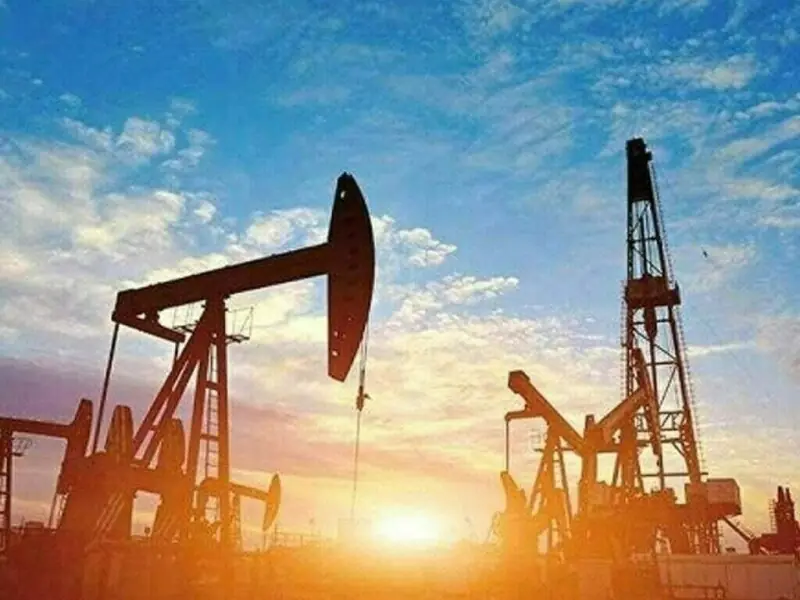

ISLAMABAD: Pakistan can unlock billions of barrels of untapped oil and gas reserves through modern AI-supported exploration techniques that allow deeper, faster, and more accurate identification of resources, speakers said at the 2nd International Oil and Gas Conference 2025 here on Monday.
They said Pakistan’s onshore and offshore basins hold enormous potential that remains underexplored, and technology can help close the growing gap between supply and demand.
Delivering the keynote address to the conference, Kuwait Petroleum Country Manager Ali Taha Al Temimi, said that Pakistan’s domestic supply no longer meets national energy needs and the country is forced to rely heavily on imported fuel.
He said Pakistan currently produces a maximum of around four billion cubic feet of gas a day, which is far below the country’s demand.
He maintained that tight gas, shale gas, and deeper reservoirs offer significant new opportunities, and an AI-assisted analysis of geological data can speed up discovery and reduce the high costs of drilling.
The conference was organised by Energy Update in collaboration with the Oil and Gas Regulatory Authority (OGRA) and attended by leading national and international companies, policymakers, and industry experts.
Earlier in his welcome address, Energy Update’s Managing Director and Chairman Organising Committee, M Naeem Qureshi, said the conference brings together leading experts and innovators to discuss challenges and opportunities in Pakistan’s oil and gas sector.
He said Energy Update has played a key role in promoting dialogue and awareness in the national energy industry for almost two decades and thanked the OGRA, OCAC, and Nimex Petroleum Group, along with sponsors including PARCO, Pakistan Petroleum Limited, OGDCL, EngroVopak Terminal Limited, ILF Consulting Engineers, and SSGC LPG, for supporting the event.
Chief Guest Ali Taha Al Temimi told participants that Pakistan’s oil and gas reserves are depleting while population and consumption continue to rise. He said that Pakistan may have between ten and twenty billion barrels of equivalent oil potential in mature basins, along with 35 to 70 trillion cubic feet of tight gas and 95 to 105 trillion cubic feet of shale gas in the lower Indus Basin.
He said modern seismic imaging and the AI-supported geological models can help Pakistan explore deeper stratigraphic layers, which remain untouched.
He said Pakistan’s offshore area covers more than 282,000 square kilometres, but only eighteen wells have been drilled so far.
“This is extremely low for a region of this size and offshore Pakistan may hold between six and seven billion barrels of oil equivalent in prospective resources”, he said, adding that a single major offshore success can draw global companies to Pakistan in the same way Namibia’s offshore discoveries triggered international interest.
Joint Secretary Petroleum Shehbaz Tahir told the conference that the government has introduced reforms to stabilise the energy sector.
He said that the LNG-related challenges remain, but domestic LNG-based connections have now been opened. He added that Pakistan is working with Azerbaijan and other countries on the development of the White Oil Pipeline.
The conference featured presentations by senior professionals, including Pakistan Petroleum Limited General Manager Exploration and Core Business Development Arshad Palekar, Pak Arab Refinery Limited Head of Exploration Sohail Hashmi, and Attock Refinery General Manager Saleem Anwar, who discussed refinery challenges, supply pressures, and the need for new exploration.
Apex Energy Chief Executive RaziuddinRazi and Barrister Sarah Kazmi also addressed the gathering.
A special panel on gaseous fuels, LPG, natural gas and LNG was moderated by Moin Qazi of Nimex Petroleum Group and included Rahil Ihsan Patafi from OGRA, Jawwad Ali Khan from SSGC LPG, ShaherYar Bhatti of Kuwait Petroleum and Irfan Khokhar, Chairman of the LPG Distributors Association, Zain UlAbdiden, Member Oil, OGRA, and Khalid Mustafa, senior journalist covering the energy sector.
The energy specialists on the panel recalled that Pakistan had signed contracts to import RLNG solely for operating some power plants in Punjab to help overcome the national energy crisis.
They noted, however, that these LNG-fired plants were now largely redundant due to the growing availability of indigenous energy resources, particularly Thar coal, for power generation.
The experts stressed that RLNG should instead be made readily available to industries for operating their captive power plants, ensuring an uninterrupted electricity supply, and supporting locally generated power.
They also underscored the need for broad-based reforms to ensure the efficient utilisation of surplus RLNG currently being imported into the country.
The panellists further highlighted the significance of LPG for remote and rural communities where pipelined natural gas cannot be supplied for domestic heating and cooking. They called for strict enforcement of safety regulations governing the use and transportation of LPG to protect end-consumers.
The panel discussed stabilising supply, market distortions, and the need for balanced policies.
Speakers said Pakistan’s growing population, shrinking reserves, and widening energy gap require immediate action.
They urged rapid investment in exploration, faster approvals, stronger private sector participation, and consistent policies to help Pakistan achieve long-term energy security.
They said that AI-supported exploration and offshore drilling can reshape Pakistan’s energy future if backed by political commitment and investor confidence.
Copyright media, 2025







 American Dollar Exchange Rate