

In a move aimed at reducing government expenditures and promoting austerity, Pakistan government announced on Monday an immediate ban on the use of high-octane fuel in all official vehicles.
The decision followed a recent increase in petroleum levy on high-octane fuel by Rs200 per litre.
The new directive strictly prohibits government departments from using high-octane fuel at public expense.
“If the use of high-octane fuel becomes unavoidable for any government vehicle, the cost must be borne personally by the user rather than the state,” the Prime Minister Office (PMO) said.
The decision was part of broader cost-cutting measures introduced by the government, it added.
Earlier, the government also annouced a 50% reduction in fuel usage for official vehicles, and grounded nearly 60% of the government fleet.
All federal departments, authorities, and subordinate institutions were directed to ensure immediate and full compliance with the new policy.
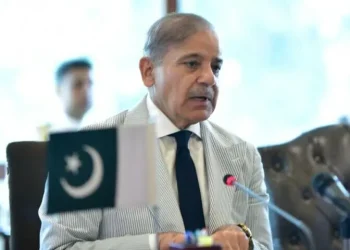
Prime Minister Shehbaz Sharif earlier this month announced sweeping austerity and energy conservation measures, including a four-day workweek for government offices, as Pakistan braces for the potential economic impact of the ongoing Middle East conflict.
Oil prices swung between gains and losses on Monday as investors weighed rising US and Iranian threats over energy facilities against the release of millions of barrels of seaborne Iranian oil after Washington temporarily removed sanctions.
Brent crude futures rose 65 cents to $112.84 a barrel by 0446 GMT.
US West Texas Intermediate was at $98.75 a barrel, up 84 cents.
Iran would retaliate to an attack on its electricity sector by targeting Israel’s power plants as well as power plants supplying US bases with electricity in regional countries, a statement by the Revolutionary Guards on Monday said.
On Saturday, US President Donald Trump warned that Iranian power plants would be targeted if Tehran failed to “fully open” the Strait of Hormuz to all shipping within 48 hours.




 American Dollar Exchange Rate