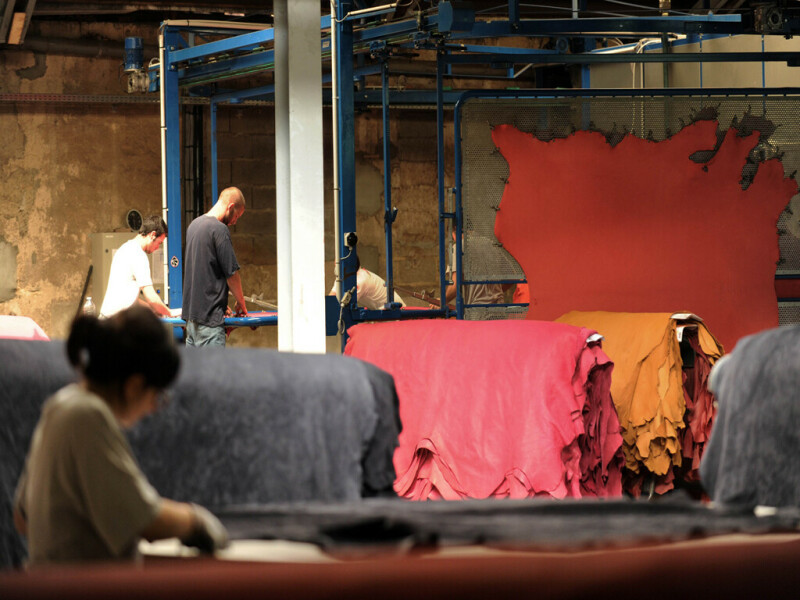
Pakistan’s leather industry has proposed lowering of customs duties on the import of chemicals used in leather manufacturing, saying it will help make the sector regionally competitive and viable, it was learnt on Wednesday.
Hamid Arshad Zahur, Central Chairman of the Pakistan Tanners Association (PTA), proposed to reduce customs duty from 20% to 16%, and Additional Customs Duties (ACD) from 4% to 2% across all chemical imports.
The development comes as Muslims around the world are to celebrate Eid-ul-Adha this week. In Pakistan, the first day of Eid will fall on Saturday, June 7.
According to Zahur, around 40% of Pakistan’s total leather production is sourced through sacrifice of animals during Eid-ul-Adha.
Sharing statistics, PTA central chairman said tanners received around 0.7 million animal hides, including 4.5 million goats, 2.5 million cows, 0.5 million sheep, and 25,000 camels last year.
The total value of the collected hides was estimated at Rs10 billion, he said.
Zahur further stated that around 25% of the hides, worth approximately Rs4 billion, were spoiled due to “mishandling and the failure to preserve them with salt in a timely manner”.
“Tanners have been urging both the federal and provincial governments to establish proper abattoirs to prevent the wastage of hides,” he said.
“The country lost hides worth Rs4 billion due to improper handling, which constitutes 40% of total local production.”
PTA central chairman emphasised that the government should establish centralised slaughterhouses for carrying out religious sacrifices similar to other Muslim countries such as Saudi Arabia, Malaysia, Türkiye, Indonesia, and others.
In its budget proposals, PTA requested to keep the export sector under the original Fixed Tax Regime, but to increase the turnover tax from 1% to 1.5% to increase government revenue.
Eid-ul-Adha 2025: trade peaks at Asia’s largest cattle market in Karachi
The leather sector is normally working at a 4-8% profit margin in general and hence a 1.5% turnover tax will actually be a net 25% tax on profit and in line with the Federal Board of Revenue’s (FBR) revenue generation targets, according to the PTA.
Zahur urged not to bring the export sector under the final tax regime.
He opposed the proposal to apply sales tax at the import of raw materials under the Export Facilitation Scheme (EFS) in the next budget.
“This step by the FBR/Ministry of Finance will totally negate the basic principal of no duty, no drawback under which the EFS was originally developed,” he said.
“One wrong has been done last year by imposing sales tax on domestic sales under EFS and it will be a second wrong to impose sales tax on import of raw material under the EFS, going forward.
“This will lead to a cash flow crunch, defeat the very purpose of the EFS and be detrimental in increasing the exports any further,” PTA official said.
He urged the government to bring the EFS back to its original form as on June 30, 2024, whereby purchase of domestic and imported raw materials under EFS was exempt from any duties or taxes.
Meanwhile, PTA suggested to bring down the rate of sales tax down to 17% in the next budget from the current 18%. It also proposed minimum tax threshold for salaried individuals at Rs1.2million per annum.

Pakistan’s leather industry has proposed lowering of customs duties on the import of chemicals used in leather manufacturing, saying it will help make the sector regionally competitive and viable, it was learnt on Wednesday.
Hamid Arshad Zahur, Central Chairman of the Pakistan Tanners Association (PTA), proposed to reduce customs duty from 20% to 16%, and Additional Customs Duties (ACD) from 4% to 2% across all chemical imports.
The development comes as Muslims around the world are to celebrate Eid-ul-Adha this week. In Pakistan, the first day of Eid will fall on Saturday, June 7.
According to Zahur, around 40% of Pakistan’s total leather production is sourced through sacrifice of animals during Eid-ul-Adha.
Sharing statistics, PTA central chairman said tanners received around 0.7 million animal hides, including 4.5 million goats, 2.5 million cows, 0.5 million sheep, and 25,000 camels last year.
The total value of the collected hides was estimated at Rs10 billion, he said.
Zahur further stated that around 25% of the hides, worth approximately Rs4 billion, were spoiled due to “mishandling and the failure to preserve them with salt in a timely manner”.
“Tanners have been urging both the federal and provincial governments to establish proper abattoirs to prevent the wastage of hides,” he said.
“The country lost hides worth Rs4 billion due to improper handling, which constitutes 40% of total local production.”
PTA central chairman emphasised that the government should establish centralised slaughterhouses for carrying out religious sacrifices similar to other Muslim countries such as Saudi Arabia, Malaysia, Türkiye, Indonesia, and others.
In its budget proposals, PTA requested to keep the export sector under the original Fixed Tax Regime, but to increase the turnover tax from 1% to 1.5% to increase government revenue.
Eid-ul-Adha 2025: trade peaks at Asia’s largest cattle market in Karachi
The leather sector is normally working at a 4-8% profit margin in general and hence a 1.5% turnover tax will actually be a net 25% tax on profit and in line with the Federal Board of Revenue’s (FBR) revenue generation targets, according to the PTA.
Zahur urged not to bring the export sector under the final tax regime.
He opposed the proposal to apply sales tax at the import of raw materials under the Export Facilitation Scheme (EFS) in the next budget.
“This step by the FBR/Ministry of Finance will totally negate the basic principal of no duty, no drawback under which the EFS was originally developed,” he said.
“One wrong has been done last year by imposing sales tax on domestic sales under EFS and it will be a second wrong to impose sales tax on import of raw material under the EFS, going forward.
“This will lead to a cash flow crunch, defeat the very purpose of the EFS and be detrimental in increasing the exports any further,” PTA official said.
He urged the government to bring the EFS back to its original form as on June 30, 2024, whereby purchase of domestic and imported raw materials under EFS was exempt from any duties or taxes.
Meanwhile, PTA suggested to bring down the rate of sales tax down to 17% in the next budget from the current 18%. It also proposed minimum tax threshold for salaried individuals at Rs1.2million per annum.



 American Dollar Exchange Rate