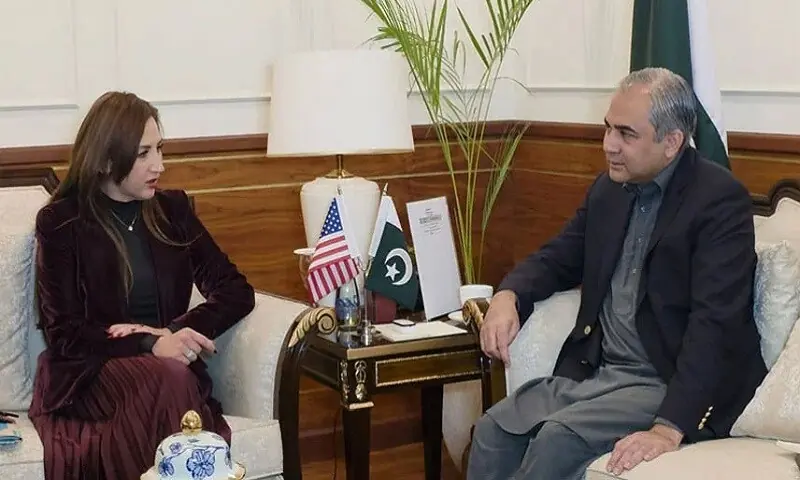

Pakistan and the United States agreed to intensify cooperation on security and immigration during a meeting in Islamabad on Saturday between Interior Minister Mohsin Naqvi and Acting US Ambassador Natalie Baker.
Naqvi and Baker discussed ways to enhance bilateral cooperation in counter-narcotics, security, and the prevention of illegal immigration.
The meeting also focused on strengthening collaboration in intelligence sharing, curbing drug trafficking, and expanding joint measures to stop illegal migration. The US envoy offered full technical assistance to Pakistan in combating narcotics and preventing unauthorised cross-border movement.
He said the identification of drug trafficking cases at airports remains a top priority, adding that state-of-the-art scanning machines were being installed at all major airports across the country.
Naqvi reaffirmed that Pakistan is strictly implementing a zero-tolerance policy against narcotics. Even today, drugs originating from Afghanistan are reaching dozens of countries and destroying young generations, he noted, welcoming US technical support to bolster Pakistan’s counter-narcotics capabilities.
On the prime minister’s directive, the National Narcotics Coordination Centre would be established soon, the interior minister informed the envoy.
Earlier in November, the two sides reaffirmed their commitment to strengthening bilateral ties, with Islamabad’s envoy describing it as an effort to build an “economically entrenched strategic partnership”.
After years of uneven engagement and recurring mistrust, both sides are now emphasising economic cooperation alongside traditional security ties.
In recent months, US officials have pointed to Pakistan’s potential role in regional stability and its capacity to contribute to economic and energy initiatives in South and Central Asia. The Trump administration has also encouraged American firms to explore investment opportunities in Pakistan’s infrastructure, minerals, and technology sectors.
For Islamabad, the new tone in Washington offers an opportunity to diversify its partnership with the US, while the Trump administration appears keen to reduce Pakistan’s overreliance on China. Officials in both capitals say they want to anchor the relationship in trade, investment, and long-term development — not merely in aid or counterterrorism cooperation.
In October, US Secretary of State Marco Rubio said that the US sees an opportunity to expand its strategic relationship with Pakistan, but added that the recent strengthening of ties between the two countries did not come at the expense of Washington’s relationship with New Delhi.
In September, PM Shehbaz Sharif also met with Mr Trump in the Oval Office, where they discussed regional security and cooperation along the lines of counter-terrorism.

 American Dollar Exchange Rate