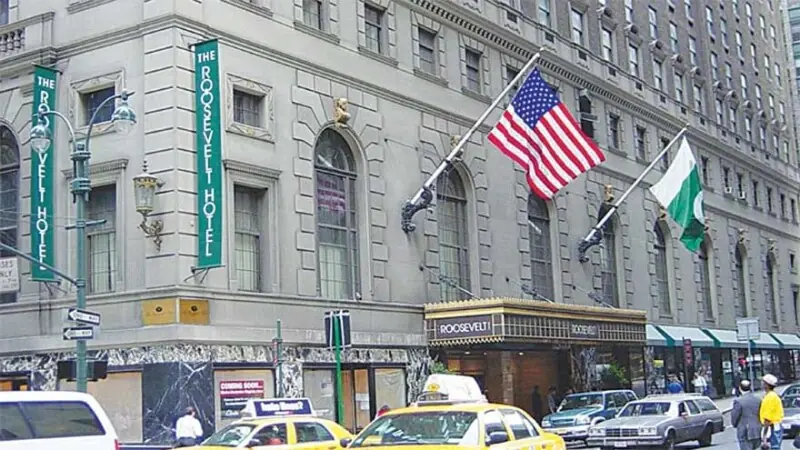

The Privatisation Commission (PC) Board on Friday took key decisions on several high-profile transactions, including House Building Finance Company Limited (HBFCL), the Roosevelt Hotel in New York, Islamabad International Airport (IIAP) and the second batch of power distribution companies (DISCOs).
At its 247th meeting, chaired by Adviser to the Prime Minister on Privatisation and PC Chairman Muhammad Ali, the Board recommended terminating the ongoing negotiated sale of a 51% stake in HBFCL after Pakistan Mortgage Refinance Company Limited (PMRCL) emerged as the sole bidder with an offer of Rs4.2 billion, well below the Rs13.55 billion reference price approved by the Cabinet Committee on Privatisation (CCoP).
The Board advised restarting the privatisation with the appointment of a new financial adviser.
For the Roosevelt Hotel, the Board annulled the process for hiring a financial adviser and directed issuance of fresh expressions of interest to ensure a more competitive process, after the pool of interested parties narrowed from seven to two following legal and technical screening.
The Board also recommended inclusion of IIAP in the privatisation programme and proposed a concession-based model through an open, competitive process.
READ MORE: No outright sale of Roosevelt Hotel, says privatisation chief
The move follows a ruling by the Cabinet Committee on Inter-Governmental Commercial Transactions (CCoIGCT) that ruled out a government-to-government mode on January 1, 2026. The Commission was authorised to negotiate directly with the Asian Development Bank (ADB) for its appointment as financial adviser for the transaction.
Additionally, the Board approved the formation of a transaction committee for the privatisation of Hyderabad Electric Supply Company (HESCO) and Sukkur Electric Power Company (SEPCO), which will assess deliverables submitted by Raiffeisen Investment, the financial adviser.
Reiterating its commitment to transparency, the PC Board said all transactions would be conducted through structured and competitive processes to maximise returns for the national exchequer.





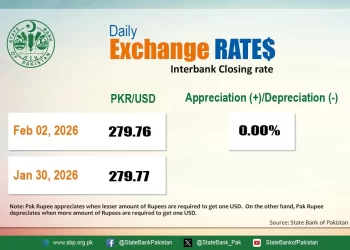

 American Dollar Exchange Rate