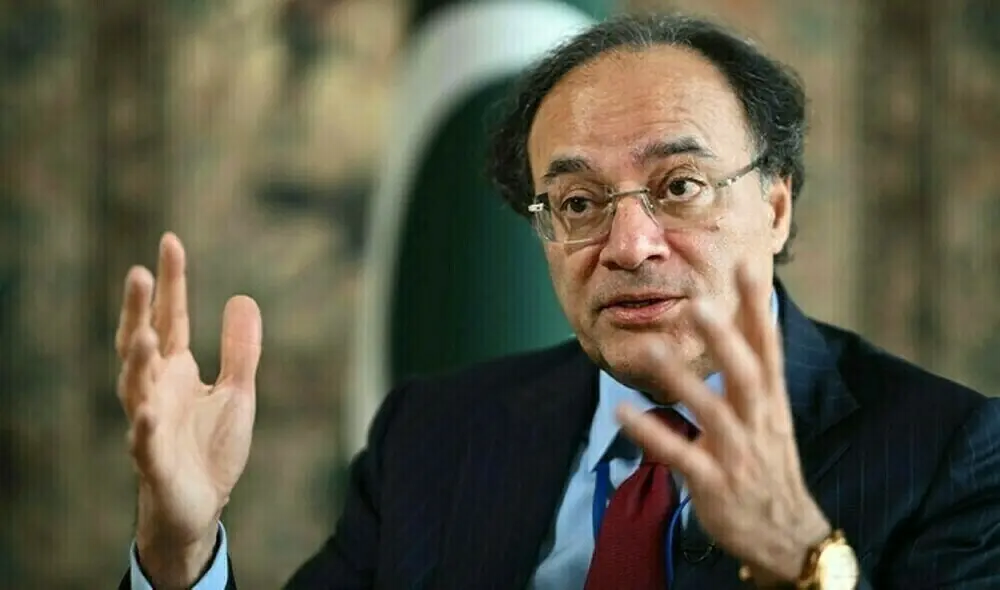

ISLAMABAD: Finance Minister Senator Muhammad Aurangzeb informed the National Assembly on Friday that the federal government allocated Rs590.29 billion to Gilgit-Baltistan in the form of current grants, development grants, and wheat subsidy from FY2020–21 to FY2025–26.
Responding to written questions from a member of the National Assembly, the minister said the centre has transferred an amount of Rs 453.79 billion for current and development grants and wheat subsidy to the Government of G-B for the last five years. He said the funds include Rs335.49 billion in current grants, Rs174.6 billion in development grants, and Rs80.20 billion as wheat subsidy during the period.
According to the year-wise details presented in the House, the federal transfers increased gradually over the years, with the current grant rising from Rs37 billion in 2020-21 to Rs80 billion in 2025-26, while development grants rising from Rs 25 billion in 2020-21 to Rs 36.5 billion and wheat subsidies were also increased from Rs 8.37 billion in 2020-21 to Rs 20 billion in 2025-26.
The finance minister further informed the Assembly that development grants accounted for about 29 percent of total federal expenditure for G-B during the period.
He said financial transparency and monitoring of spending are the responsibility of the G-B government, while the Finance Division releases current grants on a monthly basis. He said that receipts and expenditures are monitored through civil accounts prepared by the Accountant General’s office in G-B, while the State Bank provides daily cash balance updates to the Finance Division.
In another written replies to the question, Commerce Minister Jam Kamal Khan informed the House that Pakistan’s rice exports witnessed a sharp decline during the first half of FY2025-26 (July–December), falling from USD 1.83 billion to USD 0.97 billion, a drop of 46.7 percent.
Responding to a written question from a member of the House, the minister said export quantities also decreased by 36.6 percent, indicating that the decline was not merely cyclical but due to broader market pressures.
He said basmati rice exports fell by 32.3 percent in value and 33.8 percent in volume, mainly due to India’s re-entry into the global market after removing its Minimum Export Price (MEP) restriction. The move led to an influx of lower-priced Indian basmati, creating a supply glut in international markets.
According to the minister, Indian basmati has been offered at around USD 900 per metric ton, compared to USD 1,050–USD 1,275 per metric ton for Pakistani rice, reducing Pakistan’s competitiveness, particularly in price-sensitive Gulf markets such as the UAE.
Jam Kamal Khan said the government is aware of the declining export trend and has maintained active coordination with the private sector to explore measures to reverse the decline and improve Pakistan’s competitiveness in global rice markets.
He announced that the government has introduced the Rice Drawback of Local Taxes and Levies (DLTL) scheme to support exporters and improve Pakistan’s competitiveness in international markets.
According to the minister, the incentive for rice exports has been made effective from January 23, 2026. He said that under the scheme, exporters will receive a 9 percent drawback on basmati rice and 3 percent on non-basmati varieties.
He said the initiative aims to compensate exporters for local taxes and levies incurred during production and export, thereby encouraging higher shipments and strengthening Pakistan’s position in the global rice market.
The minister added that the scheme is being implemented through an automated application and disbursement system integrated with the Pakistan Single Window (PSW) platform. The digital mechanism is designed to ensure greater efficiency, transparency, and timely processing of payments to exporters.
Copyright media, 2026


 American Dollar Exchange Rate