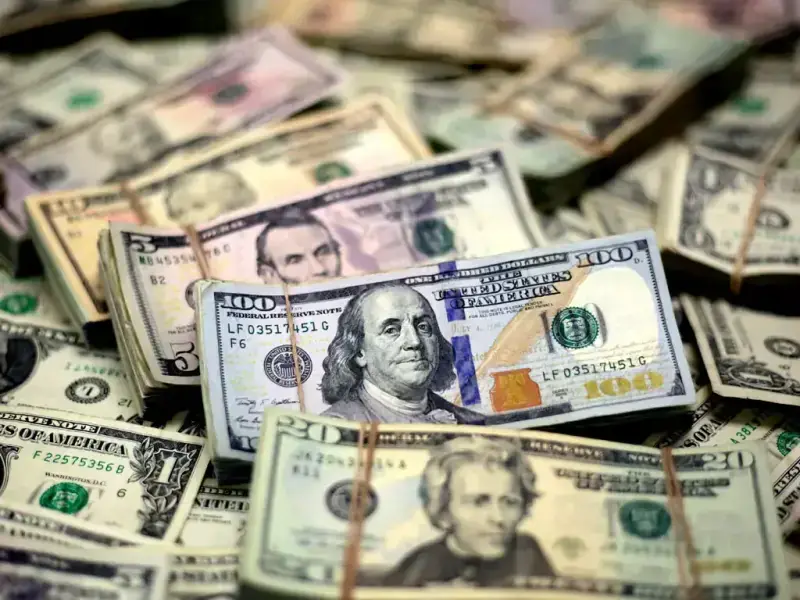

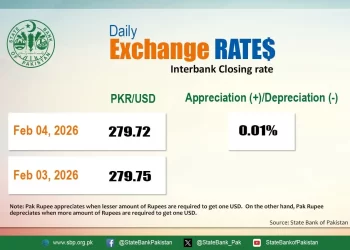
The Pakistani rupee registered marginal gain against the US dollar in the inter-bank market on Wednesday.
At close, the local currency settled at 280.20, a gain of Re0.01 against the greenback.
On Tuesday, the local unit closed at 280.21.
Internationally, the US dollar was headed for its worst annual performance in more than two decades on Wednesday as investors wagered the Federal Reserve would have room to cut rates further next year, even as some of its peers looked set to hike.
The greenback stayed on the back foot in Asia trade, with a solid US GDP reading failing to move the dial on the rate outlook, leaving investors pricing in roughly two more Fed cuts in 2026.
Against a basket of currencies, the dollar fell to a 2-1/2-month low of 97.767, and was on track to lose 9.9% for the year, which would mark its steepest annual drop since 2003.
The US dollar has had a tumultuous year, whipsawed by President Donald Trump’s chaotic tariffs, which sparked a crisis of confidence in U.S. assets earlier this year. His growing influence over the Fed has also raised concerns about its independence.
In contrast, the euro, which rose to a three-month high of $1.1806, is up just over 14% for the year thus far, putting it on track for its best performance since 2003.
The European Central Bank stood pat on rates last week and revised some of its growth and inflation projections, in a move that likely closes the door to further easing in the near term.
Traders have since responded by pricing in a slim chance of tighter policy next year, mirroring expectations for Australia and New Zealand, where the next moves are seen as likely to be hikes.
Oil prices, a key indicator of currency parity, rose for a sixth day on Wednesday supported by robust US economic growth and the risk of supply disruptions from Venezuela and Russia.
Brent crude futures climbed 17 cents, or 0.27%, to $62.55 a barrel by 0714 GMT, while US West Texas Intermediate crude added 20 cents, or 0.34%, to $58.58.
Both contracts have gained about 6% since December 16, when they plunged to near five-year lows.



 American Dollar Exchange Rate