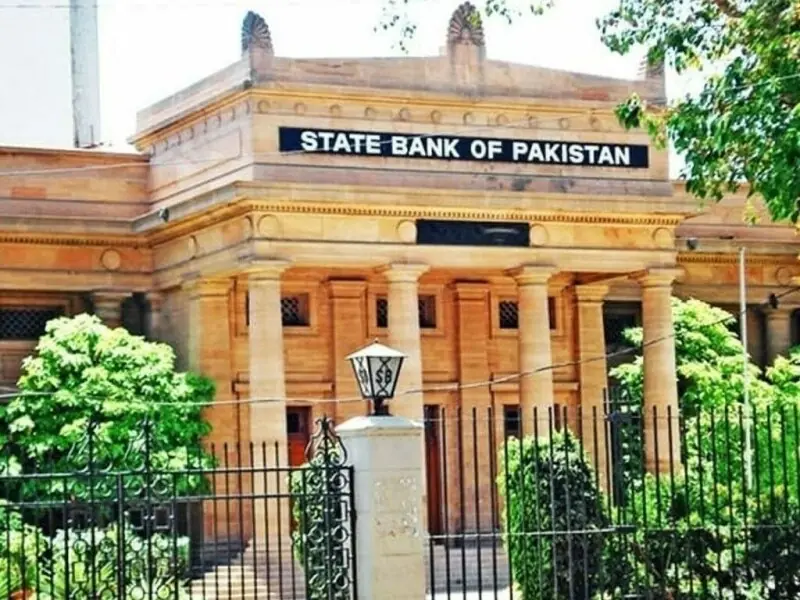

KARACHI: The State Bank of Pakistan (SBP) has been designated as the authority to prepare resolution strategy and play its role to deal with distressed and problem banks and safeguard financial stability and depositor interests on time, it was learnt on Monday.
“SBP has established ‘Financial Institutions Resolution Department’ (FIRD) for orderly resolution of distressed/ problem banks, Microfinance Banks (MFBs) and Development Finance Institutions (DFIs),” the central bank said in a notification.
The central bank directed financial institutions to provide information related to their operations, as “resolution planning is considered as an essential pre-requisite for preparing in advance for an orderly resolution of distressed banks.”
Banks were advised to prepare the first set of required information based on position as of December 31, 2025 and send a confirmation to SBP to this effect by April 30, 2026.
Further, banks were advised to update their required information at least annually or more frequently to reflect any changes in their business operations, group structure, or their material entities.
The timely provision of relevant information/data would serve as a key input for preparation of resolution plans.
Banks shall designate a senior level official, preferably the Chief Risk Officer (CRO) or Chief Financial Officer (CFO), under intimation to FIRD, who shall be responsible for internal coordination and submission of information as well as coordination with SBP on all resolution planning related matters, the notification reads.
A resolution plan and strategy for troubled banks may be “including resolution tools to apply, such as, bail-in of liabilities, reconstruction, amalgamation, use of bridge bank, etc,” according to guidelines on core information requirements for resolution planning.
It concludes with a resolvability assessment so as to identify and to address any impediments to the resolution of the bank. “Such impediments may include insufficient loss-absorbing capacity, inability to maintain operational continuity, inability to avoid disorderly early termination of financial contracts, etc.”
The central bank has sought key information from financial institutions on five broad categories including (1) deposits like retail, corporate and government deposits; (2) lending & loan servicing like corporate/commercial advances, SME advances, consumer advances and agriculture advances; (3) payments, clearing, custody & settlement like cash, retail and wholesale settlements; (4) wholesale funding markets like securities financing, wholesale lending and securities lending; and (5) capital markets & investments like debt and other securities, asset management and insurance.








 American Dollar Exchange Rate