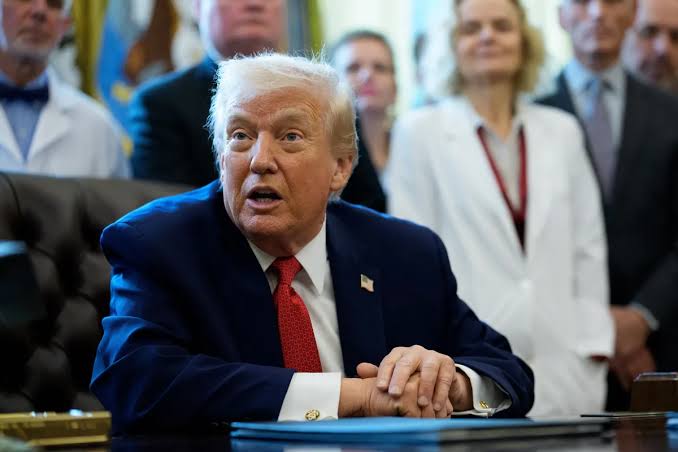
US President Donald Trump has approved a major change to America’s national drug policy. He has signed a new executive order that officially lowers the legal risk level of marijuana, changing how the federal government views the substance.

Under this order, marijuana will now be moved to Schedule III which is a category for drugs that have accepted medical uses and are considered to have a moderate to low chance of addiction.
In Schedule III, marijuana will share the same group as codeine-based painkillers, some hormone medicines, and anabolic steroids. These substances can be used under medical supervision, and although they carry some risks, they are not seen as extremely dangerous.
Before this decision, marijuana was labeled as a Schedule I drug. This category is reserved for substances that are considered highly unsafe with no medical value, such as heroin, LSD, and ecstasy.
Being in Schedule I meant that marijuana was treated as a very serious illegal drug at the federal level, even though many US states had already legalized it for medical or recreational use.
This change marks a historic shift in the United States. By moving marijuana to Schedule III, the government is officially recognizing that it has medical benefits and a much lower risk of dependence than previously claimed.
The new classification will make it easier for doctors and researchers to study marijuana, and it could lead to wider medical use across the country.
Another important impact is on business and banking. Until now, many cannabis companies could not easily access the US financial system because federal law still classified marijuana as illegal and high-risk.
With this new status, legal businesses may find it simpler to get bank accounts, loans, insurance, and investment opportunities.








 American Dollar Exchange Rate