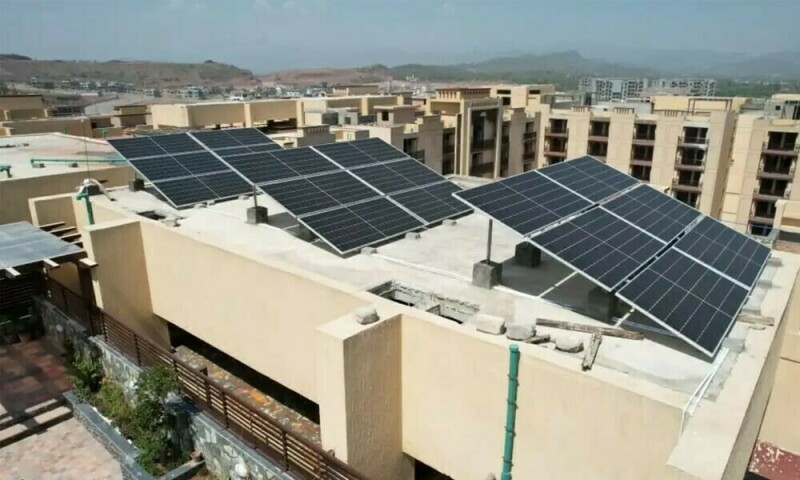

Solar net-metering capacity in Pakistan has jumped to 2,813 megawatts (MW) as of March 31, 2025, according to the Pakistan Economic Survey 2024-25, reflecting a 12% increase over the first nine months of the current fiscal year.
This represents a rise of over 300MW from the previous fiscal year, when the capacity stood at around 2,500MW, as per NEPRA’s State of the Industry Report 2024.
The 300MW jump in net-metering capacity is largely attributed to a sharp fall in solar panel prices and the financial incentives net-metering offers to consumers.
China exports more solar panels to Pakistan than to many G20 nations in 5 years: report
The system allows consumers to install rooftop solar panels, sell surplus power generated during the day to distribution companies (DISCOs), and purchase electricity at night — offsetting monthly bills and contributing to the national grid.
Experts say the expansion has also improved voltage stability and reduced transmission and distribution losses, showcasing tangible benefits to the power system.
Despite the growth, net-metering still accounts for a fraction of the total potential. Pakistan is estimated to have imported solar equipment capable of producing 20,000–22,000MW in recent years, most of which is installed off-grid — particularly in agriculture, residential, and industrial settings.
The surge in clean energy coincides with broader developments in the country’s power sector.
As of March 2025, Pakistan’s total installed electricity generation capacity reached 46,605MW, up 1.6% from 45,888MW a year earlier.
This includes the operationalisation of the 884MW Suki Kinari Hydropower Project, and progress on new solar, wind, and bagasse-based projects, as well as the termination of power purchase agreements (PPAs) with some independent power producers (IPPs).
Of the total capacity, 44.3% now comes from hydel, nuclear, and renewable sources, marking a continued shift away from thermal power, which now accounts for 55.7% of the energy mix.
Renewable energy data reveals that hydel sources contribute 24.4%, nuclear power 7.8%, and solar and wind (including net-metering) 12.2% to the installed capacity.
Meanwhile, Khalid Waleed, an energy expert at the Sustainable Development Policy Institute (SDPI), warned against proposed tariff reductions for net-metering.
From crisis to clean energy: Pakistan emerges as top solar market in 2024
The government is considering slashing the current Rs27 per unit buyback rate to Rs10, which Waleed argued would “disincentivise clean energy” and reverse recent gains. Instead, he recommended a phased reduction to Rs15-18 per unit to maintain investor and consumer interest.
The Indicative Generation Capacity Expansion Plan (IGCEP) 2022-31 set a target to add 3,420MW under net-metering by 2031. NEPRA believes this goal can be met — or even exceeded — if distribution companies avoid obstructing the ongoing rooftop solarisation momentum.







 American Dollar Exchange Rate