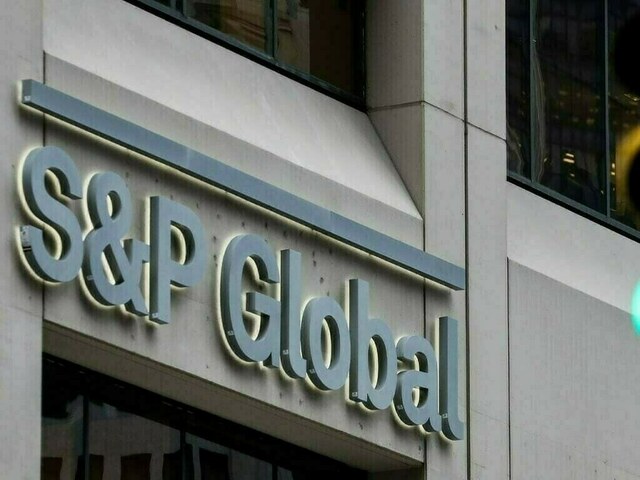
ISLAMABAD: The Standard and Poor’s (S&P) Global Ratings recommended Pakistan to stay the course, deepen the reform momentum, and focus on embedding permanence in macroeconomic stability, with international partners, while expressing readiness to support the country in achieving these objectives.
The Federal Minister for Finance and Revenue, Senator Muhammad Aurangzeb, along with his team, held a Zoom meeting on Friday with representatives of S&P Global Ratings as part of the ongoing Pakistan Sovereign Ratings Review. Aurangzeb briefed S&P on reform progress and economic stability outlook.
The finance minister presented a detailed overview of the government’s macroeconomic reform agenda and reaffirmed Pakistan’s commitment to achieving sustainable and inclusive economic growth by enhancing productivity and promoting exports.
He emphasised the continuity of reforms across key sectors including taxation, energy, state-owned enterprises (SOEs), privatisation, public finance management, rightsizing of government functions, and more active debt management strategies.
The finance minister noted that inflation and the current account deficit (CAD) had remained a good story throughout the year, contributing positively to overall economic stability. He also highlighted the achievement of surpluses in both the primary balance and the current account as major milestones, underscoring the improving fundamentals of Pakistan’s economy. He stated that the country’s external portfolio was well-managed, with foreign exchange reserves projected to reach $14 billion by the end of June, supported by upcoming institutional and trade inflows, strong remittances, and easing oil prices, all of which are helping reduce pressure on the external account.
He credited strict financial discipline and robust coordination between the federal and provincial governments for enabling the achievement of a primary surplus. The finance minister pointed to significant institutional reforms including the signing of a comprehensive National Fiscal Pact, operationalisation of the National Tax Council, and the imposition of agricultural income tax, reflecting a whole-of-government approach and a shared national resolve to improve resource efficiency, broaden the tax base, and ensure long-term inclusive growth.
He stated that the tax-to-GDP ratio was expected to reach 10.6 percent by the end of June, which would mark progress toward the government’s target of raising it to 13 percent by the conclusion of the 37-month Extended Fund Facility (EFF) with the International Monetary Fund (IMF). He added that the separation of the Tax Policy office from the Federal Board of Revenue (FBR) was part of a broader effort to align tax policymaking with economic value principles rather than administrative convenience.
The finance minister also shared insights from his recent visit to the United States for the World Bank/IMF Spring Meetings, during which he held over 70 meetings in six days with counterparts, Development Finance Institutions (DFIs), investment banks, multilateral and bilateral partners, rating agencies, think tanks, and media outlets.
He conveyed that the feedback received from these stakeholders consistently reflected appreciation and support for the structural reforms and macroeconomic stability achieved by Pakistan over the past 14 months. At the same time, there was a strong and unified recommendation for Pakistan to stay the course, deepen the reform momentum, and focus on embedding permanence in macroeconomic stability, with international partners expressing readiness to support the country in achieving these objectives.

ISLAMABAD: The Standard and Poor’s (S&P) Global Ratings recommended Pakistan to stay the course, deepen the reform momentum, and focus on embedding permanence in macroeconomic stability, with international partners, while expressing readiness to support the country in achieving these objectives.
The Federal Minister for Finance and Revenue, Senator Muhammad Aurangzeb, along with his team, held a Zoom meeting on Friday with representatives of S&P Global Ratings as part of the ongoing Pakistan Sovereign Ratings Review. Aurangzeb briefed S&P on reform progress and economic stability outlook.
The finance minister presented a detailed overview of the government’s macroeconomic reform agenda and reaffirmed Pakistan’s commitment to achieving sustainable and inclusive economic growth by enhancing productivity and promoting exports.
He emphasised the continuity of reforms across key sectors including taxation, energy, state-owned enterprises (SOEs), privatisation, public finance management, rightsizing of government functions, and more active debt management strategies.
The finance minister noted that inflation and the current account deficit (CAD) had remained a good story throughout the year, contributing positively to overall economic stability. He also highlighted the achievement of surpluses in both the primary balance and the current account as major milestones, underscoring the improving fundamentals of Pakistan’s economy. He stated that the country’s external portfolio was well-managed, with foreign exchange reserves projected to reach $14 billion by the end of June, supported by upcoming institutional and trade inflows, strong remittances, and easing oil prices, all of which are helping reduce pressure on the external account.
He credited strict financial discipline and robust coordination between the federal and provincial governments for enabling the achievement of a primary surplus. The finance minister pointed to significant institutional reforms including the signing of a comprehensive National Fiscal Pact, operationalisation of the National Tax Council, and the imposition of agricultural income tax, reflecting a whole-of-government approach and a shared national resolve to improve resource efficiency, broaden the tax base, and ensure long-term inclusive growth.
He stated that the tax-to-GDP ratio was expected to reach 10.6 percent by the end of June, which would mark progress toward the government’s target of raising it to 13 percent by the conclusion of the 37-month Extended Fund Facility (EFF) with the International Monetary Fund (IMF). He added that the separation of the Tax Policy office from the Federal Board of Revenue (FBR) was part of a broader effort to align tax policymaking with economic value principles rather than administrative convenience.
The finance minister also shared insights from his recent visit to the United States for the World Bank/IMF Spring Meetings, during which he held over 70 meetings in six days with counterparts, Development Finance Institutions (DFIs), investment banks, multilateral and bilateral partners, rating agencies, think tanks, and media outlets.
He conveyed that the feedback received from these stakeholders consistently reflected appreciation and support for the structural reforms and macroeconomic stability achieved by Pakistan over the past 14 months. At the same time, there was a strong and unified recommendation for Pakistan to stay the course, deepen the reform momentum, and focus on embedding permanence in macroeconomic stability, with international partners expressing readiness to support the country in achieving these objectives.






 American Dollar Exchange Rate