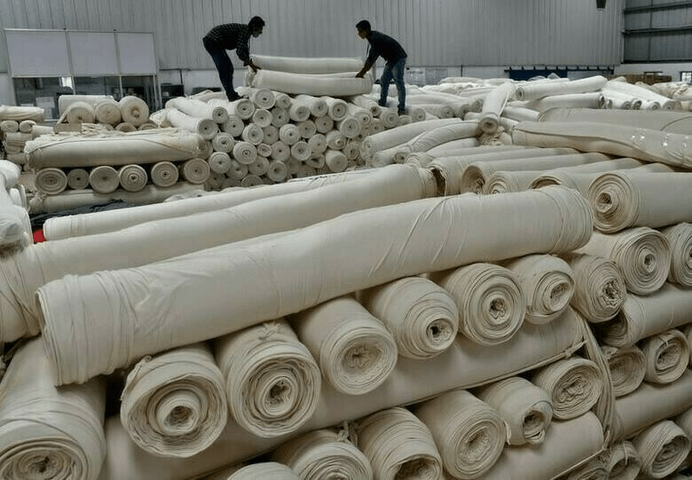

ISLAMABAD: The country’s textile exports have shown dismal performance during the first five months (July-November) 2025-26) as compared to the corresponding period of FY 2024-25.
According to Pakistan Textile Council’s (PTC) monthly report of the country’s textile and apparel exports, the textile sector remained the dominant contributor, with exports reaching USD 7.84 billion, representing a 2.8 percent growth over FY25 and accounting for approximately 61 percent of Pakistan’s total exports.
However, textile exports in November 2025 posted a 2.7 percent year-on-year decline, alongside an 11.7 percent month-on-month decrease.
Within textile and apparel exports, performance varied across product categories. Trend analysis of traditional textiles continued to show a persistent decline, with exports falling from USD 1,782 million in 2021–22 (July–November) to USD 1,276 million in 2025–26.
Textile sector faces layoffs, shutdowns as export growth slows: PTC chairman
Declines were noted in CH-52 cotton (-8.66 percent), CH-54 man-made filaments (-17.6 percent), CH-56 wadding, felt and non-wovens (-2.01 percent), CH-57 carpets (-15.34 percent), CH- 60 – knitted fabrics (- 31.08 percent), and CH-53 other vegetable textile fibres (-41.2 percent), reflecting persistent weakness in conventional and raw material-based categories. In contrast, Chapters 61–63 (value-added textiles) increased from USD 6,052 million in 2021–22 to percent 6,559 million in 2025–26, reflecting a CAGR of around two percent over the period. Growth was driven by knitwear (+5.7 percent), non-knit apparel (+5.9 percent), and other made-up articles (+3.7 percent), which together posted a five percent increase in 2025–26.
Declining performance within top export product lines in value added clothing lines was also observed. In home textiles, exports of cotton bed linen and bed covers recorded notable declines compared to last year. Similarly, in knitted apparel, exports of knitted T-shirts and gloves weakened, while woven apparel saw a sharp fall in cotton men’s suits, jackets, trousers, and related ensembles, declining significantly during July–November FY26. While the sector continues to demonstrate resilience through value added exports, uncompetitive energy tariffs and rigid wage policies remain key constraints relative to regional peers.
Export destinations also displayed mixed trends. The European Union remained Pakistan’s largest market, with exports rising to USD 3.114 billion. Out of the top 10 export products to EU decline was observed in HS 62032200 Ensemble men/boy cot not knit (-14.93 percent), HS 61109000 Jersey, etc. Other textile Material (-6.94 percent) and HS 63023130 Bed covers of cotton mill-made (- 9.98 percent). EU was followed by the United States at USD 2.102 billion, where exports have remained broadly stable but below earlier peak levels. Out of the top 10 export products to US decline was observed in HS 62032200 Ensemble men/boy cot not knit (-22.5 percent), HS 61099090 Other T-Shirts, Other Textile Material- Knit (-13.6 percent) and HS 63071020 Wash cloth (-12. 0 percent).
The US was followed by the United Kingdom (UK). The UK recorded exports of USD 772 million, reflecting a marginal increase. Out of the top 10 export products to UK decline was observed in HS 62032200 Ensemble men/boy cot not knit (-16.29 percent), HS 63026010 Towels of cotton mill made (-7.83 percent), HS 61059000 Men/boys shirts made from other textile crocheted (-30.12 percent) and HS 63023190 Other bed linen of cotton (-13.66 percent).
UK was followed by Bangladesh and UAE. Bangladesh and the UAE reached USD 277 million and USD 272 million, respectively. Bangladesh’s imports remain heavily concentrated in raw materials such as cotton yarn and fabrics, whereas the UAE market continues to exhibit volatility across apparel and fabric categories.
Copyright media, 2025





 American Dollar Exchange Rate