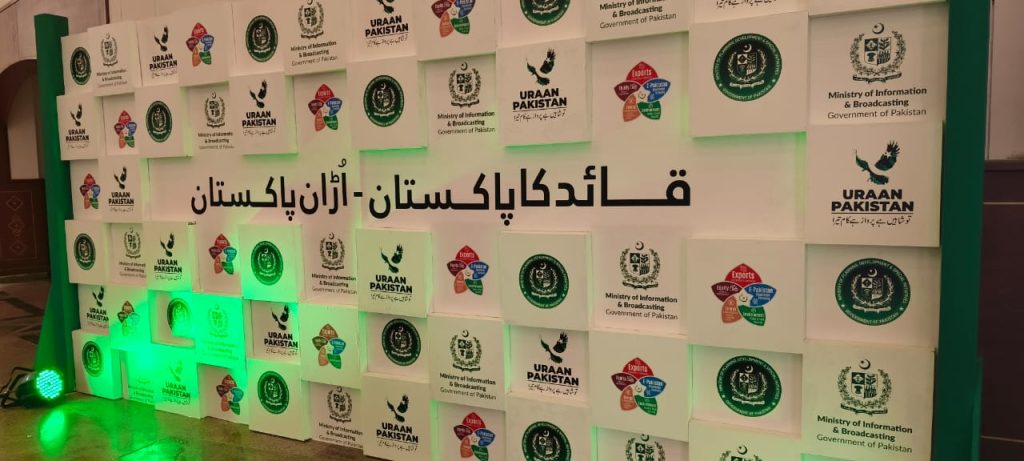
Inside URAAN Pakistan’s celebration that became Islamabad’s only meaningful tribute

Here’s something troubling: In Pakistan’s federal capital on December 25th, only one substantial event celebrated Quaid-e-Azam’s birthday. One, period.
Federal Minister Ahsan Iqbal’s URAAN Pakistan initiative hosted what became, by default and design, Islamabad’s defining commemoration. And in that singularity lies a story about how we’ve learned to honor symbols while avoiding substance.
But this event was different. Deliberately, uncomfortably, powerfully different.
When Celebration Became Confrontation
The address opened conventionally, praising Jinnah’s extraordinary achievement. Then came the turn.
“Quaid-e-Azam gave us Pakistan. Now history asks us: Can we give Pakistan the future he dreamed of?”
The pause wasn’t dramatic effect—it was space for uncomfortable recognition. Because honest answer, seventy-seven years later, is complicated at best.
And unlike typical events that avoid such complications, this one leaned into them.
The Jinnah We Don’t Discuss
Most speeches feature Jinnah the lawyer, the statesman. Minister Iqbal’s event introduced different dimensions:
Jinnah the feminist who understood nations can’t progress with half their population sidelined. Today, Pakistan’s female labor participation hovers around 22%—among world’s lowest. We’ve built a country that systematically excludes half its human capital.
Jinnah the economic visionary who wanted self-reliance through exports, industry, and science—not perpetual dependency on loans, not stuck exporting raw materials while importing finished products. Seventy-seven years later, we’re trapped in exactly what he warned against.
Jinnah the youth advocate who saw young people as nation-builders to empower. We have world’s youngest population—64% under 30. Demographic gift or curse? Answer depends on whether we educate, skill, and employ them.
Jinnah the character-driven leader who achieved the impossible through disciplined organization, constitutional politics, moral authority—not mobs or noise.
“Great nations are not built on noise—they are built on discipline, sacrifice, and hard work.”
In era of viral outrage and social media populism, this feels heretical. Which might be precisely why we need it.
The Speech That Didn’t Look Away
What made this remarkable was refusal to avoid uncomfortable truths.
“We are blessed with population, resources, strategic location, talented youth,” the speaker acknowledged. Then the reckoning: “Yet our journey has been hindered by political instability, policy inconsistency, educational neglect, weak institutions, dependency rather than self-reliance.”
And the diagnosis that cut through decades of excuse-making: “We did not lag because of lack of resources—we lagged because of lack of discipline, continuity, unity, and vision.”
When did you last hear that honesty at official government event?
URAAN: Vision Meets Policy
Minister Iqbal explained URAAN Pakistan isn’t another government acronym—it’s systematic attempt to translate Jinnah’s vision into 21st-century strategy.
The speaker connected each pillar: Exports addressing self-reliance. E-Pakistan modernizing emphasis on modern skills. Equity fulfilling commitment to women and youth. Environment extending long-term thinking. Energy building competitive foundation.
“URAAN Pakistan converts Quaid’s dream into development strategy. It calls for merit over sifarish, productivity over rhetoric, innovation over complacency, exports over dependency, unity over division.”
Whether execution matches ambition remains to be seen. But strategic alignment—founding vision meeting contemporary policy—represents rare coherent direction.

The Inclusive Message
The event embodied its message. Celebrities attended as nation-building stakeholders. Quaid scholars provided historical and contemporary analysis. Young professionals mingled with policymakers. Diversity wasn’t token—it was strategic.
One entrepreneur told me: “Usually these feel performative. This felt like actual conversation about Pakistan’s future.”
Learning from Jinnah’s Journey
Minister Iqbal emphasized dimension often overlooked: Jinnah’s personal struggle, his dedication when few believed success possible, his resilience through ridicule, imprisonment, betrayal, failing health.
He didn’t inherit Pakistan—he willed it into existence through decades of thankless work. He unified the League when fractured. He maintained constitutional approach when others advocated violence.
“We must learn from his determination and resilience.”
Because Pakistan’s current challenges require exactly the sustained commitment, principled approach, and long-term thinking Jinnah demonstrated.
The Youth Challenge
The speech directly addressed young Pakistanis: “You are not meant to be spectators. You are the torchbearers of Quaid’s mission. Refuse hopelessness. Reject corruption. Embrace hard work. Learn modern skills. Innovate, create, and lead.”
Students afterward said they’d never heard Jinnah’s vision framed as active mission for their generation rather than passive history lesson.
“I’ve sat through Quaid birthday assemblies every year since kindergarten,” one told me. “This was first time I understood I’m supposed to do something with his legacy, not just memorize it.”
Why This Stood Alone
Meaningful commemoration requires effort, honest assessment, connecting vision to reality—which means acknowledging gaps and confronting failures.
Routine ceremonies are easier. Issue statement, lay wreath, take photos, move on.
Minister Iqbal chose harder path. That this path was solitary reveals how Pakistan engages with founding legacy.
We’ve mastered commemorating Jinnah while ignoring his message. This event refused that comfortable dissonance.
The Relevance Question
Is Jinnah’s message really more relevant today?
Consider: He emphasized institutional strength—we struggle with weak institutions. He stressed self-reliance—we’re trapped in dependency. He prioritized education—we’ve systematically neglected it. He insisted on merit—we’ve normalized sifarish. He demanded unity—we’re increasingly fragmented.
His vision is relevant precisely because we’ve failed to implement it. His principles are urgent precisely because we’ve abandoned them.
What Happens Now?
Does this mark beginning of more substantive engagement, or remain isolated exception? Does URAAN successfully translate principles into policy, or join the graveyard of plans that fade into political changes?
Most importantly: Do Pakistanis—particularly youth addressed so directly—embrace their role as mission torchbearers, or remain spectators?
The Choice
The event concluded with call for covenant: unity above division, institutional strength, merit-based systems, universal education, women and youth empowerment, economic self-reliance.
“With faith, discipline, unity, and URAAN Pakistan’s vision: Yes—Pakistan will rise. Yes—Pakistan will prosper. Yes—Quaid’s dream will be fulfilled.”
Inspiring words. But inspiration without implementation is just emotion.
In year when Quaid’s birthday generated usual holidays and perfunctory statements, one event did something different. It honored our founder not just by remembering his achievement but by recommitting to his mission.
That it stood alone is both credit to Minister Iqbal and critique of broader failure to meaningfully engage with founding legacy.
Pakistan Paindabad.






 American Dollar Exchange Rate