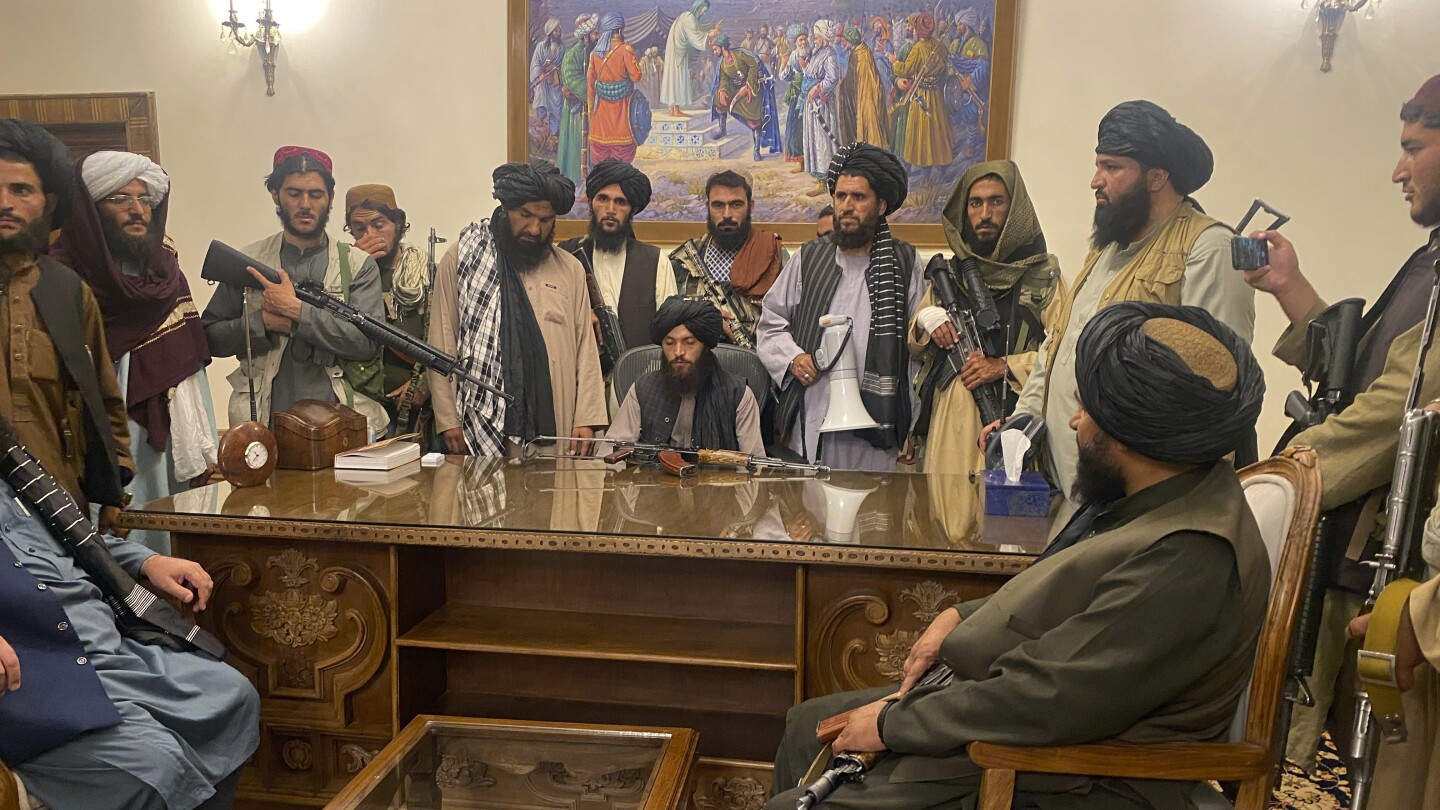
KABUL, Afghanistan (news agencies) — It’s been three years since the Taliban took control of Afghanistan. They have transitioned from insurgency to authority, imposed their interpretation of Islamic law and sought to reinforce their claim to legitimacy.

Despite no international recognition as the country’s official rulers, the Taliban enjoy high-level meetings with major regional powers like China and Russia. They even attended United Nations-sponsored talks while Afghan women and civil society were denied a seat at the table. It was a triumph for the Taliban, who see themselves as the country’s only true representatives.
There’s no domestic challenge to their rule, and no overseas appetite to support one. Wars in Ukraine and Gaza draw the international community’s focus, and Afghanistan doesn’t represent the same terror threat it once did. But challenges remain.
Here are five things to know about the Taliban in power.
The Taliban supreme leader sits atop a pyramid-like ruling system as a paragon of virtue. Mosques and clerics are on one side. On the other is the Kabul administration, which implements clerics’ decisions and meets with foreign officials.
“There are different levels of extremism, and the Taliban are in an uneasy coalition of ruling hard-liners and political pragmatists. It has put them in a culture war,” said Javid Ahmad, a non-resident scholar at the Middle East Institute.
The most controversial policies are unlikely to be reversed while supreme leader Hibatullah Akhundzada is in charge — and supreme leaders don’t retire or resign. They lead until death.
It’s wishful thinking that diverging opinions are enough to divide the Taliban, said Ibraheem Bahiss with Crisis Group’s South Asia program. “The Taliban are unified and will remain a political force for many years. They rule as one group, they fight as one group.”
To maintain cohesion and ensure discipline, seasoned Taliban have moved from the battlefield into bureaucracy, getting top jobs in government and provinces.
“You have to give them a reward for playing a significant role in the insurgency,” Ahmad said. Other perks can include a free hand in the running of a province or permission to have a third or fourth wife, a new pickup truck, a share in customs fees or the keys to a house.
Bahiss called this “the strongest Afghan government in modern times. They can exact a decree to the village level.”
Civil servants keep the country running and are more likely to have a formal or technical education. But the Taliban leading civilian institutions have no proper knowledge of how such institutions are run. “Their qualifications come from God,” Ahmad said.
The Taliban’s legitimacy to govern doesn’t come from Afghans but from their interpretation of religion and culture, said Leena Rikkila Tamang with the International Institute for Democracy and Electoral Assistance.
If a government is defined by the trust and buy-in of citizens, recognition by international powers and legitimacy through processes like elections, then the Taliban do not qualify as a government, she said.
Afghanistan’s economy has weakened. In 2023, foreign aid still made up around 30% of the country’s GDP.
The U.N. has flown in at least $3.8 billion to fund international aid organizations during the past three years. The United States remains the largest donor, sending more than $3 billion in assistance since the Taliban takeover. But the U.S. watchdog assigned to follow the money says a lot is taxed or diverted.
“The further the cash gets away from the source, the less transparency there is,” said Chris Borgeson, the deputy inspector general for audits and inspections at the Special Inspector General for Afghanistan Reconstruction.
The Taliban also apply vigorous taxation. In 2023, they collected around $2.96 billion. But that’s not much in a country with huge and complex needs, and the Taliban don’t have the means to stimulate the economy.
The central bank can’t print money. Cash is printed abroad. Interest transactions are banned because interest is forbidden in Islam, and banks aren’t lending. The Taliban can’t borrow money because they’re not recognized as the government, and international banking is cut off.
Natural disasters and the flow of Afghans fleeing Pakistan under pressure to return home have underlined Afghanistan’s reliance on foreign aid to meet essential needs.




 American Dollar Exchange Rate