

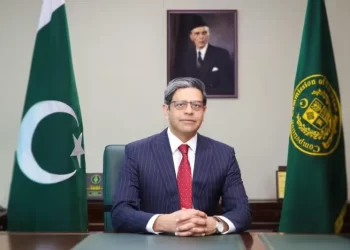
Tokenisation – the process of converting real-world assets or data into digital tokens on a blockchain – will be a game changer for Pakistan as it will solve a host of issues if applied at the ecosystem level, Qaiser Noor told media in an exclusive interview. Noor is a board member of eight entities in the Kingdom of Saudi Arabia (KSA)’
He is also the author of a book titled ‘The Kingdom Through My Eyes! Vision 2030 Kingdom of Saudi Arabia (KSA)’.
Tokenization is the process of converting sensitive data or real-world assets into a non-sensitive, unique digital representation (a token) for secure processing, storage, or transfer
He said tokenisation can unlock Pakistan’s “stuck value” by turning real-world assets (land, receivables, commodities, mining assets and infrastructure cashflows) into verifiable digital units that can be traded, pledged, or fractionally owned.
READ MORE: What will it take for Pakistani firms to succeed in Saudi Arabia?
Pakistan’s informal economy is often estimated ot be around 30%–50% of the formal economy, and many assets remain “unbankable”. Tokenisation adds standardised data, and programmable rules (KYC – Know Your Customer/AML- Anti Money Laundering, limits, investor eligibility) that cut friction for lenders and investors. Tokenised regulated products can convert flows into long-term savings and productive investment.
It can also mobilize the diaspora: Pakistan’s remittances rose from about $26.4bn (2023) to $34.6bn (2024); tokenised, compliant investment products can channel a slice of these flows into infrastructure rather than only consumption. Tokenised regulated products can convert flows into long-term savings and productive investment.
Finally, where provinces are already digitising land records (e.g., Punjab’s Land Record Authority), tokenised titles can further reduce disputes and enable faster collateralised lending. In term of property, linking tokenised assets to digitised registries improves traceability and reduces duplicate pledges.
Noor said that tokenisation works best as shared “trust infrastructure” across regulators, banks, fintechs, land registries, and capital markets.
There are other issues tokenization can help with.
SME liquidity gaps: tokenised invoices/receivables enable faster discounting and secondary trading with near-real-time settlement.
Leakage and corruption: immutable audit trails reduce manual tampering and enable automated reporting, helping shift activity out of the large informal sector.
Government/project financing (including mining): tokenised revenues improve transparency and broaden investor access.
Saudi Arabia, for one, is actively pursuing real estate tokenization as a cornerstone of its Vision 2030 economic diversification plan, launching a national blockchain-based infrastructure.
“The Kingdom has the scale, upcoming regulation, and institutional demand to industrialise tokenisation, not just pilot it,” said Noor.
Regulatory Sandbox Labs in KSA explicitly aim to enable and supervise fintech innovation, creating a credible path from testing to licensing and market adoption. Tokenisation aligns with the country’s goals of capital-market deepening and modernising real estate, private credit/receivables, and sukuk-linked cashflows with stronger transparency and investor protection, he said.
“From KSA, you can build GCC-standard rails and export the model to Pakistan via compliant diaspora products,” he said.


 American Dollar Exchange Rate