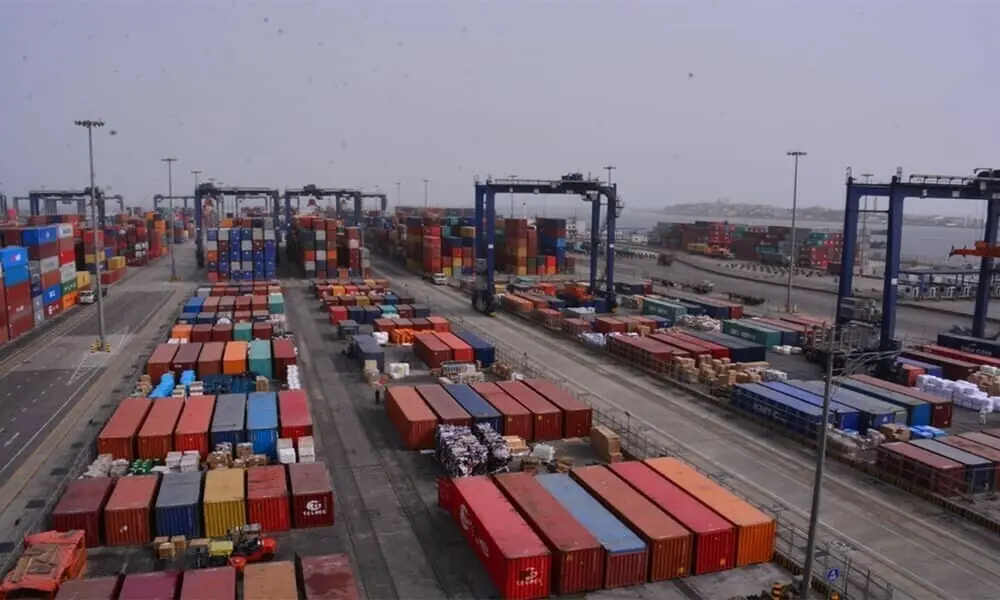

Pakistan’s exports could receive a significant boost if the government expands trade diplomacy, ensures policy stability, improves infrastructure, and signs free trade agreements (FTAs) with Central Asian countries, exporters and economic strategists said.
Karachi, being an important port city, needs developed infrastructure and an ideal law and order situation, they added.
Speaking to media, Pakistan Hosiery Manufacturers & Exporters Association (PHMEA) Central Chairman Muhammad Babar Khan said the government should reduce energy and logistics costs, ensure policy continuity, and simplify taxation and refund systems.
“The government should expand trade diplomacy, negotiate market access, and strengthen export credit and insurance facilities,” he said. “Investment in technology upgrade, skills development, and product diversification is essential.”
He was of the view that digital trade facilitation and faster customs clearance could improve competitiveness.
“Support for compliance with environmental and social standards will help access premium markets. Public-private coordination platforms should be strengthened to align industrial policy with global demand trends.”
Also read: How policy built Pakistan’s auto industry, how reversal could reshape it
Commenting on flaws in exports, he said exports remain concentrated in limited products and markets.
“High production costs, inconsistent policies, and infrastructure gaps reduce competitiveness. Limited research, innovation, and branding restrict entry into value-added segments.
“Weak market intelligence and insufficient trade promotion hinder exploration of emerging markets. Regulatory complexity and delayed refunds strain liquidity. Inadequate compliance with evolving environmental and traceability standards also restrict access to high-value markets. Overall, structural inefficiencies limit diversification and expansion.”
Babar Khan said past export performance suffered from over reliance on low value products, energy shortages, policy instability, and limited diversification.
“Short-term incentives replaced long-term competitiveness reforms. Weak investment in technology and skills constrained productivity growth. Future success depends on structural reforms, cost competitiveness, innovation-driven manufacturing, and diversification into engineering, information technology enabled services, and agro processing.
“Stable policies, improved infrastructure, and integration into regional and global value chains can transform export growth sustainably.”
SITE Association of Industry (SAI) Karachi president Abdul Rehman Fudda urged the government to offer special incentives for food processing-cum-packaging industries as well as helping them in getting their products approved and certified by importing countries.
He called for appointing businessmen and professionals as ambassadors and trade attaches.
Fudda further urged the government to develop infrastructure in the metropolitan city of Karachi.
“Karachi, being a port city and major contributor in exports/taxes, needs developed infrastructure and an ideal law and order situation as the city has huge potential to perform more.”
Commenting on failures in exports, he said there were a host of flaws in the export strategy, including “inconsistent policies, political instability, and lack of research and development”.
“When we were enjoying good time in textiles, our neighbours – India and Bangladesh – focused on exploring ways to get more businesses and overcome their deficiencies.
“In early 90s, India was not producing/processing polyester fabric, but in a few years, they developed the facilities and passed over Pakistan. Bangladesh used to import Pakistani Fabric and after value addition (stitching), fetching export market.”
Economic strategist Dr Mehmoodul Hassan Khan said Pakistan exports volumes had been flawed for many “complex and complicated structural, institutional and policy shortcomings” in which the high cost of doing of business, lack of professionals, lack of export diversity in terms of manufacturing and destinations, and absence of quality export development played havoc.
“Heavy reliance on low-value textiles and agriculture commodities remained main causes of low exports in the past and its saga still continues.”
Also read: Govt housing scheme expected to revive economic activities in construction sector
The strategist said complete overhauling of manufacturing capacity, further diversification of exports converting into value-added sectors, leveraging IT services, and improving competitiveness through activation of Special Free Economic Zone (CPEC Phase-II), pursuing a quality development policy and path, with more focus on digitalisation, artificial intelligence, and quantum technologies, and consistence macro-policies pertaining to national economy and financial & banking facilitation could be the way forward.
Khan said study, execution, and implementation of FTAs and preferential trade agreements with all Central Asian countries would be a value addition for the increase of the country’s exports.





 American Dollar Exchange Rate