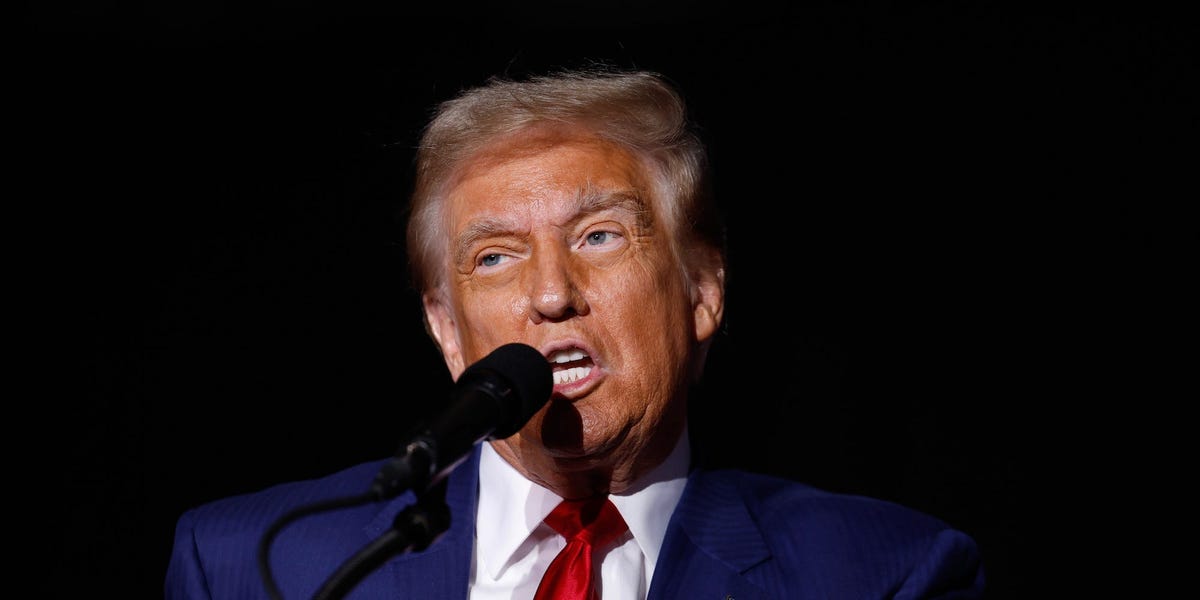
- President Trump on Inauguration Day said he would declare a national emergency at the southern border.
- This comes after Trump confirmed plans in November to use the military for deportation efforts.
- Economists and researchers said Trump’s deportation plans could have negative economic impacts.
President Donald Trump said at his inauguration that he will declare a national emergency at the US-Mexico border, ramping up his immense focus on immigration in his second term.
“I will send troops to the southern border to repel the disastrous invasion of our country,” he said during his inaugural speech at the Capitol. “We will also be designating the cartels as foreign terrorist organizations.”
“As Commander in Chief, I have no higher responsibility than to defend our country from threats and invasions and that is exactly what I am going to do,” he continued. “We will do it at a level nobody has ever seen before.”
Trump said he’d halt all illegal entry “immediately,” adding that he’d start the process of deporting “criminal aliens” back to their home countries.
He also said he’d reinstate his Remain in Mexico policy and “end the practice of catch and release.”
The Remain in Mexico policy — which was launched in 2019 during Trump’s first term — mandates that migrants seeking asylum to remain in Mexico pending their immigration court date in the US.
Trump has not yet officially signed his executive orders, but his speech laid the framework for how he’ll proceed on much of his immigration platform.
It was not immediately clear how Trump would advance other immigration-related promises, such as his controversial vow to end birthright citizenship for the children of people living in the country illegally.
Throughout his campaign, Trump argued that deportations could benefit the US economy. He has said that removing large numbers of people in the country illegally could open job opportunities for US-born workers and legal immigrants and could bring housing prices down.
Business Insider has spoken to over a dozen immigration researchers and policy analysts across the political spectrum. While some conservative-leaning researchers said reducing the number of people coming into the US and living in the country illegally, along with large-scale mass deportations, is necessary to protect American safety and could have long-term economic benefits, left- and center-leaning researchers said there may be economic shocks.
The US had an estimated 11.7 million immigrants living in the US illegally as of July 2023, per the most recent numbers from the Center for Migration Studies. As many as 8.3 million people in this demographic work, per CMS estimates.
Mass deportations could have significant economic consequences, some researchers told BI. The American Immigration Council estimated that a “one-time mass deportation operation” would directly cost the federal government $315 billion, accounting for detainments, arrests, legal processing, and removals.
Trump’s promises for large-scale deportations
In interviews and speeches, Trump has stressed his belief that the US has had no choice but to carry out large-scale deportations. He also confirmed plans to use the military for deportation efforts in November, along with using a 1798 law allowing for the deportation of suspected gang and cartel members.
Before Inauguration Day, Trump’s border czar, Tom Homan, told ABC News that the administration was reviewing plans for immigration raids in Chicago. Trump has threatened to crack down on illegal immigration in communities in Colorado and Ohio, whose high concentrations of immigrants have drawn national attention.
Homan previously stressed that deportations would not involve sweeps of immigrant-heavy neighborhoods and would instead target immigrants with criminal records.
In private meetings, Homan told Republican lawmakers to tone down expectations for initial deportations due to limited resources. Homan told CNN he would need at least 100,000 beds to carry out detainment plans.
CNN also reported that Homan and lawmakers discussed a plan to target the 1.4 million people with final immigration orders of removal as part of a tiered approach to deportation. Concerns have risen about ICE’s lack of space for a heightened number of detainees, as well as various legal challenges to its plans for deportations.
Other plans include working with local and state law enforcement agencies and reassigning law enforcement officials to ICE officers, The New York Times reported. The Trump team may also expand expedited removal, the process of removing noncitizens without a hearing and drafting limitations on birthright citizenship, such as ceasing to issue passports to children born in the US to immigrant parents who live in the US illegally.
Trump named Stephen Miller, the chief architect of Trump’s first-term travel ban, as Homeland Security advisor and White House deputy chief of staff.
The border has calmed down recently. US Border Patrol calculated 47,330 migrant encounters along the southwest border in December, among the lowest since mid-2020 — and an over 80% reduction since December 2023.
During Trump’s first term in office, the US deported about 1.5 million people. Between January 2021 and August 2024, when Biden held office, more than 1.4 million deportations were carried out.
Mass deportations could hurt American jobs
One of Trump’s arguments about immigrants is that they steal jobs from native-born workers. Recent research shows that US-born employment increases with immigration, and deportations hurt native job numbers.
“US-born workers do not simply take all the jobs left behind by immigrants after they are deported,” Chloe East, a fellow at the Brookings Institution who studies immigration policy, told BI. “This is because these jobs are lower-paid, more dangerous, and otherwise less desirable than the jobs more often taken by US-born workers.”
The US has already seen examples of this in its recent history. Around 400,000 people were deported between 2008 and 2014 through a program called Secure Communities. Research published in October showed industries experienced heightened worker shortages as a result.
This also included the construction workforce, which employs among the highest numbers of workers living in the US illegally.
“The labor market is already tense and tight, and construction is one of those industries that doesn’t have enough workers,” Jennie Murray, president and CEO of the immigrant advocacy nonprofit group National Immigration Forum, told BI. She added that deportations could worsen housing shortages in the US.
Consumers may feel the effects of deportations at the grocery store, as a reduced agricultural workforce could mean less locally sourced food and higher prices. A Center for American Progress analysis from 2021 found that nearly 300,000 workers living in the US illegally were in agriculture and farming — around 13% of the 2.3 million workers in the agriculture sector that year.
The broader economy could be impacted
Immigrants living in the US illegally also contribute significantly to taxes and government programs. In 2022, they paid $96.7 billion in federal, state, and local taxes, per the most recent data from the Institute on Taxation and Economic Policy. They paid $25.7 billion in Social Security taxes and $6.4 billion in Medicare taxes while being ineligible to receive benefits from those social insurance programs.
However, Republicans have argued that welfare programs and taxpayer-subsidized health insurance for immigrants have cost US residents billions, potentially partly offsetting these gains.
Some think tanks said the broader economy could suffer if millions of people are deported. The Peterson Institute for International Economics wrote in September that if 1.3 million people are deported, GDP could fall 1.2% below baseline by 2028.

- President Trump on Inauguration Day said he would declare a national emergency at the southern border.
- This comes after Trump confirmed plans in November to use the military for deportation efforts.
- Economists and researchers said Trump’s deportation plans could have negative economic impacts.
President Donald Trump said at his inauguration that he will declare a national emergency at the US-Mexico border, ramping up his immense focus on immigration in his second term.
“I will send troops to the southern border to repel the disastrous invasion of our country,” he said during his inaugural speech at the Capitol. “We will also be designating the cartels as foreign terrorist organizations.”
“As Commander in Chief, I have no higher responsibility than to defend our country from threats and invasions and that is exactly what I am going to do,” he continued. “We will do it at a level nobody has ever seen before.”
Trump said he’d halt all illegal entry “immediately,” adding that he’d start the process of deporting “criminal aliens” back to their home countries.
He also said he’d reinstate his Remain in Mexico policy and “end the practice of catch and release.”
The Remain in Mexico policy — which was launched in 2019 during Trump’s first term — mandates that migrants seeking asylum to remain in Mexico pending their immigration court date in the US.
Trump has not yet officially signed his executive orders, but his speech laid the framework for how he’ll proceed on much of his immigration platform.
It was not immediately clear how Trump would advance other immigration-related promises, such as his controversial vow to end birthright citizenship for the children of people living in the country illegally.
Throughout his campaign, Trump argued that deportations could benefit the US economy. He has said that removing large numbers of people in the country illegally could open job opportunities for US-born workers and legal immigrants and could bring housing prices down.
Business Insider has spoken to over a dozen immigration researchers and policy analysts across the political spectrum. While some conservative-leaning researchers said reducing the number of people coming into the US and living in the country illegally, along with large-scale mass deportations, is necessary to protect American safety and could have long-term economic benefits, left- and center-leaning researchers said there may be economic shocks.
The US had an estimated 11.7 million immigrants living in the US illegally as of July 2023, per the most recent numbers from the Center for Migration Studies. As many as 8.3 million people in this demographic work, per CMS estimates.
Mass deportations could have significant economic consequences, some researchers told BI. The American Immigration Council estimated that a “one-time mass deportation operation” would directly cost the federal government $315 billion, accounting for detainments, arrests, legal processing, and removals.
Trump’s promises for large-scale deportations
In interviews and speeches, Trump has stressed his belief that the US has had no choice but to carry out large-scale deportations. He also confirmed plans to use the military for deportation efforts in November, along with using a 1798 law allowing for the deportation of suspected gang and cartel members.
Before Inauguration Day, Trump’s border czar, Tom Homan, told ABC News that the administration was reviewing plans for immigration raids in Chicago. Trump has threatened to crack down on illegal immigration in communities in Colorado and Ohio, whose high concentrations of immigrants have drawn national attention.
Homan previously stressed that deportations would not involve sweeps of immigrant-heavy neighborhoods and would instead target immigrants with criminal records.
In private meetings, Homan told Republican lawmakers to tone down expectations for initial deportations due to limited resources. Homan told CNN he would need at least 100,000 beds to carry out detainment plans.
CNN also reported that Homan and lawmakers discussed a plan to target the 1.4 million people with final immigration orders of removal as part of a tiered approach to deportation. Concerns have risen about ICE’s lack of space for a heightened number of detainees, as well as various legal challenges to its plans for deportations.
Other plans include working with local and state law enforcement agencies and reassigning law enforcement officials to ICE officers, The New York Times reported. The Trump team may also expand expedited removal, the process of removing noncitizens without a hearing and drafting limitations on birthright citizenship, such as ceasing to issue passports to children born in the US to immigrant parents who live in the US illegally.
Trump named Stephen Miller, the chief architect of Trump’s first-term travel ban, as Homeland Security advisor and White House deputy chief of staff.
The border has calmed down recently. US Border Patrol calculated 47,330 migrant encounters along the southwest border in December, among the lowest since mid-2020 — and an over 80% reduction since December 2023.
During Trump’s first term in office, the US deported about 1.5 million people. Between January 2021 and August 2024, when Biden held office, more than 1.4 million deportations were carried out.
Mass deportations could hurt American jobs
One of Trump’s arguments about immigrants is that they steal jobs from native-born workers. Recent research shows that US-born employment increases with immigration, and deportations hurt native job numbers.
“US-born workers do not simply take all the jobs left behind by immigrants after they are deported,” Chloe East, a fellow at the Brookings Institution who studies immigration policy, told BI. “This is because these jobs are lower-paid, more dangerous, and otherwise less desirable than the jobs more often taken by US-born workers.”
The US has already seen examples of this in its recent history. Around 400,000 people were deported between 2008 and 2014 through a program called Secure Communities. Research published in October showed industries experienced heightened worker shortages as a result.
This also included the construction workforce, which employs among the highest numbers of workers living in the US illegally.
“The labor market is already tense and tight, and construction is one of those industries that doesn’t have enough workers,” Jennie Murray, president and CEO of the immigrant advocacy nonprofit group National Immigration Forum, told BI. She added that deportations could worsen housing shortages in the US.
Consumers may feel the effects of deportations at the grocery store, as a reduced agricultural workforce could mean less locally sourced food and higher prices. A Center for American Progress analysis from 2021 found that nearly 300,000 workers living in the US illegally were in agriculture and farming — around 13% of the 2.3 million workers in the agriculture sector that year.
The broader economy could be impacted
Immigrants living in the US illegally also contribute significantly to taxes and government programs. In 2022, they paid $96.7 billion in federal, state, and local taxes, per the most recent data from the Institute on Taxation and Economic Policy. They paid $25.7 billion in Social Security taxes and $6.4 billion in Medicare taxes while being ineligible to receive benefits from those social insurance programs.
However, Republicans have argued that welfare programs and taxpayer-subsidized health insurance for immigrants have cost US residents billions, potentially partly offsetting these gains.
Some think tanks said the broader economy could suffer if millions of people are deported. The Peterson Institute for International Economics wrote in September that if 1.3 million people are deported, GDP could fall 1.2% below baseline by 2028.






 American Dollar Exchange Rate