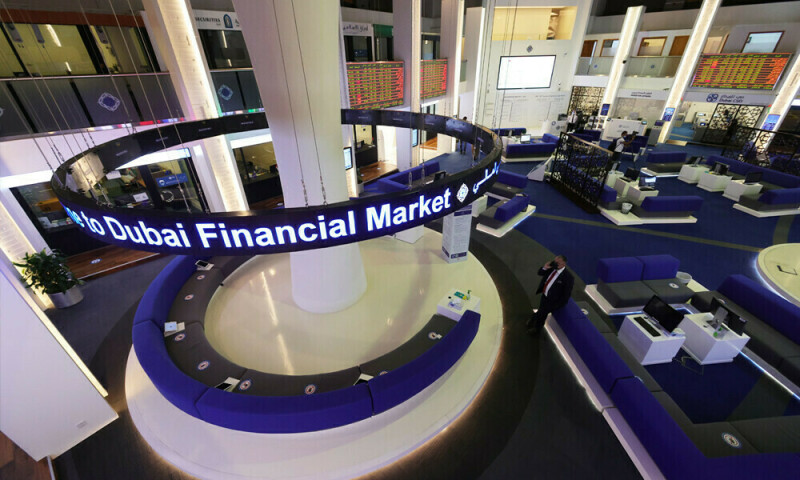

United Arab Emirates markets declined on Friday, mirroring losses in global equities, after the U.S. slapped steep tariffs on dozens of trading partners, while investors await U.S. jobs data that could impact the Federal Reserve rate cut decision.
MSCI’s broadest index of Asia-Pacific shares outside Japan fell 0.8%, while Japan’s Nikkei closed 0.7% lower.
Late on Thursday, President Donald Trump signed an executive order imposing tariffs of 10% to 41% on U.S. imports from foreign countries, including 25% on goods from India, 20% from Taiwan, 19% from Thailand and 15% from South Korea.
The Fed’s decisions impact monetary policy in the Gulf, where most currencies, including the Saudi riyal, are pegged to the U.S. dollar.
Dubai’s main index dropped 0.8%, retreating for a second straight session, as investors booked profits after the index surpassed a 17-1/2-year high, with top lender Emirates NBD Bank falling 2.4% and toll operator Salik Company decreasing 1.1%.
However, maritime and shipping company Gulf Navigation Holding surged 5.8% after it raised the foreign ownership limit to 100% from 49%.
Abu Dhabi’s benchmark index settled 0.5% lower, snapping a five-session winning streak after reaching its highest level in over two and a half years earlier in the week.
Gulf stocks gain on earnings optimism, ahead of US Fed outlook
The downturn was led by a 3.4% decline in Abu Dhabi Commercial Bank, the UAE’s third-largest lender. Commercial Bank International also slumped 7.8% after reporting a 5% decrease in second-quarter profit to 42.6 million dirhams ($11.60 million).
Nevertheless, losses in the index were partially capped by a 5.1% jump in IHC-owned investment firm Multiply Group as investors continued to buy dips after sluggish earnings last week.
National Bank of Fujairah also climbed 9.6%, its biggest single-day gain since early February, following a 67% growth in its Q2 profit.
Oil prices – a key catalyst for the Gulf’s financial market – slipped 0.9% to $71.03 a barrel by 1136 GMT.
Dubai and Abu Dhabi indices ended their five-week winning streaks with weekly declines of 0.6% and 0.2% respectively, but still posted strong monthly gains with Dubai clinching 8%, its highest in over four years, and Abu Dhabi climbed 4.2%, its highest in more than two years, according to LSEG data.
———————————

 ABU DHABI   down 0.5% to 10,317

 DUBAI       fell 0.8% to 6,112

———————————







 American Dollar Exchange Rate