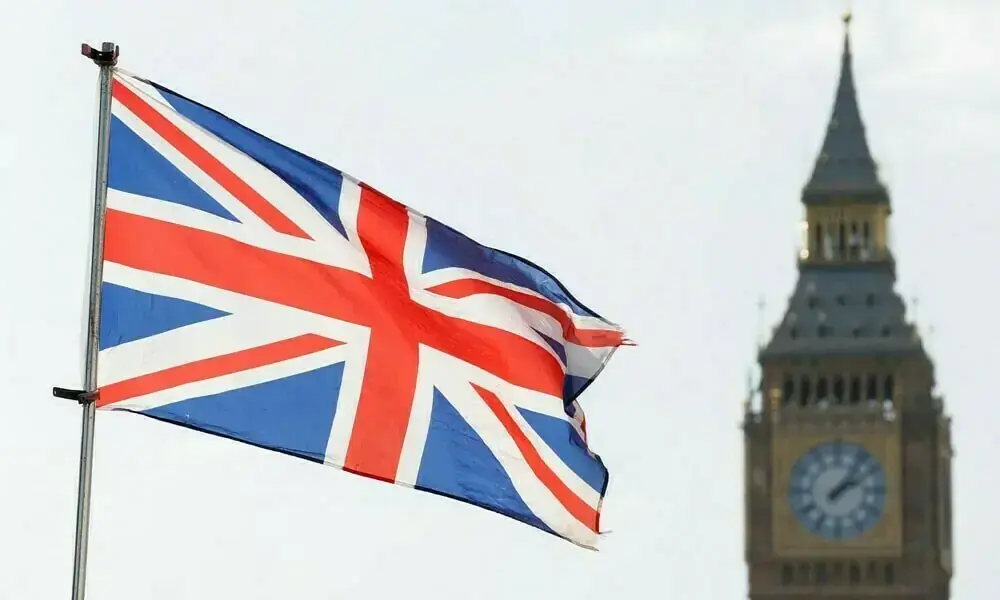
LONDON: Britain’s government and the Bank of England say it is too soon to judge the economic hit from the Iran war, but the first strains are appearing and are likely to ring alarm bells for policymakers whose response options are more limited than in past crises.
On Thursday, the Organisation for Economic Co-operation and Development cut Britain’s growth forecast for 2026 by more than any other major economy and raised the country’s inflation forecast by the most too.
The bleak outlook jeopardises the Labour government’s central pledge to voters that it could fix the public finances and pay for better public services with faster economic growth.
It also threatens the Bank of England’s hopes of bringing high inflation under control for the first time in years.
While much of the global economy will feel the effects of the conflict, Britain is particularly vulnerable among big Western economies.
Gas – which has almost doubled in price this month – typically sets the price for British electricity, unlike in France, where it is mostly generated by nuclear plants.
Surveys this week showed the biggest month-to-month leaps in decades in the British public’s inflation expectations and in a gauge of costs paid by manufacturers, alongside falls in consumer confidence.
The first clear increase in prices paid by households has been felt by drivers at the fuel pumps, while farmers have warned of higher food prices from next month, starting with tomatoes, cucumbers and peppers, which are grown in heated greenhouses.
Retailers say the war will raise their costs and selling prices, as well as hitting demand. Clothing chain Next warned a long conflict could push up its selling prices by 2 percent in June and up to 10 percent later in the year.
Food-to-funerals group the Co-op said consumer confidence was “fragile”. In the housing market, floating mortgage rates are jumping and lenders have pulled fixed rate products anticipating higher BoE interest rates.
Ross Walker, chief UK economist and head of global economics at NatWest Markets, said Britain had limited firepower to counter a lengthy energy crisis.
The government cannot borrow heavily to help households without upsetting bond investors, while underlying inflation pressures were already too high for the BoE to cut rates quickly, despite a rise in unemployment.
“We enter this crisis in a suboptimal position,” Walker said. “Policy leeway looks very constrained.”
The BoE last week said it was ready to act to prevent the energy price spike from turning into the kind of long-lasting inflation problem that followed the surge in gas prices when Russia launched its full-scale invasion of Ukraine in 2022.
However, policymakers are warning against assumptions that they will follow their approach of four years ago. Then, they raised borrowing costs from almost zero to a peak of 5.25 percent in the space of 18 months.
BoE officials say the risks of higher energy costs causing broader inflation might be lower this time because Britain’s economy is weaker now. Furthermore, the jump in gas prices has so far been less dramatic.
“There’s always a risk of fighting the last battle, but we’re certainly doing what we can,” BoE rate-setter Megan Greene said on Wednesday.
But Stephen Millard, deputy director of the National Institute of Economic and Social Research think-tank, said memories of the surge in inflation to above 11 percent in 2022 would make it harder for the BoE to sit tight and do nothing.

LONDON: Britain’s government and the Bank of England say it is too soon to judge the economic hit from the Iran war, but the first strains are appearing and are likely to ring alarm bells for policymakers whose response options are more limited than in past crises.
On Thursday, the Organisation for Economic Co-operation and Development cut Britain’s growth forecast for 2026 by more than any other major economy and raised the country’s inflation forecast by the most too.
The bleak outlook jeopardises the Labour government’s central pledge to voters that it could fix the public finances and pay for better public services with faster economic growth.
It also threatens the Bank of England’s hopes of bringing high inflation under control for the first time in years.
While much of the global economy will feel the effects of the conflict, Britain is particularly vulnerable among big Western economies.
Gas – which has almost doubled in price this month – typically sets the price for British electricity, unlike in France, where it is mostly generated by nuclear plants.
Surveys this week showed the biggest month-to-month leaps in decades in the British public’s inflation expectations and in a gauge of costs paid by manufacturers, alongside falls in consumer confidence.
The first clear increase in prices paid by households has been felt by drivers at the fuel pumps, while farmers have warned of higher food prices from next month, starting with tomatoes, cucumbers and peppers, which are grown in heated greenhouses.
Retailers say the war will raise their costs and selling prices, as well as hitting demand. Clothing chain Next warned a long conflict could push up its selling prices by 2 percent in June and up to 10 percent later in the year.
Food-to-funerals group the Co-op said consumer confidence was “fragile”. In the housing market, floating mortgage rates are jumping and lenders have pulled fixed rate products anticipating higher BoE interest rates.
Ross Walker, chief UK economist and head of global economics at NatWest Markets, said Britain had limited firepower to counter a lengthy energy crisis.
The government cannot borrow heavily to help households without upsetting bond investors, while underlying inflation pressures were already too high for the BoE to cut rates quickly, despite a rise in unemployment.
“We enter this crisis in a suboptimal position,” Walker said. “Policy leeway looks very constrained.”
The BoE last week said it was ready to act to prevent the energy price spike from turning into the kind of long-lasting inflation problem that followed the surge in gas prices when Russia launched its full-scale invasion of Ukraine in 2022.
However, policymakers are warning against assumptions that they will follow their approach of four years ago. Then, they raised borrowing costs from almost zero to a peak of 5.25 percent in the space of 18 months.
BoE officials say the risks of higher energy costs causing broader inflation might be lower this time because Britain’s economy is weaker now. Furthermore, the jump in gas prices has so far been less dramatic.
“There’s always a risk of fighting the last battle, but we’re certainly doing what we can,” BoE rate-setter Megan Greene said on Wednesday.
But Stephen Millard, deputy director of the National Institute of Economic and Social Research think-tank, said memories of the surge in inflation to above 11 percent in 2022 would make it harder for the BoE to sit tight and do nothing.





 American Dollar Exchange Rate