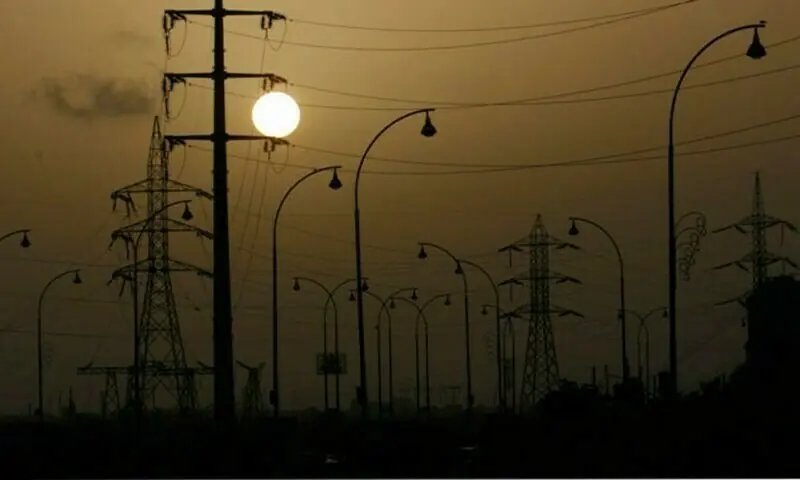

ISLAMABAD: The United Nations Economic and Social Commission for Asia and the Pacific (UN-ESCAP) will provide policy advisory and technical support to energy financing to assist Pakistan in the development of its Energy Transition Investment Plan (ETIP).
At the request of the government, a scoping mission of UN-ESCAP visited Pakistan recently, and held talks with ministries concerned and development partners to understand the needs, challenges, and opportunities in Pakistan on energy transition financing. The team obtained a deep understanding of entry points to building a strong ETIP and understanding where challenges and opportunities may lie, UN-ESCAP says.
The country’s energy transition is critical for economic resilience, climate commitments, and fiscal stability. Heavy reliance on imported fossil fuels, coupled with a circular debt crisis exceeding Rs2.6 trillion, underscores the urgency of shifting to renewables to meet energy needs by 2030. However, challenges like policy inconsistencies, fossil fuel dependency, and limited concessional financing hinder progress.
To bridge this gap, the ETIP can assist Pakistan by working to attract green foreign direct investment and leverage blended finance models that combine public and philanthropic funds to unlock private capital. Concessional funding — including low-interest loans and guarantees — is essential to make renewable energy projects financially viable, especially for underserved communities.
The ETIP support is being coordinated through the office of the UN Resident Coordinator, Mohamed Yahya, working with relevant ministries, development partners and the wider UN country team. Under the arrangement, SEforALL will support the ETIP’s development and planning work, while UN-ESCAP will focus on the financing architecture, including instruments and pathways to mobilise concessional and private capital.
Existing work on Green Eurobonds, Panda Bonds, and Green Sukuk, alongside pay-as-you-go models should be bolstered to attract investment. There is also a need to investigate how funds support grid modernisation efforts, which are critical to answering Pakistan’s circular debt and integrating distributed solar and battery systems into the national energy infrastructure, ESCAP suggests.
UN-ESCAP through its Financing Energy Transition (FET) work which provided targeted technical assistance to Indonesia, the Philippines and Vietnam, has expressed its readiness to support Pakistan government with its expertise on the issue in conjunction with ESCAP’s existing work with Pakistan.
ESCAP’s FET work stream has already produced three analytical reports identifying critical gaps in energy transition finance, complemented by country-level capacity-building sessions and sub-regional policy dialogues in Southeast Asia. ESCAP through its expertise on integrated energy transition planning, capacity building, and scenario analysis may help contribute to Pakistan’s ETIP and its efforts on the national energy mix, industrial competitiveness, and progress towards Net-Zero emissions, while leveraging financial instruments such as green bonds and carbon markets, ESCAP says.
Pakistan’s energy mix remains heavily skewed towards fossil fuels, with imported oil, LNG, and coal dominating the power generation landscape – posing persistent challenges to fiscal sustainability and energy security.
Published in media, January 5th, 2026






 American Dollar Exchange Rate