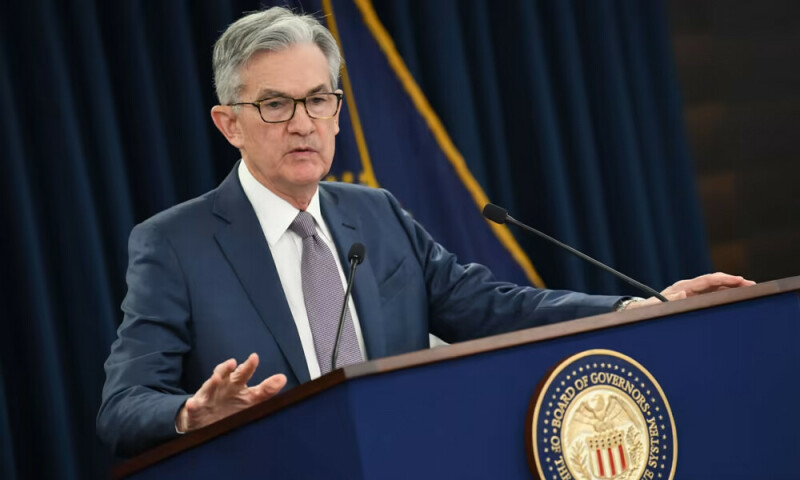

WASHINGTON: US central bank officials have divergent views on cutting interest rates this year, with continued uncertainty about the impact of tariffs on inflation, according to minutes of their most recent policy meeting.
Federal Reserve officials voted in mid-June to hold the benchmark lending rate steady for a fourth straight policy meeting, while Fed Chair Jerome Powell said the bank did not need to rush to adjust rates.
Powell’s patient approach to lowering interest rates has drawn ire from President Donald Trump, who on Wednesday again blasted the level as “at least” three points too high.
While policymakers expected Trump’s tariffs to nudge prices upwards, the June meeting minutes said there remained “considerable uncertainty” on the timing, size and duration of the effects.
Companies might choose not to raise consumer prices until they depleted their product stockpiles, for example, but supply chain disruptions caused by the levies could trigger larger price hikes.
“While a few participants noted that tariffs would lead to a one-time increase in prices and would not affect longer-term inflation expectations, most participants noted the risk that tariffs could have more persistent effects on inflation,” the report said.
Fed minutes may begin to show the hurdle to further rate cuts
Officials voted unanimously at their last meeting to keep rates unchanged at a range between 4.25 percent and 4.50 percent.
But even as they penciled in two rate cuts this year, seven of 19 policymakers projected no reductions at all in 2025.
For now, the independent central bank – especially Powell – has come under increased political pressure from Trump to cut rates sooner.
“LOWER THE RATE!!!” Trump wrote on his Truth Social platform Wednesday, citing benign inflation readings in recent months.
Besides keeping inflation in check, Fed officials are also monitoring the labor market for signs of weakness as they mull rate cuts.
One issue that could tip the balance in favor of an earlier rate reduction is a softening jobs market.
“Most participants suggested that higher tariffs or heightened policy uncertainty would weigh on labor demand, and many participants expected a gradual softening of conditions,” the report said Wednesday.
For now, policymakers found that they are “well positioned to wait for more clarity on the outlook for inflation and economic activity.”
“Participants clearly were starting to think more about what comes next, although were split on the best response,” said Pantheon Macroeconomics senior US economist Oliver Allen.
He added that a weaker labor market would “tip the balance by September” for a rate cut.





 American Dollar Exchange Rate