IAEA says it has not detected any increase in radiation levels at key nuclear sites in Iran following the US air strikes.

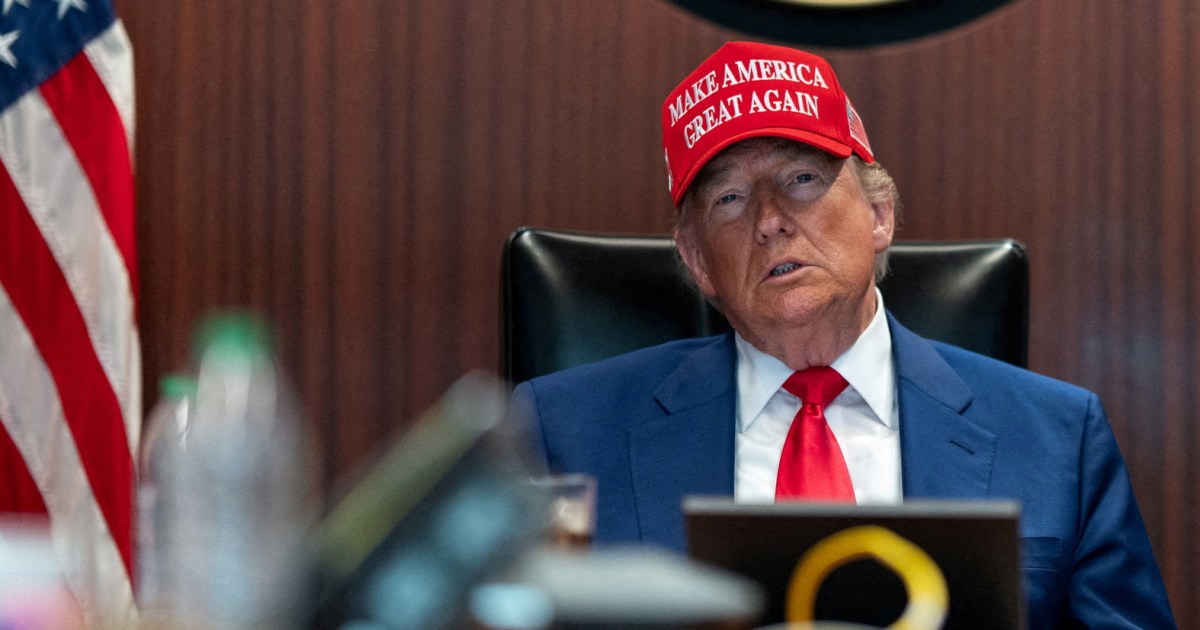
President Donald Trump has announced that the United States forces struck three Iranian nuclear sites in a “very successful attack”, adding that the heavily fortified Fordow nuclear facility is “gone”.
Trump’s decision on Saturday to join Israel’s military campaign against Iran represents a major escalation of the conflict.
“We have completed our very successful attack on the three Nuclear sites in Iran, including Fordow, Natanz, and Isfahan,” Trump posted on Truth Social, adding that the military planes were now on their way home.
“NOW IS THE TIME FOR PEACE!” he added.
Later, in a televised Oval Office address that lasted just more than three minutes, Trump said Iran’s future held “either peace or tragedy”, and that there were many other targets that could be hit by the US military.
“Iran’s key nuclear enrichment facilities have been completely and totally obliterated,” Trump said.
In response, Iranian Foreign Minister Abbas Araghchi accused the US of breaching international law.
He added that Iran “reserves all options to defend its sovereignty, interest, and people”.
CBS News reported that the US reached out to Iran diplomatically on Saturday to say the strikes were all it planned and that the US did not intend on regime change efforts.
The raid on the Iran nuclear sites was carried out by B-2 stealth bombers that dropped so-called “bunker buster bombs,” along with submarine-launched Tomahawk cruise missiles, US media reported.
‘No increase in radiation levels’
The strikes came as Israel and Iran have been engaged in more than a week of aerial combat, with deaths and injuries in both countries.
Israel launched the attacks on Iran on June 13, saying that it wanted to remove any chance of Tehran developing nuclear weapons. Israel itself is widely assumed to have nuclear weapons, which it neither confirms nor denies.
Trita Parsi, executive vice president of the Quincy Institute for Responsible Statecraft, says there was “absolutely no evidence” that Iran posed any kind of threat to the US.
“Neither was it existential, nor imminent,” he told media.
“We have to keep in mind the reality of the situation which is that two nuclear-equipped countries attacked a non-nuclear weapons state without having gotten attacked first. Israel was not attacked by Iran – it started that war; The United States was not attacked by Iran – it started this confrontation at this point.”
Parsi said the attacks on Iran “will send shockwaves” throughout the world because it will be very difficult for countries that risk ending up in the crosshairs of the US and Israel to feel that they are safe without having a nuclear deterrent.
“So I fear that we will see proliferation but I also think that this has more or less guarantee that Iran will be a nuclear weapons state in five to 10 years from now.”
Iran’s nuclear agency on Sunday said radiation system data and field surveys do not show signs of contamination or danger to residents near the sites.
“Following the illegal US attack on the Fordow, Natanz, and Isfahan nuclear sites, field surveys and radiation systems data showed: No contamination recorded,” the organisation said in a social media post, adding that there was no danger to residents around.
Shortly after the attacks, the agency insisted its work would not stop.
“The Atomic Energy Organisation of Iran assures the great Iranian nation that despite the evil conspiracies of its enemies, with the efforts of thousands of its revolutionary and motivated scientists and experts, it will not allow the development of this national industry, which is the result of the blood of nuclear martyrs, to be stopped,” it said in a statement.
Later on Sunday, the UN’s International Atomic Energy Agency said it had not detected any increase in radiation levels at key nuclear sites in Iran following US air strikes.







 American Dollar Exchange Rate