When questions no longer seek answers, even algorithms begin to tire

From Pakistan’s downing of a Rafale to Indian media’s fabrication of a parallel reality one in which Lahore not only possessed a seaport but was actively under assault by the Indian Air Force — the recent four-day war has produced its own archive of firsts. As the ceasefire settles, the wreckage extends beyond infrastructure and human loss; it includes a slower, more insidious casualty: the collapse of shared truth.
For the better part of a decade, we have diagnosed the “fake news” problem — its symptoms, its platforms, its political enablers. But what if the crisis that follows fake news is not informational but existential? That even when we can access facts, they simply do not have the power to persuade?
Students of the humanities learn early that there is no single, universal Truth, only contingent truths shaped by context. The capital-T is cast off as a relic of absolutism. But in our hyper-mediated age, this may all be beside the point. The question of our time is no longer what is true, but whether truth — of any kind — still matters.
Grok, is this true?
At the heart of the fake news phenomenon was always a paradox: people sought out information, but only the kind that reaffirmed their worldview and fine-tuned biases. None of this surprised postmodern theorists like Jean Baudrillard, who warned that simulations would eventually replace reality. But today’s questions — posed to AIs, to search engines, to friends — rarely expect real answers.
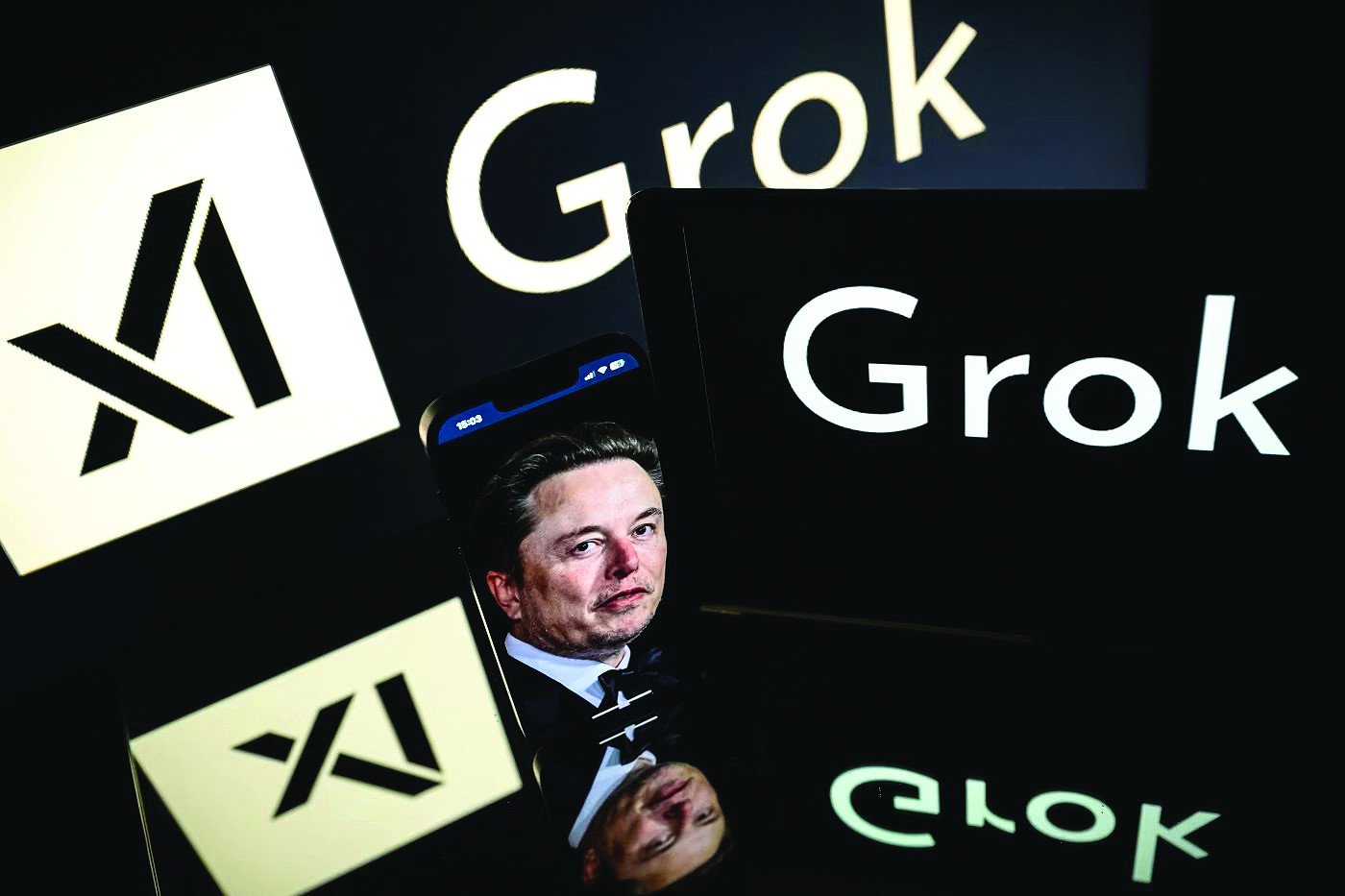
Take Grok, Elon Musk’s “based” chatbot on X (formerly Twitter), marketed as a snarkier, contrarian foil to OpenAI’s ChatGPT. Amid a blizzard of claims and counterclaims between Pakistan and India, the following comment appeared under countless posts: “Grok, is this true?” Yet no matter what source Grok pulled from — Reuters, CNN, or official communiqués — if the answer failed to flatter the prevailing narrative, it was swiftly dismissed. The original poster or a passing interlocutor would accuse the bot of parroting “globalist” lies or aiding an anti-national conspiracy.
Here lies the contradiction: the user, primed by the aesthetics of rebellion, is suspicious. But that lasts only for a moment before quickly dissolving into paranoia. There is almost a ritualistic compulsion to ask Grok and see what it has to say, even if you already suspect it to be unreliable.
The result is an average user that has simply learned to metabolise propaganda and push out an exhaustion so deep, the act of truth seeking ends at the question. You ask Grok. Grok answers. You roll your eyes and scroll.
Epistemic fatigue
In postcolonial theory, scholar Gayatri Chakravorty Spivak once described something called “epistemic violence” — the idea that dominant systems of knowledge can erase or distort marginalised voices. What we’re seeing now is something related, but possibly more insidious: epistemic fatigue.
Violence is no longer just done to knowledge; it is done through its ubiquity. To be in possession of information of this unprecedented vastness, especially for those who are not seeking, is only desensitising. This is the terrain beyond fake news. Institutions that once claimed authority — the press, academia, even AI — find themselves orphaned.
In India, the mainstream media is a willing instrument of the state, while global outlets like Reuters or CNN are dismissed as “Western propaganda.” The algorithmic tools built to correct misinformation are treated with suspicion, not because they’re inaccurate but because they’re foreign, sterile, and insufficiently emotional. The citizen no longer seeks truth but resonance.
An aesthetic turn
So what replaces truth when it stops working?
Often, it’s something more visceral. Across India and other democracies, truth is increasingly experienced as aesthetic. Not in the sense of beauty, but of emotional coherence. The Hindu right in India, like the MAGA movement in the US, has learned that persuasive narratives don’t need to be accurate. They just need to feel right.








 American Dollar Exchange Rate