- People in the back sections of two different plane crashes on Wednesday and Sunday survived.
- A 2015 study from Time Magazine found lower fatality rates in the rear section of aircraft.
- Pilot actions and the circumstances of the crash impact survivability across all seat areas.
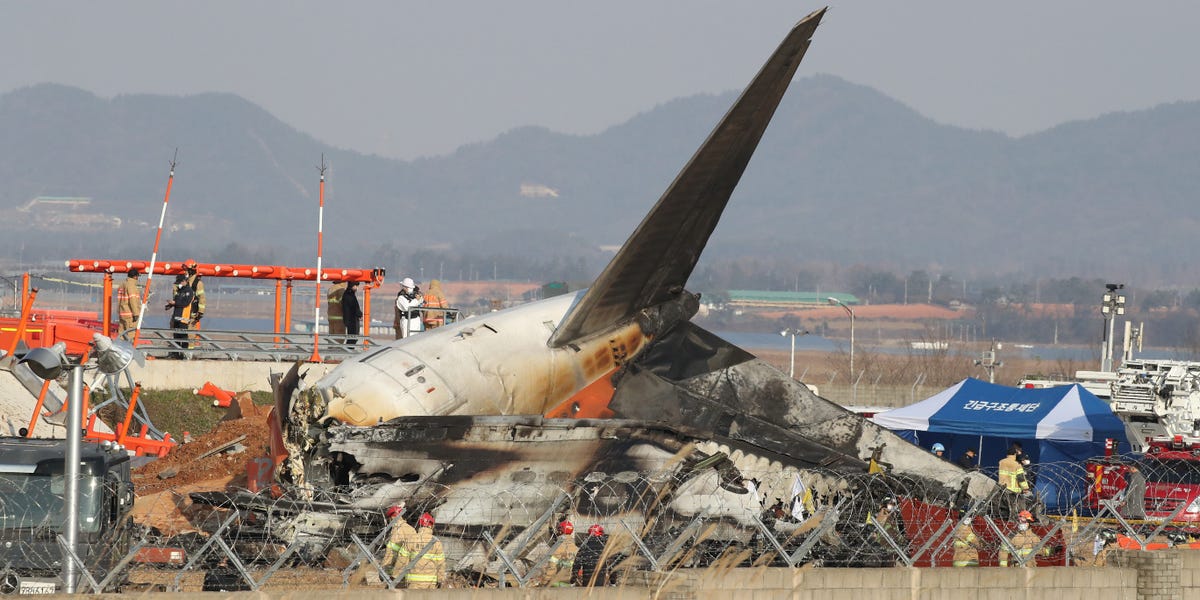
Video footage of survivors emerging from the wreckage of an Azerbaijan Airlines plane crash on Wednesday, followed by two people surviving a Jeju Air crash on Sunday, showed it’s possible to survive such catastrophic events.
29 people survived the Azerbaijan crash in Kazakhstan, and 38 people died. Two flight attendants seated in the tail section of the Jeju plane that crashed in South Korea lived, while the 179 others on board died.
CNN reported that emergency services said the tail section of the Jeju plane was the only piece somewhat intact after Sunday’s accident.
The survivability of any plane crash largely depends on the circumstances of the accident. It’s not yet known what caused the Azerbaijan or Jeju crashes or how any of the people on board either jet survived.
In general, however, seating arrangements and the actions of crew on board can contribute to survivability.
Specifically, seats in the rear of a plane — the section from which the Azerbaijan survivors were emerging and the location of the jumpseats the Jeju crew would have been sitting — are historically the safest, data shows.
Kazakhstan’s Emergency Ministry Press Service via AP
Federal data analyzed by Time Magazine in 2015, which looked at 17 crashes between 1985 and 2000 that had both survivors and fatalities and seat maps available, found the back third of the aircraft had a fatality rate of 32%.
The rear middle seats had the lowest fatality rate at 28%.
That compares to the 39% fatality rate in the middle third section and the 38% fatality rate in the front third section. The study found the highest fatality rate was in the middle section aisle seats at 44%.
The report followed a 2007 analysis by the science and technology magazine Popular Mechanics.
It analyzed 20 crashes dating back to 1971 and found the survival rate in the aft, or rear, section was 69%, which is a 31% fatality rate. The middle section and front sections had survival rates of 56% and 49%, respectively.
The rear seats can experience less G-force
The back of the plane may be safer because, when a plane crashes, the front and middle sections often absorb much of the impact energy.
This can allow the back of the aircraft to remain more intact during head-on collisions with water or terrain, even if the rear portion separates from the plane.
The sole four people who survived a Japan Airlines crash in 1985 were seated in the aft section when the plane slammed into a mountainside. 520 others died.
A Delta Air Lines crash in 1985 in Texas saw 27 survivors, most of whom were seated in the back of the aircraft. The aft section broke free during impact.
In 2012, the Discovery Channel purposefully crashed an unmanned Boeing 727 into the desert with test dummies on board to analyze survivability.
They found that the middle and aft sections were the least fatal, with the front section experiencing 12 times the force of gravity. The middle and aft sections experienced a G-force of eight and six, respectively.
Crew actions can increase survivability
Pilot handling and cabin crew responses can also improve the chances of surviving a plane crash.
Azerbaijan Airlines president Samir Rzayev spoke about the pilots’ “heroism” to reporters on Wednesday. Both died in the crash.
“While this tragic accident brought a significant loss to our nation, the crew’s valiant dedication to their duties until the last moment and their prioritization of human life have immortalized their names in history,” Rzayev said, according to the Report, an Azerbaijani news agency.
Chesley “Sully” Sullenberger is one of the more famous examples of pilots whose quick decision-making is credited with saving lives.
In 2009, Sullenberger’s US Airways plane lost engine power over New York City. He responded by ditching the aircraft in the Hudson River because there were no runways in gliding range. All 155 passengers and crew survived.
Bebeto Matthews/AP Images
Decades earlier, a United Airlines plane crashed in Iowa in 1989 due to an engine failure and subsequent hydraulics loss, meaning aircraft control was severely limited.
The pilots kept the landing gear down to absorb some of the crash shock and maintained relative control of the plane as it crashed. 184 of the 296 passengers and crew survived.
Flight attendants have also been credited for saving lives. During a fiery Japan Airlines runway collision in January, flight crews’ quick response and communication were cited for the successful evacuation of all 379 people on board.
There is no universal safest seat
Federal authorities say there is no safest seat on a plane because every crash is different and depends on factors like how the plane impacted the ground and whether there was a fire.
Sully’s water landing is an example of how the back of the plane could be most at risk after landing because it was taking on water with no exit doors available — so those passengers were among the last to exit.
In the United crash in Iowa, most of the survivors were in the rows behind first class but in front of the wings. They likely lived because of how the plane hit the ground and broke during landing, allowing people to more easily escape. Some people who did not perish on impact died due to smoke inhalation, an NTSB investigation found.
In 1977, a Pan Am and a KLM Boeing 747 collided in Tenerife, Spain, killing 583 people and becoming the world’s deadliest plane crash. However, 61 people seated in the front section of the Pan Am plane survived.
STR/JIJI PRESS/AFP via Getty Images
The KLM jet hit the middle and aft sections of the Pan Am aircraft, causing the front of the Pan Am jet to be less severely damaged and allowing people to escape via an opening near the left wing.
Despite the different outcomes of the varying air crashes over the decades, flying is the safest mode of transportation — regardless of where you sit — thanks to strict safety laws and improvements in aircraft design.
A 2020 National Transportation Safety Board survivability report found that 1.3% of people involved in commercial airline accidents between 2001 and 2017 died, down from 4.7% between 1983 and 2000.

- People in the back sections of two different plane crashes on Wednesday and Sunday survived.
- A 2015 study from Time Magazine found lower fatality rates in the rear section of aircraft.
- Pilot actions and the circumstances of the crash impact survivability across all seat areas.
Video footage of survivors emerging from the wreckage of an Azerbaijan Airlines plane crash on Wednesday, followed by two people surviving a Jeju Air crash on Sunday, showed it’s possible to survive such catastrophic events.
29 people survived the Azerbaijan crash in Kazakhstan, and 38 people died. Two flight attendants seated in the tail section of the Jeju plane that crashed in South Korea lived, while the 179 others on board died.
CNN reported that emergency services said the tail section of the Jeju plane was the only piece somewhat intact after Sunday’s accident.
The survivability of any plane crash largely depends on the circumstances of the accident. It’s not yet known what caused the Azerbaijan or Jeju crashes or how any of the people on board either jet survived.
In general, however, seating arrangements and the actions of crew on board can contribute to survivability.
Specifically, seats in the rear of a plane — the section from which the Azerbaijan survivors were emerging and the location of the jumpseats the Jeju crew would have been sitting — are historically the safest, data shows.
Kazakhstan’s Emergency Ministry Press Service via AP
Federal data analyzed by Time Magazine in 2015, which looked at 17 crashes between 1985 and 2000 that had both survivors and fatalities and seat maps available, found the back third of the aircraft had a fatality rate of 32%.
The rear middle seats had the lowest fatality rate at 28%.
That compares to the 39% fatality rate in the middle third section and the 38% fatality rate in the front third section. The study found the highest fatality rate was in the middle section aisle seats at 44%.
The report followed a 2007 analysis by the science and technology magazine Popular Mechanics.
It analyzed 20 crashes dating back to 1971 and found the survival rate in the aft, or rear, section was 69%, which is a 31% fatality rate. The middle section and front sections had survival rates of 56% and 49%, respectively.
The rear seats can experience less G-force
The back of the plane may be safer because, when a plane crashes, the front and middle sections often absorb much of the impact energy.
This can allow the back of the aircraft to remain more intact during head-on collisions with water or terrain, even if the rear portion separates from the plane.
The sole four people who survived a Japan Airlines crash in 1985 were seated in the aft section when the plane slammed into a mountainside. 520 others died.
A Delta Air Lines crash in 1985 in Texas saw 27 survivors, most of whom were seated in the back of the aircraft. The aft section broke free during impact.
In 2012, the Discovery Channel purposefully crashed an unmanned Boeing 727 into the desert with test dummies on board to analyze survivability.
They found that the middle and aft sections were the least fatal, with the front section experiencing 12 times the force of gravity. The middle and aft sections experienced a G-force of eight and six, respectively.
Crew actions can increase survivability
Pilot handling and cabin crew responses can also improve the chances of surviving a plane crash.
Azerbaijan Airlines president Samir Rzayev spoke about the pilots’ “heroism” to reporters on Wednesday. Both died in the crash.
“While this tragic accident brought a significant loss to our nation, the crew’s valiant dedication to their duties until the last moment and their prioritization of human life have immortalized their names in history,” Rzayev said, according to the Report, an Azerbaijani news agency.
Chesley “Sully” Sullenberger is one of the more famous examples of pilots whose quick decision-making is credited with saving lives.
In 2009, Sullenberger’s US Airways plane lost engine power over New York City. He responded by ditching the aircraft in the Hudson River because there were no runways in gliding range. All 155 passengers and crew survived.
Bebeto Matthews/AP Images
Decades earlier, a United Airlines plane crashed in Iowa in 1989 due to an engine failure and subsequent hydraulics loss, meaning aircraft control was severely limited.
The pilots kept the landing gear down to absorb some of the crash shock and maintained relative control of the plane as it crashed. 184 of the 296 passengers and crew survived.
Flight attendants have also been credited for saving lives. During a fiery Japan Airlines runway collision in January, flight crews’ quick response and communication were cited for the successful evacuation of all 379 people on board.
There is no universal safest seat
Federal authorities say there is no safest seat on a plane because every crash is different and depends on factors like how the plane impacted the ground and whether there was a fire.
Sully’s water landing is an example of how the back of the plane could be most at risk after landing because it was taking on water with no exit doors available — so those passengers were among the last to exit.
In the United crash in Iowa, most of the survivors were in the rows behind first class but in front of the wings. They likely lived because of how the plane hit the ground and broke during landing, allowing people to more easily escape. Some people who did not perish on impact died due to smoke inhalation, an NTSB investigation found.
In 1977, a Pan Am and a KLM Boeing 747 collided in Tenerife, Spain, killing 583 people and becoming the world’s deadliest plane crash. However, 61 people seated in the front section of the Pan Am plane survived.
STR/JIJI PRESS/AFP via Getty Images
The KLM jet hit the middle and aft sections of the Pan Am aircraft, causing the front of the Pan Am jet to be less severely damaged and allowing people to escape via an opening near the left wing.
Despite the different outcomes of the varying air crashes over the decades, flying is the safest mode of transportation — regardless of where you sit — thanks to strict safety laws and improvements in aircraft design.
A 2020 National Transportation Safety Board survivability report found that 1.3% of people involved in commercial airline accidents between 2001 and 2017 died, down from 4.7% between 1983 and 2000.







 American Dollar Exchange Rate