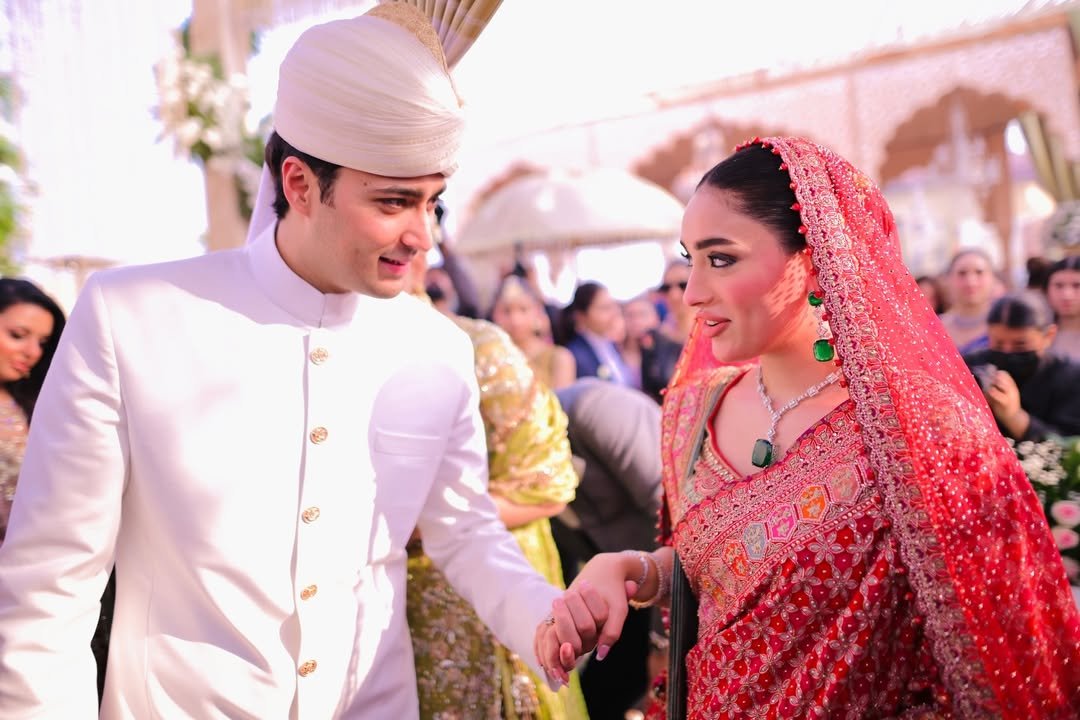
Junaid Safdar’s wedding grabbed nationwide attention as bride Shanzeh Ali Rohail dazzled in Sabyasachi and Tarun Tahiliani, blending Indian couture with Pakistani tradition across three viral celebrations in Lahore.
WEBDESK – MediaBites – January 19, 2026
The wedding of Junaid Safdar, son of Punjab Chief Minister Maryam Nawaz, and Shanzeh Ali Rohail has turned into one of the most talked-about social events of the year, with fashion emerging as the real headline across three days of celebrations in Lahore.
Held from January 16 to 18 at the Sharif family’s Jati Umra residence, the festivities included Mehndi, Baraat and Walima ceremonies, all of which quickly went viral on social media. While political names dominated the guest list, it was the outfits, designers and styling choices that captured public attention.
For her Mehndi, Shanzeh Ali Rohail, granddaughter of senior PML-N leader Sheikh Rohail Asghar, made a bold fashion statement by opting for Indian couture. She wore a green and multi-colored lehenga designed by renowned Indian designer Sabyasachi, featuring intricate zardozi, gota work and sequins, paired with a peach net dupatta. The look sparked widespread discussion online, with many praising the craftsmanship and others debating cross-border fashion choices.
Junaid Safdar complemented the Mehndi theme in a navy blue traditional shalwar kameez by Pakistani designer Hassan Sheheryar Yasin, paired with a cotton waistcoat, keeping the groom’s style rooted in classic elegance.
On the Baraat, Shanzeh once again turned heads by choosing another Indian designer, Tarun Tahiliani. She wore a deep red sari with delicate floral embroidery, an antique gold border and a flowing pallu that stood out in motion. Interestingly, the same sari design had previously been worn by Indian actress Ananya Panday at a high-profile wedding, adding another layer of buzz to Shanzeh’s look. Industry estimates suggest Tarun Tahiliani’s embroidered saris range between $4,000 and $12,000.
Junaid Safdar, meanwhile, stayed loyal to HSY for the Baraat, wearing an off-white sherwani with a sculpted collar, refined button detailing, a traditional turban and a cotton shalwar kameez.
For the Walima, the couple chose to go fully Pakistani, with both bride and groom wearing outfits designed by Faraz Manan, bringing the celebrations to a sophisticated close.
Fashion attention did not stop with the bride and groom. Maryam Nawaz herself remained a central style figure throughout the events. She wore designs by Nomi Ansari for the Mehndi and Walima, while opting for a green ensemble by Iqbal Hussain for the Baraat. Her accessories also drew notice, particularly a Valentino handbag reportedly priced at $3,100, paired with jewelry by Hanif Jewellers.
Other political figures, including Maryam Aurangzeb, also became part of the online conversation, with social media users commenting on noticeable changes in her appearance. Speculation ranged from weight loss methods to lifestyle changes, though no official clarification has been provided and such claims remain unverified.
Beyond fashion, the wedding menu also became a subject of debate after a video circulated online alleging a violation of the one-dish law at the Walima. Fact checks later revealed the video was unrelated to the event and had been posted earlier by a catering company.
As images continue to circulate, Junaid Safdar and Shanzeh Ali Rohail’s wedding stands out not only as a political family celebration but as a fashion moment that blended Pakistani tradition with Indian high couture, keeping the public firmly glued to their screens.







 American Dollar Exchange Rate