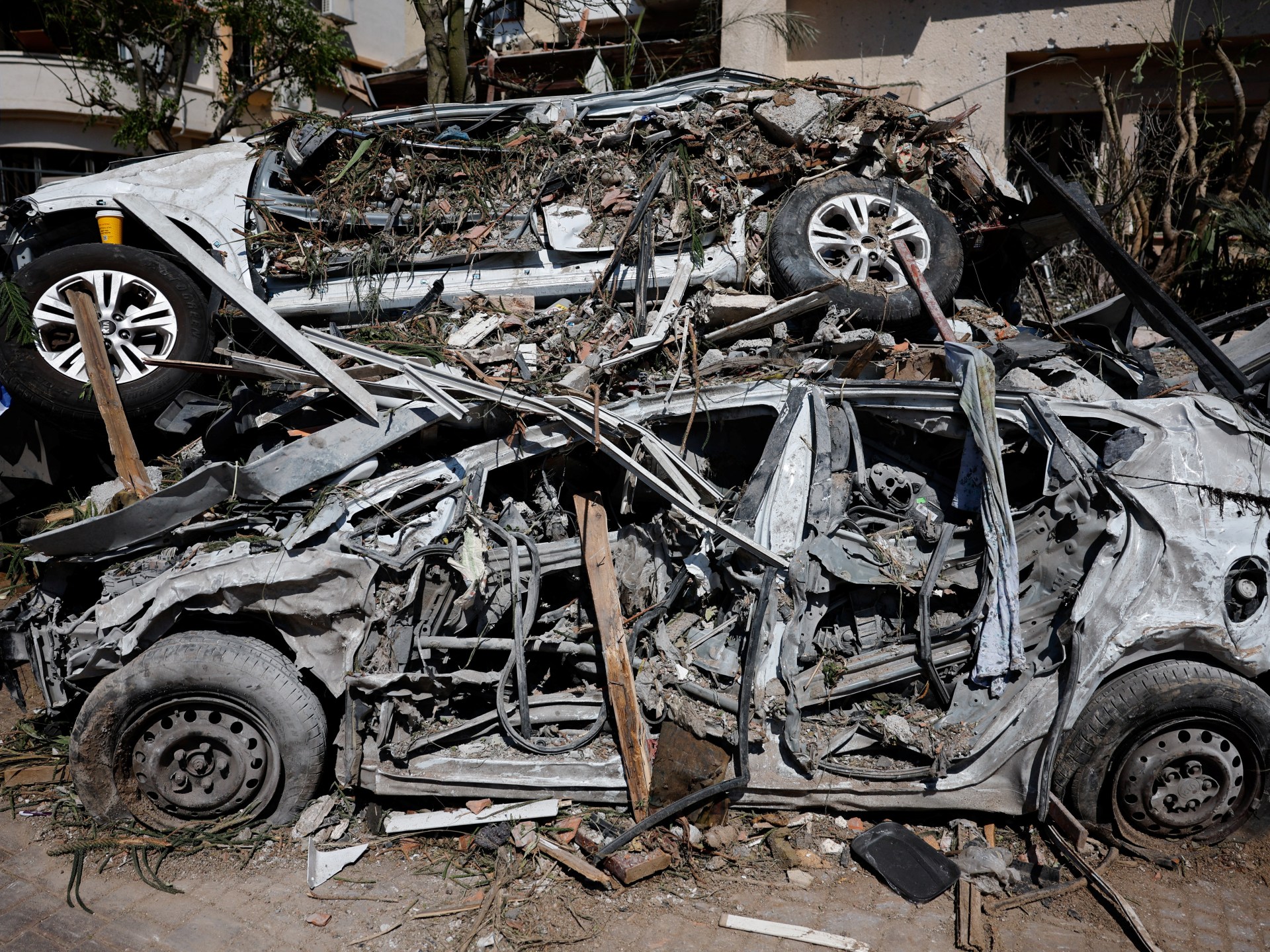
As Israel and Iran threaten increased attacks, world leaders stress restraint amid fears of a wider conflagration.

World leaders and senior officials have called on both Israel and Iran to walk back from the brink of all-out war as the bitter enemies traded intense attacks for a second day.
Prime Minister Benjamin Netanyahu claimed on Saturday that Israel’s strikes on Iranian infrastructure had set its nuclear programme back years, without providing evidence, but rejected global calls for restraint.
“We will hit every site and every target of the Ayatollahs’ regime, and what they have felt so far is nothing compared with what they will be handed in the coming days,” he said in a video message.
During its surprise attack on Friday, the Israeli army targeted more than 200 military and nuclear sites, killing top Iranian army commanders, scientists and other senior officials.
Iran strong retaliation penetrated Israel’s lauded missile defence on Friday night and overnight into Saturday, with air raid sirens sounding across Israel. At least four people were killed, with the Israeli military saying Iran had fired about 200 ballistic missiles in four waves.
Iranian President Masoud Pezeshkian warned on Saturday of a “more severe and powerful response” if Israel continued to strike.
In light of the escalation, world leaders have spoken to Iranian and Israeli top officials, fearing a possible regional war.
Here is what some countries have said:
The United States President Donald Trump says he spoke to his Russian counterpart Vladimir Putin about the conflicts in the Middle East and Ukraine. “He feels, as do I, this war in Israel-Iran should end, to which I explained, his war should also end,” Trump wrote in a social media post.
Earlier, top Kremlin aide Yuri Ushakov told reporters Putin spoke to Trump and condemned Israel’s attacks on Iran. Putin “expressed serious concern about a possible escalation of the conflict, which would have unpredictable consequences for the entire situation in the Middle East”, Ushakov said,
According to Ushakov, Trump described the current events in the Middle East as “very alarming”.
The two leaders did not rule out a return to the negotiating meetings on Iran’s nuclear programme, Ushakov said.
President Recep Tayyip Erdogan told the Iranian president that Israel was looking to “drag the whole region into the fire,” according to a statement from the Turkish presidency. Erdogan also told Pezeshkian that Israel’s attacks aimed to divert attention from the genocide in Gaza.
US/Russia
Erdogan told Saudi Arabia’s Crown Prince Mohammed bin Salman that Israel needed “to be stopped”, calling it “the main threat to stability and security in the region”. The issue of Iran’s nuclear programme “can only be resolved through negotiations”, he added. The Turkish leader also spoke with Jordan’s King Abdullah II and Egyptian President Abdel Fattah al-Sisi.
Similarly, Erdogan told Trump in a phone call that he sees nuclear negotiations as the only way to resolve the conflict.
Wang told Iranian Foreign Minister Abbas Araghchi that Beijing “supports Iran in safeguarding its national sovereignty, defending its legitimate rights and interests, and ensuring the safety of its people”, according to a statement by the foreign ministry.
Wang told Araghchi that Israel’s actions “seriously violate … the basic norms governing international relations”, adding attacks on nuclear facilities “have set a dangerous precedent with potentially catastrophic consequences”.
During his conversation with Israeli Foreign Minister Gideon Saar, Wang expressed that its attack on Iran was “unacceptable”.
“Diplomatic means for the Iranian nuclear issue have not been exhausted, and there is still hope for a peaceful solution. Force cannot bring lasting peace,” Wang said, adding that Beijing was willing to play a role in de-escalating the conflict.
Emir Sheikh Tamim bin Hamad Al Thani also spoke with Pezeshkian and reiterated Qatar’s strong condemnation and denunciation of the Israeli attack targeting the territory of Iran, considering it a “blatant violation of Iran’s sovereignty and security, and a clear breach of the rules and principles of international law”.
The Qatari leader also called for a diplomatic solution to reach a lasting and comprehensive peace in the region.
Pezeshkian has held a phone call with Saudi Arabia’s Crown Prince Mohammed bin Salman, IRNA reports. The Saudi State news agency confirmed the call.
“Since taking office as president, I have sought to strengthen peace, stability and security in the region, but the Zionist regime has disrupted and sabotaged every area where we wanted to achieve something,” Pezeshkian was quoted as saying.
The Saudi crown prince said, “the Kingdom condemns ongoing attacks that undermine Iran’s sovereignty and security. ”
Ties between Riyadh and Tehran have improved significantly since the two countries agreed to restore diplomatic relations in 2023 after years of animosity.
The British Prime Minister Keir Starmer said Saturday that the UK is moving military assets, including fighter jets, to the Middle East for contingency support across the region.






 American Dollar Exchange Rate