SINGAPORE: A slide in U.S. Treasury yields dented the dollar on Wednesday, and oil prices also struggled as worries over the outlook for the world’s largest economy grew, while Asia shares rose ahead of AI darling Nvidia’s earnings later in the day.
U.S. copper prices surged more than 4% while those elsewhere fell overnight after President Donald Trump on Tuesday ordered a probe into potential new tariffs on copper imports.
Data on Tuesday showed U.S. consumer confidence deteriorated at its sharpest pace in 3-1/2 years in February – the latest in a string of surveys suggesting that businesses and consumers were becoming increasingly rattled by the Trump administration’s policies.
Traders reacted by ramping up bets of more Federal Reserve rate cuts this year, with futures now pointing to nearly 60 basis points worth of easing priced in by year-end, up from about 40 bps a week ago.
“We’re not surprised that we’re getting these weak consumer confidence numbers. What we are surprised about, though, is that we’re getting them now, before consumers see the impact of tariffs,” said Joseph Capurso, head of international and sustainable economics at Commonwealth Bank of Australia (CBA).
U.S. Treasury yields came under pressure on Wednesday due to the heightened Fed easing bets, with the benchmark 10-year yield languishing at a more than two-month low of 4.2830%.
The two-year yield fell 1 bp to 4.0860%.
That in turn weighed on the dollar, particularly against the yen. The greenback last traded 0.13% lower at 148.81 yen , after bottoming at an over four-month low in the previous session.
The euro hovered near a one-month high at $1.0522, while sterling was similarly within striking distance from a two-month top and last bought $1.2675.
“What we’re seeing is the dollar weakens because of this soft economic data, but at some point, you hit a threshold where you get safe-haven flows into the U.S. dollar,” said CBA’s Capurso.
Asian shares slide on US curbs on China, euro gives up gains
“So if things get really, really bad in America, let’s say the market starts pricing in a recession or something close to a recession, the U.S. dollar always goes up.”
Fears of slowing U.S. growth also cast a shadow over the outlook for oil demand.
Brent futures were up 0.34% to $73.27 a barrel having fallen more than 2% in the previous session, while U.S. West Texas Intermediate (WTI) crude rose 0.36% to $69.18 per barrel, reversing some of Tuesday’s 2.5% slump.
Elsewhere, gold similarly ticked up on Wednesday owing to some safe haven flows, rising 0.1% to $2,918.50 an ounce.
Asia shares upbeat
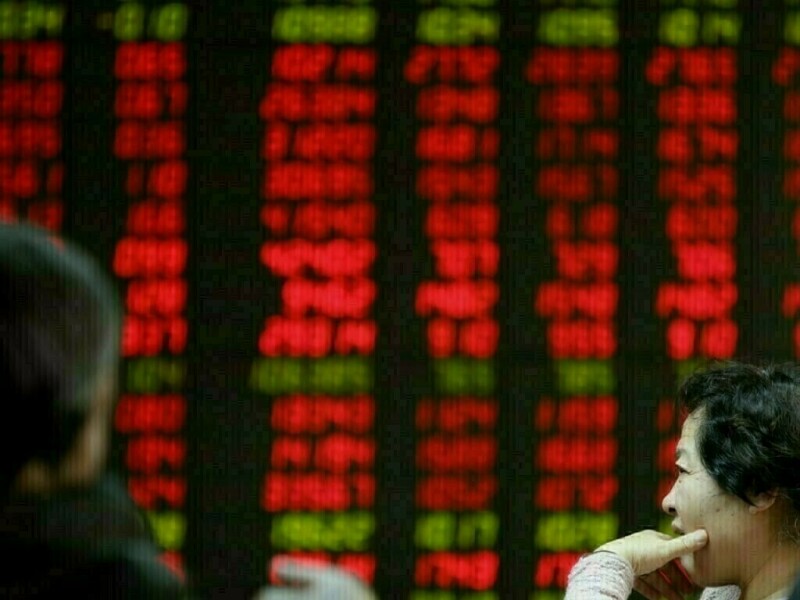
In stocks, MSCI’s broadest index of Asia-Pacific shares outside Japan advanced 0.63% on Wednesday, helped by a rally in Chinese markets.
Hong Kong’s Hang Seng Index surged more than 2%, with the Hang Seng Tech index also rising 2.7%.
The CSI300 blue-chip index ticked up 0.54%, while the Shanghai Composite Index gained 0.7%.
Chinese stocks have been on a tear over the past few weeks, driven by DeepSeek’s AI breakthrough that reignited investor interest in China’s technology capabilities.

SINGAPORE: A slide in U.S. Treasury yields dented the dollar on Wednesday, and oil prices also struggled as worries over the outlook for the world’s largest economy grew, while Asia shares rose ahead of AI darling Nvidia’s earnings later in the day.
U.S. copper prices surged more than 4% while those elsewhere fell overnight after President Donald Trump on Tuesday ordered a probe into potential new tariffs on copper imports.
Data on Tuesday showed U.S. consumer confidence deteriorated at its sharpest pace in 3-1/2 years in February – the latest in a string of surveys suggesting that businesses and consumers were becoming increasingly rattled by the Trump administration’s policies.
Traders reacted by ramping up bets of more Federal Reserve rate cuts this year, with futures now pointing to nearly 60 basis points worth of easing priced in by year-end, up from about 40 bps a week ago.
“We’re not surprised that we’re getting these weak consumer confidence numbers. What we are surprised about, though, is that we’re getting them now, before consumers see the impact of tariffs,” said Joseph Capurso, head of international and sustainable economics at Commonwealth Bank of Australia (CBA).
U.S. Treasury yields came under pressure on Wednesday due to the heightened Fed easing bets, with the benchmark 10-year yield languishing at a more than two-month low of 4.2830%.
The two-year yield fell 1 bp to 4.0860%.
That in turn weighed on the dollar, particularly against the yen. The greenback last traded 0.13% lower at 148.81 yen , after bottoming at an over four-month low in the previous session.
The euro hovered near a one-month high at $1.0522, while sterling was similarly within striking distance from a two-month top and last bought $1.2675.
“What we’re seeing is the dollar weakens because of this soft economic data, but at some point, you hit a threshold where you get safe-haven flows into the U.S. dollar,” said CBA’s Capurso.
Asian shares slide on US curbs on China, euro gives up gains
“So if things get really, really bad in America, let’s say the market starts pricing in a recession or something close to a recession, the U.S. dollar always goes up.”
Fears of slowing U.S. growth also cast a shadow over the outlook for oil demand.
Brent futures were up 0.34% to $73.27 a barrel having fallen more than 2% in the previous session, while U.S. West Texas Intermediate (WTI) crude rose 0.36% to $69.18 per barrel, reversing some of Tuesday’s 2.5% slump.
Elsewhere, gold similarly ticked up on Wednesday owing to some safe haven flows, rising 0.1% to $2,918.50 an ounce.
Asia shares upbeat
In stocks, MSCI’s broadest index of Asia-Pacific shares outside Japan advanced 0.63% on Wednesday, helped by a rally in Chinese markets.
Hong Kong’s Hang Seng Index surged more than 2%, with the Hang Seng Tech index also rising 2.7%.
The CSI300 blue-chip index ticked up 0.54%, while the Shanghai Composite Index gained 0.7%.
Chinese stocks have been on a tear over the past few weeks, driven by DeepSeek’s AI breakthrough that reignited investor interest in China’s technology capabilities.






 American Dollar Exchange Rate