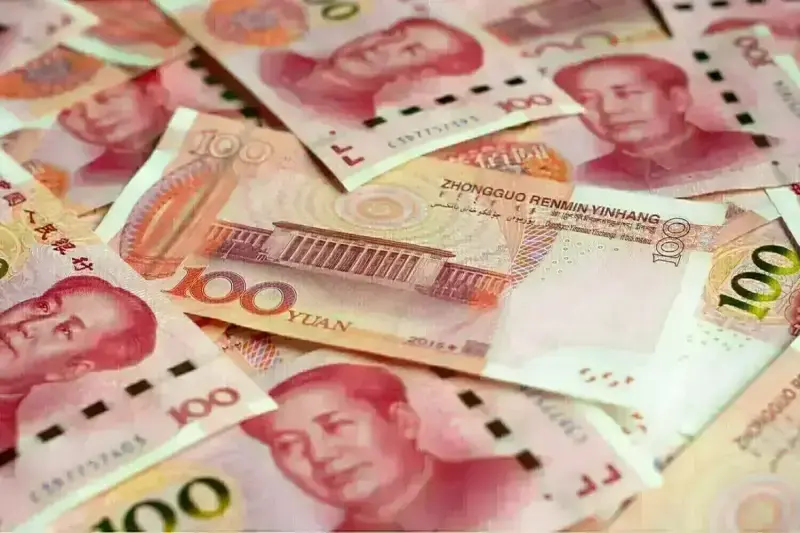

HONG KONG: China’s yuan eased from a 14-month peak against the US dollar on Wednesday, as analysts said a weaker-than-expected fixing signalled the central bank’s efforts to prevent rapid currency gains.
At 0326 GMT, the yuan was 0.01% lower at 7.0439 to the dollar, snapping a four-session winning streak that had pushed it to a fresh 14-month high.
The offshore yuan traded at 7.0393 yuan per dollar, down about 0.04% in Asian trade.
Prior to the market opening, the People’s Bank of China set the midpoint rate at 7.0573 per dollar, its strongest since October 9, 2024.
However, the midpoint was 187 pips weaker than a Reuters’ estimate, extending a pattern that has persisted since late November, which some analysts have interpreted as reflecting unwillingness to allow sharp yuan gains.
The spot yuan is allowed to trade 2% either side of the fixed midpoint each day.
“It’s clear that the PBOC has been trying to slow down the recent renminbi gains” as the central bank does not want to see the currency appreciating sharply, analysts at CMB International Wealth Management said in a note.
“We believe there’s a decent chance the renminbi could reach 7 against the dollar, but once it breaks through that level, the PBOC will likely step up its efforts to slow further gains.”
The yuan is up 0.4% against the dollar this month and 3.6% firmer this year, heading for its sharpest annual gain since the pandemic year of 2020.
Despite the recent market calls for a stronger yuan, analysts at Commerzbank said a sharp rise could weigh on China’s economy at least in the short term, given its reliance on exports to support growth in recent quarters.
“More policy measures to support domestic demand, stabilize the property market, and reduce overcapacity will be necessary should policymakers want to strengthen the yuan to help rebalance the economy,” the analysts said.
Elsewhere, the US dollar was steady on Wednesday and near its lowest since the start of October after data showed the US labour market remained soft, leaving investors on edge about when the next rate cut from the Federal Reserve is likely to come.






 American Dollar Exchange Rate