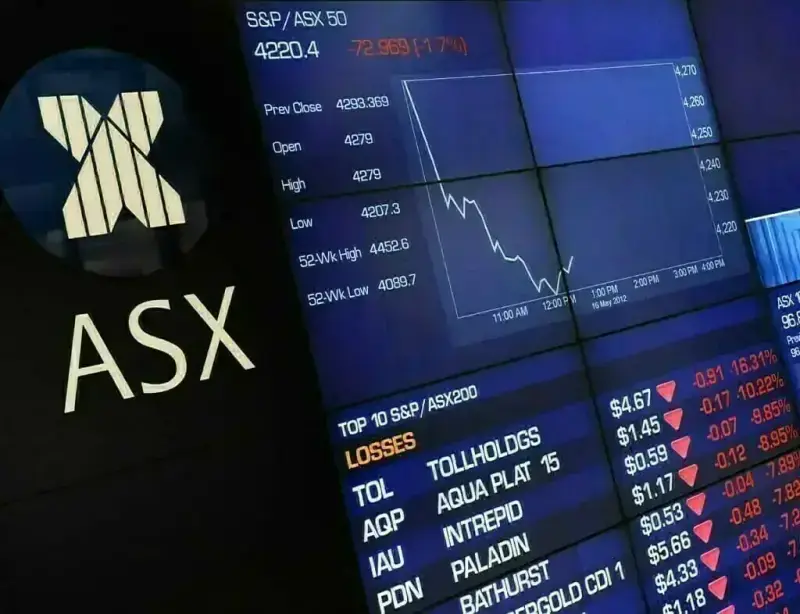

Australian shares were flat in early trade on Friday but were on track for their weakest November in more than a decade, as heavyweight banks tumbled on frothy valuation concerns and strong economic data dampened hopes of near-term policy easing.
The S&P/ASX 200 index was largely unchanged at 8620.1, as of 0025 GMT.
The benchmark has lost 3% for the month and is poised for its weakest November since 2014.
With the Reserve Bank of Australia (RBA) holding rates and striking a cautious tone this month, firmer jobs and inflation data have reinforced a run of solid numbers, giving the central bank little reason to cut interest rates anytime soon.
Swaps now suggest the RBA could raise rates in December 2026, with markets pricing in a 43% chance of a hike.
Heavyweight banks headed toward their most feeble month since June 2022, dropping 6.7% in November, following tepid earnings from major lenders.
The sub-index weighed on the benchmark and declined 0.2% on the day, with the “big four” banks shedding 0.1%-0.4%.
Real estate stocks fell nearly 0.7%, with property landlord Goodman Group slipping 0.2%.
The sub-index is set for its weakest month since March this year, down 4.2% Limiting losses, Chinese export-dependent miners rose 0.2% and are up 1% for the month, putting them on track for a fifth straight monthly gain.
Major miner Fortescue gained 0.4%.
Tech stocks tracked their Wall Street peers higher to trade up 1.4%.
The sub-index fell 11.3% this month, heading for its weakest month since February. Meanwhile, New Zealand’s S&P/NZX 50 benchmark was largely flat at 13,437.43.
The Reserve Bank of New Zealand delivered a widely expected 25-basis-point cut earlier this week and signalled an end to the easing cycle, as the economy showed early signs of picking up.








 American Dollar Exchange Rate