
ISLAMABAD: Pakistan’s automobile industry has warned that proposed changes to tax incentives for plug-in hybrid vehicles could put at risk more than USD1 billion already invested over the past decade, along with billions more planned for new-energy vehicle (NEV) projects.

Industry sources say the automobile sector could face a major policy shock if these revisions go ahead, as they may disrupt pricing, shake investor confidence, and slow the transition toward cleaner, electrified mobility.
The concern stems from a broader structural reality: Pakistan’s auto industry has been built not through organic demand alone, but through deliberate fiscal engineering. Tariff structures, duty concessions, and targeted incentives have historically dictated market behaviour — shaping consumer demand, guiding product portfolios, and influencing where global automakers deploy capital.
“When policy is supportive, investment follows. When it reverses, capital retreats,” said a senior industry executive, cautioning that abrupt fiscal changes risk undoing years of progress. The Automotive Industry Development Policy (AIDP) 2016–2021 marked a turning point, offering reduced duties on parts and tariff protection for new entrants. The policy successfully attracted around 15 new players, with total committed investment estimated at USD1.169 billion and realised investment exceeding USD1 billion across assembly, vendor development and dealership expansion.
The impact was visible. Passenger car sales rose from 181,000 units in FY16 to nearly 234,000 units by FY22, while the SUV segment expanded rapidly as new brands entered the market. Building on that momentum, the Automotive Industry Development and Export Policy (AIDEP) 2021–2026 shifted focus toward technology adoption and electrification. Under this framework, duties on hybrid-exclusive parts were reduced to 4 percent, plug-in hybrid components to 3 percent, and electric vehicle parts to 1 percent, while sales tax on hybrid and plug-in hybrid vehicles was maintained at 8.5 percent— a differential widely seen as critical in enabling affordability in a price-sensitive market.
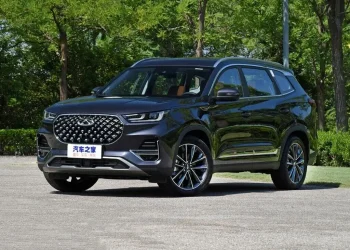
Industry experts said that these incentives directly enabled automakers to introduce advanced hybrid and plug-in hybrid models in Pakistan, laying the groundwork for a gradual transition toward cleaner mobility. However, the proposed fiscal changes could reverse that trajectory. Plans under consideration include a 3 percent NEV levy on internal combustion engine (ICE) vehicles and hybrids, along with a proposal to increase sales tax on hybrid and plug-in hybrid vehicles from 8.5 percent to 18 percent.
Market experts caution that such measures would sharply increase retail prices of electrified vehicles, narrowing or eliminating their cost advantage over conventional petrol-powered cars. “In a market like Pakistan, pricing is everything,” said a Karachi-based analyst. “If you erode the price advantage of hybrids and plug-in hybrids, consumers will revert to conventional engines almost immediately.” The timing of the proposed changes has further intensified concerns, as Pakistan continues to grapple with high fuel costs and external account pressures driven by oil imports.
Recent increases in global oil prices have already pushed domestic petrol prices up by around Rs55 per litre, reinforcing the economic case for fuel-efficient and electrified vehicles. They said that the new National Electric Vehicle Policy targets 30 percent electrification of passenger vehicles by 2030, aimed not only at reducing emissions but also at lowering the country’s reliance on imported fuel. Industry stakeholders argue that weakening incentives at this stage sends contradictory signals to investors.
“Policy consistency is the single most important factor for long-term investment,” said an industry official. “Automakers have committed capital based on a defined roadmap. If that roadmap changes midway, it raises serious concerns about future investment planning.” Executives warn that several manufacturers have already invested in local assembly of hybrid and plug-in hybrid vehicles, along with vendor ecosystems aligned to electrified platforms.
A sudden shift in tax policy could disrupt these plans, delay localisation efforts, and stall further technology transfer. Beyond immediate pricing impacts, analysts say the implications extend to Pakistan’s broader industrial strategy. “The NEV framework is not just about vehicles,” an executive noted. “It is about energy security, reducing the oil import bill, and building a future-ready manufacturing base.
Rolling back incentives risks the undermining all three.” With billions already invested and more at stake, the sector now awaits clarity on the government’s final decision. Experience suggests the consequences will be far-reaching. Pakistan’s auto industry has repeatedly demonstrated that fiscal policy determines market direction. Any reversal in incentives for electrified vehicles could not only slow adoption but also force a wider recalibration of investment across the sector. For investors and industry players alike, the message is clear: policy uncertainty carries a cost — and this time, it could be measured in billions.
Copyright media, 2026


 American Dollar Exchange Rate