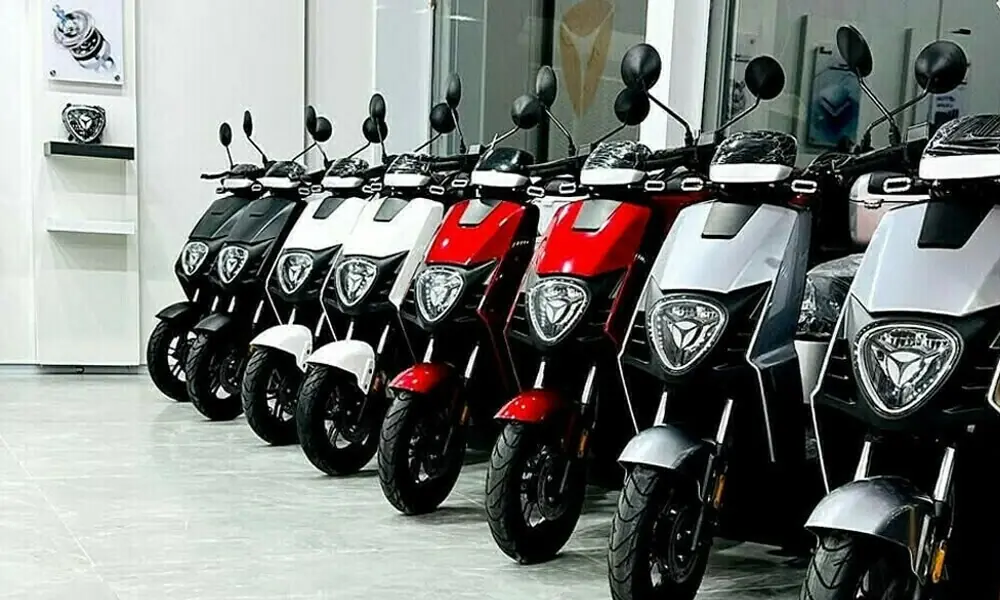
Soaring fuel prices in the wake of the Iran war have triggered a surge in demand for electric scooters and motorbikes, with stocks of popular EV models rapidly depleting at showrooms and manufacturing units across the country.
The ongoing Iran war is the result of a sharp escalation in long-standing tensions between Iran and the United States and its allies, particularly over Iran’s nuclear programme, regional influence, and military capabilities. The conflict began in February 2026 when US and Israeli forces launched large-scale airstrikes targeting Iran’s military infrastructure and leadership, prompting Tehran to retaliate with missile and drone attacks across the Middle East.
Also read: Pakistan govt hikes petrol price to Rs458, diesel to Rs520 per litre
Auto sector expert Muhammad Sabir Shaikh told media all major brands and models of EV bikes in Pakistan had witnessed a spike in demand.
“Nowadays, there is an acute shortage of electric bikes and scooters in the local market, following the Iran war and fuel price hike,” Shaikh said.
“EV bike assemblers placed orders of completely knocked down (CKD) kits more than 10 times to meet the market demand as if an assembler, who would call 1,000 units, ordered 10,000 units.
The expert said the increase in demand also led to a rise in the prices of EV bikes, ranging between Rs3,000 and Rs10,000 per bike.
“Even if fuel prices go down, demand for EV bikes will pick up in future and sales of EV scooters will go up.”
Evee Director Sales and Marketing Hamza Asad said the EV scooter market had witnessed a sharp shift in consumer behaviour amid soaring fuel prices. He noted that assemblers were previously selling around 15,000 units per month, with 65% of buyers being new customers and 35% switching from petrol-powered bikes.
“However, following the recent surge in fuel prices, monthly demand has nearly doubled to about 29,600 units. Evee alone accounted for the largest share, selling 9,680 units last month. The customer mix has also changed significantly, with 87% of buyers now switching from petrol bikes, while only 13% represent new entrants to the EV segment, highlighting a rapid transition toward electric mobility,” Asad said.
He said the government was supporting all original equipment manufacturers (OEMs).
“The government should continue the support for the next five years to promote two-wheeler revolution in the country. He claimed that if this support continues, around 1 million EV scooters will be sold annually after a couple of years.”
Commenting on the resale of EV scooters, Asad was of the view that resale of EV scooters would rise gradually.
VLEKTRA’s founder and CEO Syed Raza Mohsin said the more people adopt EV bikes, the greater their contribution to reducing the country’s oil import bill. He also urged the governement to promote localisation, which Mohsin said would generate job opportunities and help make Pakistan an export hub of EV bikes.
 American Dollar Exchange Rate