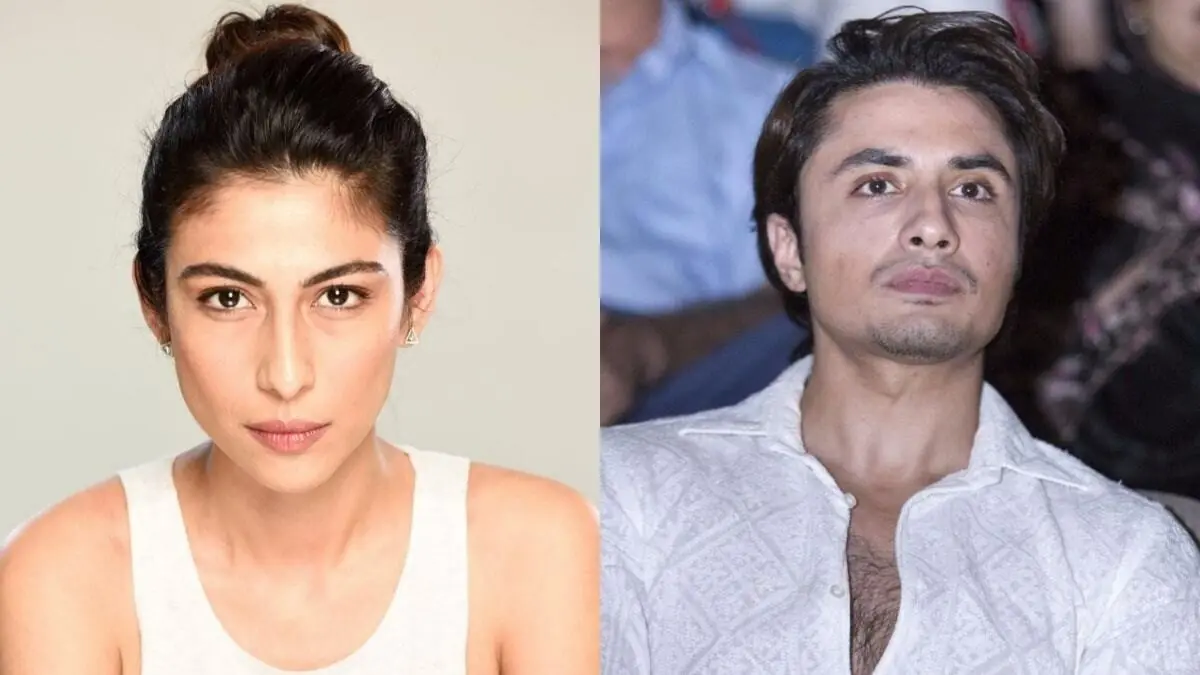
LAHORE: The Lahore High Court (LHC) on Tuesday upheld a trial court order restraining singer Meesha Shafi from making statements related to sexual harassment allegations against actor-cum-singer Ali Zafar until the conclusion of the defamation suit filed by the latter against the former.
In the written order seen by media, Justice Ahmad Nadeem Arshad observed that the veracity of the allegations cannot be determined without recording evidence and that repeated public statements while the matter was sub judice could amount to a “parallel media trial, which is neither permissible nor desirable in the interest of justice and fair adjudication”.
The judge subsequently dismissed the plea filed by Shafi challenging the gag order issued by the trial court on Jan 24, 2019.
Zafar had claimed that the allegations levelled against him by Shafi were false and had damaged his reputation. Along with the defamation suit, he had sought an interim injunction to prevent the defendant female singer from issuing further statements on the matter.
The trial court had accepted Zafar’s application and passed an order which stated: “The defendant shall not make any statement which is relevant to the controversy of defamation of plaintiff in this case till the decision of this suit.”
The written order by the LHC said that during the arguments, Meesha’s counsel had argued that an injunction could not be granted in a defamation suit. He further said that injunctions in defamation cases should only be granted in exceptional circumstances.
Meanwhile, Zafar’s counsel had opposed Shafi’s petition, pointing out the irreparable harm to his client’s reputation through public statements made by the petitioner, it noted.
In his judgment, Justice Arshad held that there was no “absolute bar” in the law on granting injunctions in defamation cases and that interim protection may be justified in exceptional circumstances to prevent irreparable harm to reputation.
He noted that reputation, once damaged, could not be restored through monetary compensation and that the balance of convenience favoured maintaining the injunction.
The judge said that for a public figure whose career and livelihood depended upon public perception and trust, the continuous circulation of unproven allegations would cause harm that could not be quantified in terms of money.
“The allegations levelled against him (respondent), if found to be untrue, are of such a nature that they directly strike at his dignity, honour and professional credibility,” the judge added.
He said the material available on record prima facie showed that the suit raised “serious triable issues requiring evidence, therefore, the respondent cannot be left remedyless, during the pendency of the proceedings”.
On the contrary, the judge noted, the petitioner (Shafi) would not suffer any irreparable prejudice by being restrained from making statements pertaining to the controversy till the matter was decided on merit.
He said the restraint imposed was temporary in nature and subject to the final outcome of the suit. The judge ruled that the trial court had exercised its discretion properly by imposing a limited restriction rather than a blanket prohibition.
The judge also held that the order did not violate freedom of expression, stating that such freedom was subject to reasonable restrictions and must be balanced with the right to dignity.
Justice Arshad observed that following the principles of Bonnard v. Perryman (1981), an interim injunction restraining the petitioner from making any statement regarding the subject matter of the alleged defamation until the disposal of the suit was justified.
Dismissing Shafi’s petition, the judge also directed the trial court to decide the main defamation suit expeditiously, preferably within 30 days, as the case was currently at the stage of final arguments.
In his suit, Zafar said Shafi had posted on Twitter (now X) on April 19, 2018 and levelled baseless allegations of sexual harassment against him, which resulted in tarnishing his image in public.
He said the female singer failed to delete the post and issue an apology within 14 days of a legal notice served on her. He had asked the court to issue a decree against Shafi directing her to pay Rs1 billion as damages to him.
 American Dollar Exchange Rate