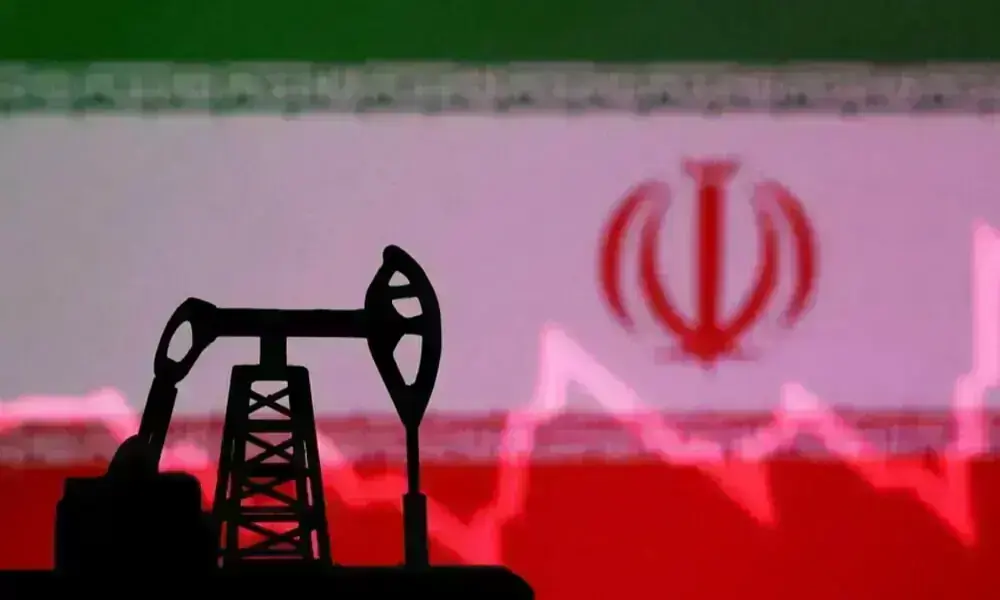

NEW YORK: Oil prices dropped about 10% to a one-week low on Monday after U.S. President Donald Trump said he would postpone any military strikes against Iranian power plants for five days after constructive talks, hours ahead of a deadline that threatened further escalation in the four-week-old conflict.
Brent futures fell $11.64, or 10.4%, to $100.55 a barrel at 10:19 a.m. EDT (1419 GMT), while U.S. West Texas Intermediate (WTI) lost $9.66, or 9.8%, to $88.57.
Extreme price changes in recent weeks – Brent closed at its highest since July 2022 on Friday – boosted both crude benchmarks’ historic or actual 30-day close-to-close futures volatility to the highest levels since April 2022.
Trump said on Monday that the U.S. has held talks with Iran and that the two sides had “major points of agreement”. Earlier in the day, the president said he gave orders to postpone strikes against Iranian power plants for five days.
US to deploy thousands of additional troops to the Middle East, officials say
Iran’s Revolutionary Guards had said they would attack Israel’s power plants and those supplying U.S. bases across the Gulf region if the U.S. followed through with Trump’s threat to “obliterate” Iran’s power network.
The war has already damaged major energy facilities in the Gulf and effectively halted shipping through the Strait of Hormuz, which handles about 20% of global oil and liquefied natural gas flows.
Analysts have estimated a loss of 7 million to 10 million barrels per day (bpd) of Middle East oil production.
The crisis in the Middle East is worse than the two oil shocks of the 1970s put together, Fatih Birol, executive director of the International Energy Agency (IEA), said on Monday.
The supply crunch has led to a temporary waiving of U.S. sanctions on Russian and Iranian oil already at sea. Indian refiners plan to resume buying Iranian oil while refiners elsewhere in Asia are examining such a move, traders told Reuters.
Iran considers EU armies as ‘terrorist groups’ in retaliatory move
China’s state-run refiner Sinopec does not intend to buy Iranian oil but is pushing for permission to tap state reserves, a senior executive said on Monday, days after the U.S. waived sanctions for buyers of some Iranian crude.
Around the world
In Russia, the Baltic Sea port of Ust-Luga resumed oil loadings after a drone attack alert was lifted, industry sources said, while neighbouring Primorsk remained shut after air strikes, adding to global shortages.
In Libya, the El Feel oilfield has been in shutdown since Thursday after state oil company National Oil Corporation (NOC) used its pipeline to transport crude from the Sharara field after its pipeline was damaged by fire, two El Feel engineers said. Production is expected to resume in a week to 10 days, one of the engineers said.
In the U.S., Federal Reserve Governor Stephen Miran said on Monday that it was too soon to say what the energy price shock from the Iran war will do to inflation and that he still thinks rate cuts are warranted to support the job market.
Oil up despite efforts by US, allies to boost supply and open Strait of Hormuz
Central banks like the Fed use interest rates to control inflation. Lower interest rates, which reduce consumer borrowing costs, can boost economic growth and demand for oil.
The Bank of Japan, meanwhile, is laying the groundwork for tweaks to its policy language in April, keeping alive the chance of a near-term increase to interest rates as the weak yen and Middle East conflict pile inflationary pressures on the economy.
The Japanese government is considering intervention in crude oil futures as the Middle East crisis drives energy prices sharply higher, market sources said on Monday.
In China, government officials urged all parties involved in the Middle East conflict, particularly the U.S. and Israel, to cease military operations, warning of a “vicious cycle” in a war that analysts say could undermine global growth and weaken demand for Chinese exports.
China took steps to cushion the impact of rising fuel prices on Monday, increasing the regulated price ceiling for retail gasoline and diesel but limiting the increase to about half what would normally be applied under the government’s pricing mechanism.





 American Dollar Exchange Rate