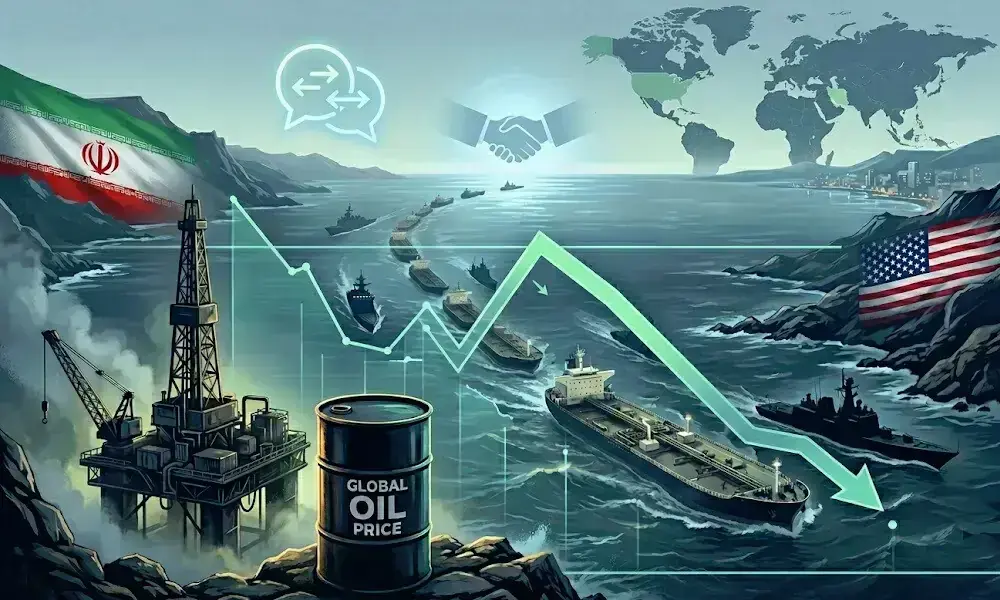
NEW YORK: Oil prices rose on Thursday as the market questioned whether peace talks between the U.S. and Iran would resolve disruptions to Middle Eastern energy supplies caused by their ongoing war.
Brent crude futures climbed $3.48, or 3.7%, to $98.41 a barrel by 12:01 p.m. ET (1601 GMT). U.S. West Texas Intermediate crude futures were up $2.22, or 2.4%, to $93.51 a barrel.
Talks between the United States and Iran have scaled back ambitions for a comprehensive peace deal and are instead seeking a temporary memorandum to prevent a return to conflict, two Iranian sources told Reuters on Thursday.
“We remain sceptical of any immediate solving of this war,” PVM oil market analyst John Evans said. “Pick any headline and there is always a counter.”
There was no immediate change to oil benchmarks after U.S. President Donald Trump said Israeli and Lebanese leaders had agreed to begin a 10-day ceasefire in their related conflict starting Thursday.
The U.S.-Israeli war with Iran has been described as the largest-ever disruption of global oil and gas supplies due to Iran’s interruption of traffic through the Strait of Hormuz, which typically carries about 20% of the world’s oil and liquefied natural gas flows.
The disruption to Strait of Hormuz energy flows has started to strain global oil inventories.
White House denies US requested extension in ceasefire, says new talks may happen in Pakistan
“As of now, there are no bombs falling, but the amount of ships making it through the Strait is no better than it was before the U.S. Blockade, which just adds to global draw on stocks that finally showed up in the U.S. this week,” Scott Shelton, analyst at TP ICAP, said.
U.S. crude oil inventories fell by 913,000 barrels last week, compared with analysts’ expectations for an increase of 154,000 barrels, government data showed on Wednesday. U.S. gasoline and distillate fuel inventories also fell last week, the data showed, as countries seeking barrels to replace the disrupted flows drove U.S. exports higher.
Possible resumption of peace talks
U.S. and Iranian officials were considering returning to Pakistan for further talks as early as the coming weekend. Pakistan’s army chief arrived in Tehran on Wednesday as a mediator.
China’s teapots seek Iranian oil after prices fall, sources say
A source briefed by Tehran told Reuters that Iran could consider allowing ships to sail freely through the Omani side of the Strait of Hormuz in the event of a deal to prevent renewed conflict after a two-week ceasefire started on April 8.
Analysts from ING estimate that roughly 13 million barrels per day of oil flow has been disrupted by the closure of the Strait, after taking into consideration pipeline diversions and the trickle of tankers that have passed through the gateway.
With the U.S. blockade on Iranian ports announced after the collapse of peace talks over the weekend, the disruption could increase, although some U.S.-sanctioned tankers have made it through.
U.S. Treasury Secretary Scott Bessent said that Washington will not be renewing sanction waivers for some Iranian and Russian oil.
 American Dollar Exchange Rate